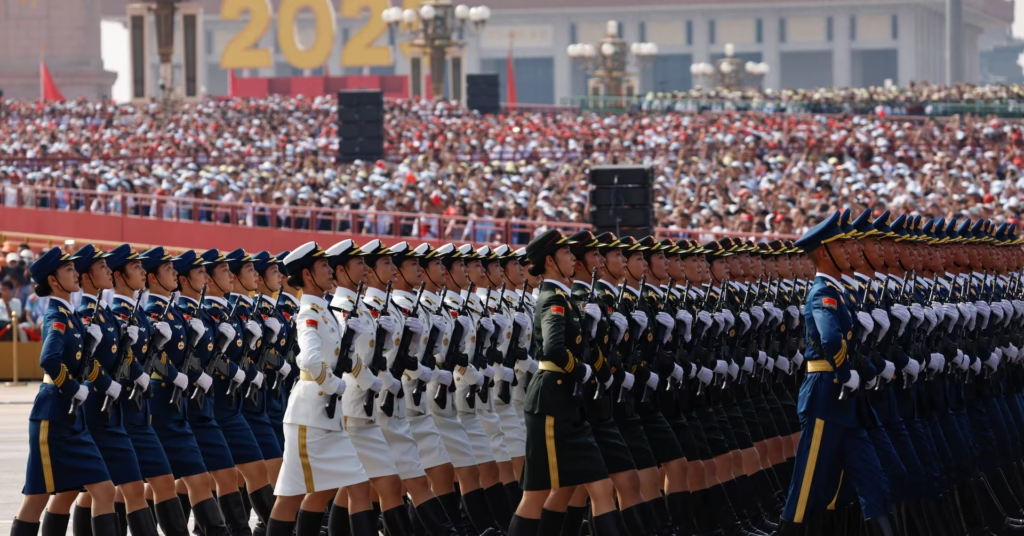
On September 2, 2025, Tiananmen Square in Beijing transformed into a grand stage for a military parade hosted by Chinese President Xi Jinping. This remarkable event was organized to celebrate the 80th anniversary of the conclusion of World War II. However, it wasn’t just any parade; Xi was joined by two notable figures—Russian President Vladimir Putin and North Korean leader Kim Jong-un. Their combined presence sent a powerful message to the world: China is not only flaunting its military might but also its expanding alliances.
To the average spectator, the parade appeared to be a vibrant display of soldiers, tanks, and aircraft. Yet for global leaders and analysts, it served as a stark reminder of the rapidly changing landscape of international politics.
A Historic Display of Strength
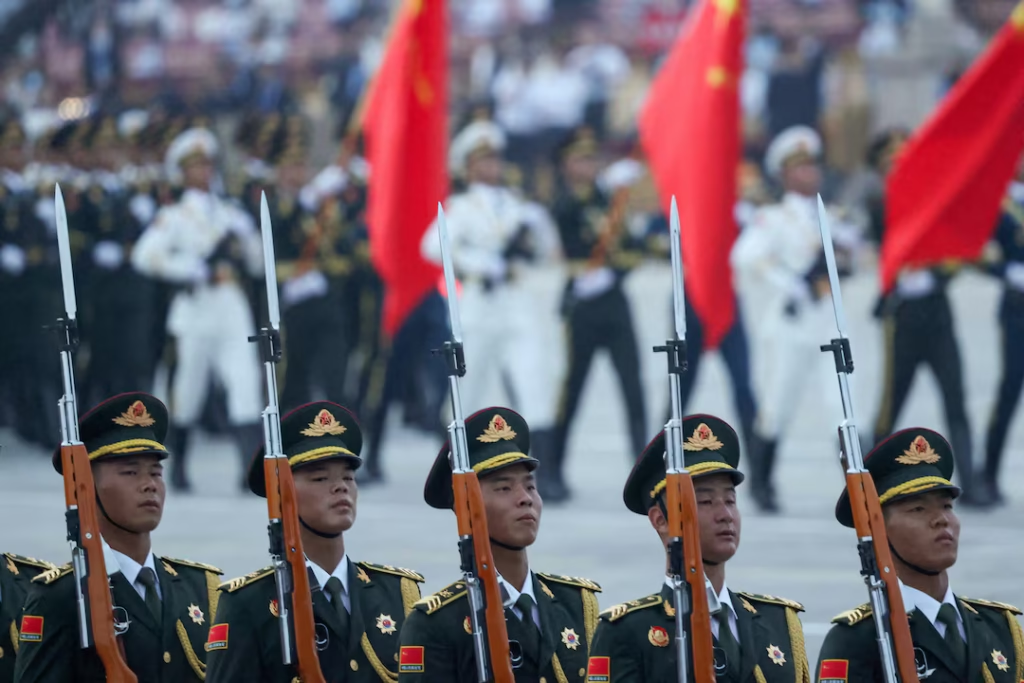
According to Reuters, it was the largest display of military force China had organized in decades. Thousands of troops marched in flawless formation, while fighter jets thundered overhead. The crowd witnessed hypersonic missiles, underwater drones, and AI-equipped tanks gliding past. During the event, Xi proclaimed that China’s ascent is “unstoppable” and emphasized the country’s readiness to protect not just peace, but also its own interests. The advanced military technology on show was not merely for decoration; it was a declaration that China is prepared for future conflicts.
Why Putin and Kim Were There
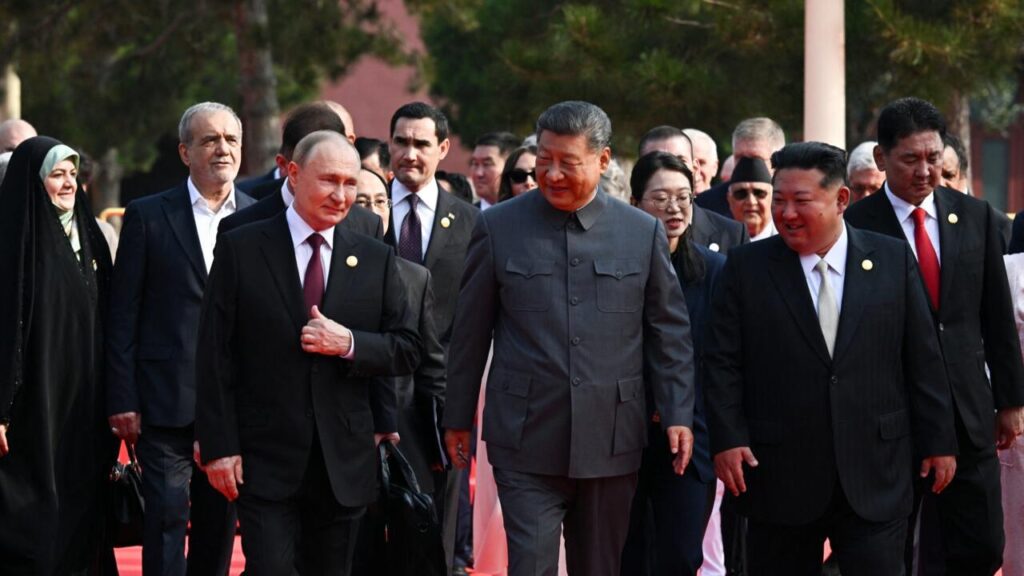
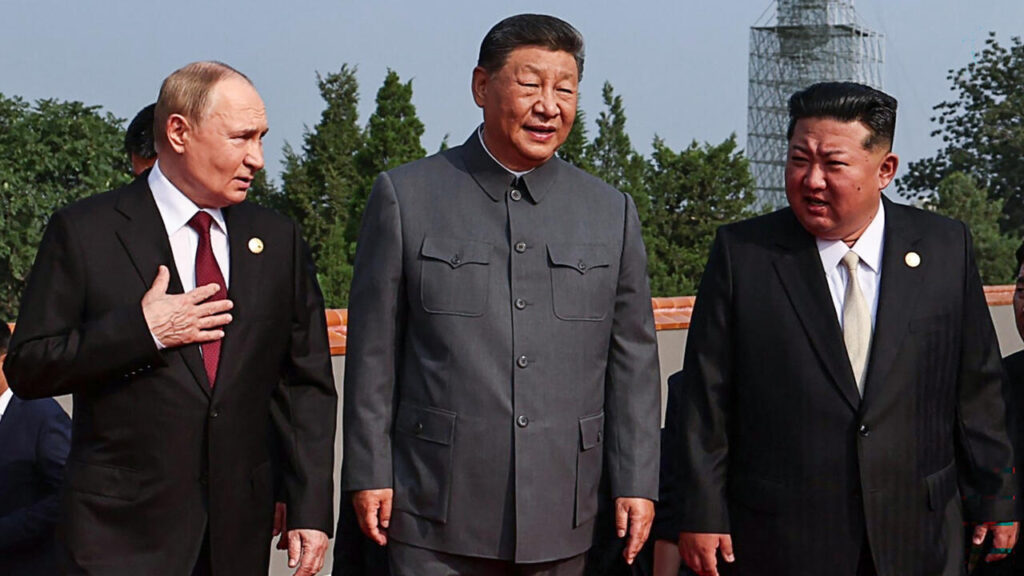
For many observers, the most striking aspect of the day was not the military hardware but the sight of Xi flanked by Putin and Kim. Both leaders seldom venture outside their own countries, making their attendance in Beijing significant. This gathering illustrated a new form of collaboration. With Russia facing Western sanctions, it is in search of allies, while North Korea, also under heavy sanctions, stands to gain by aligning with China. For Xi, having these two leaders by his side signified that China is cultivating its own network of supporters, particularly as Western powers become increasingly cautious. It was a quiet yet bold statement: “We are united, and we are unafraid to demonstrate it.”
The Weapons That Stole the Show
The parade was not just about showcasing military equipment. It aimed to introduce the world to China’s latest technological advancements. As reported by The Washington Post, the event featured weapons that had previously only existed in speculation. Highlights included:
– Hypersonic missiles capable of striking targets faster than existing defense systems.
– Underwater drones, indicating China’s enhancing naval capabilities.
– AI-driven tanks and advanced artillery, merging cutting-edge technology with conventional firepower.
– Sophisticated air defense systems designed to counter both missiles and drones.
This spectacle was breathtaking for onlookers but served as a wake-up call to competing militaries.
The Symbolism Behind the Parade
However, the parade symbolized much more than just advanced weaponry. It marked a significant anniversary, celebrating 80 years since the end of World War II, when China played a crucial role in defeating fascism. By linking the past with the present, Xi conveyed a message: “China contributed to global peace then, and is prepared to defend it again, but on its own terms.”
The release of 80,000 white doves at the conclusion of the parade further underscored this symbolism. While the military might demonstrated power, the doves represented peace—a carefully crafted message indicating that China desires harmony yet is prepared for conflict.
How the World Saw It
The world reacted in various ways to the parade. In China, it was seen as a moment of national pride, with millions tuning in on television and online to celebrate their country’s strength. In Russia and North Korea, their leaders’ presence was interpreted as evidence of a robust friendship with Beijing. Conversely, many in the West viewed the parade as a troubling indicator. Analysts from The Guardian suggested that it signified the emergence of a new bloc of nations willing to contest U.S. influence.
Experts Weigh In
Military experts noted that while the parade was a mix of performance and strategy, it’s true that these new weapons have not been tested in actual combat, and some may still be in the experimental phase. Nevertheless, as a showcase, the event was impactful. According to The Wall Street Journal, it aimed to enhance China’s image both domestically and internationally. At home, it stirred national pride, while on the global stage, it communicated that China is confident and undeterred.
Why This Moment Matters
1. China’s Global Image: It reinforced China’s ambition to be recognized not just as an economic powerhouse but as a formidable military force.
2. Alliances: The trio of Xi, Putin, and Kim served as a clear indication of emerging alliances in global politics.
3. Message to the West: While Xi spoke of peace, the military display conveyed a contrasting narrative: China is ready to confront challenges if necessary.
Looking Ahead
The question now is: what comes next?
Will China’s alliance with Russia and North Korea become more official?
How will the U.S., Europe, and their allies respond to this evolving situation?
Will we see these weapons used in actual conflicts, or will they simply serve as deterrents?
One thing is clear: September 2, 2025, will be marked as a significant moment in history. The image of Xi, Putin, and Kim standing together at Tiananmen Square will be etched in our memories as a symbol of a shifting world order.
Final Thoughts
This was more than just a parade; it was a powerful statement. China displayed its military strength, showcased its alliances, and revealed its ambitions. The world was watching closely. While many applauded the spectacle, others found reasons for concern. As one analyst noted, ‘It wasn’t merely a show of power—it was a clear declaration of intent.’

Abhi Platia is a financial analyst and geopolitical columnist who writes on global trade, central banks, and energy markets. At GeoEconomic Times, he focuses on making complex economic and geopolitical shifts clear and relevant for readers, with insights connecting global events to India, Asia, and emerging markets.