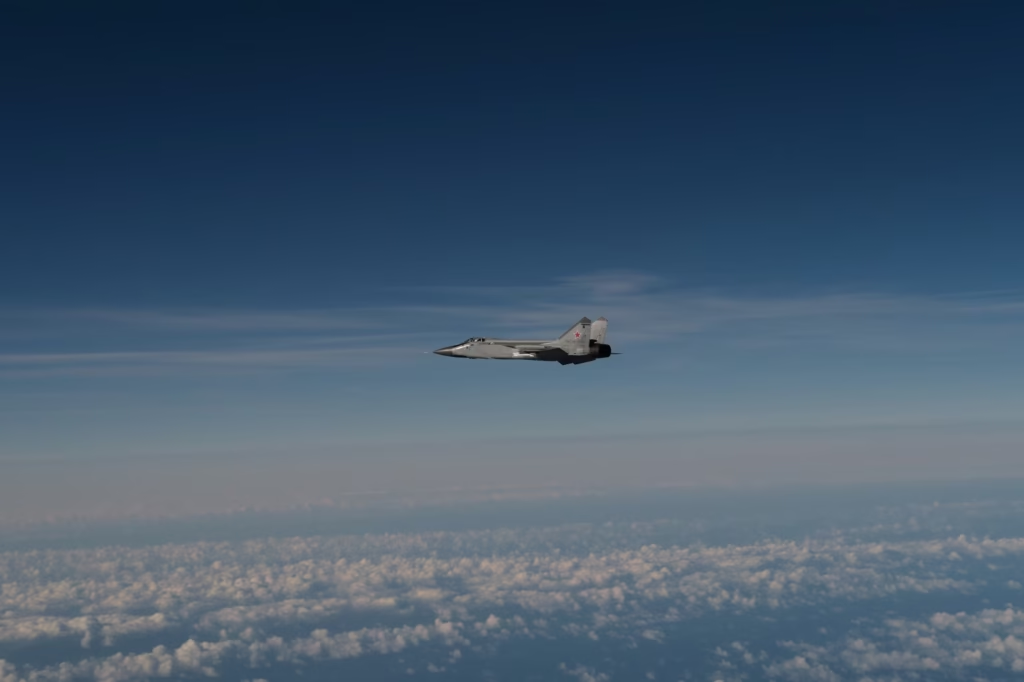
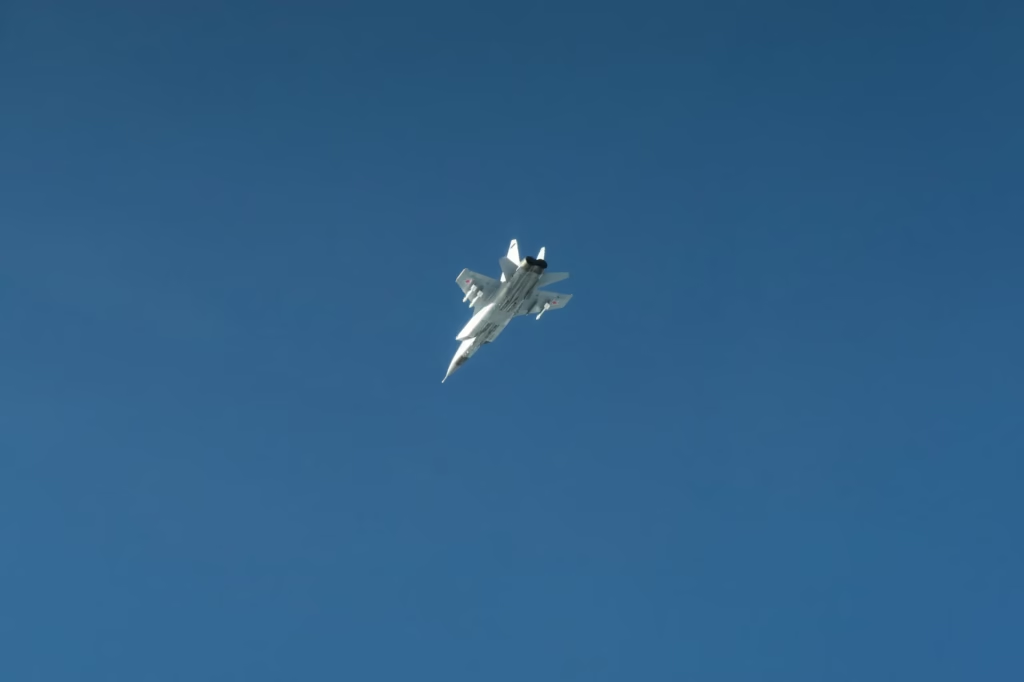
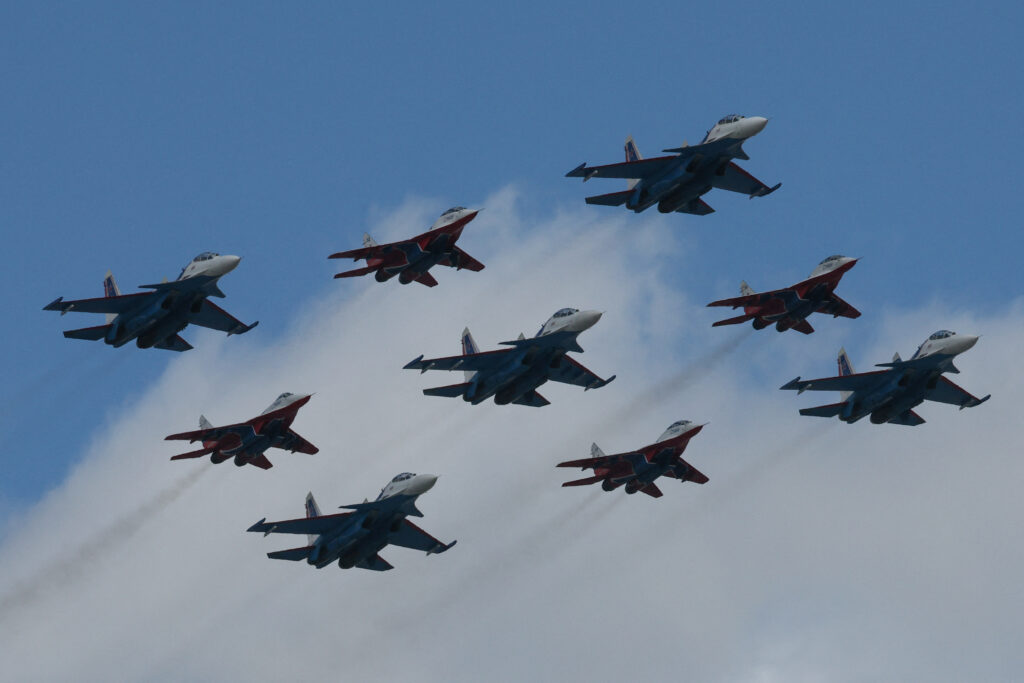
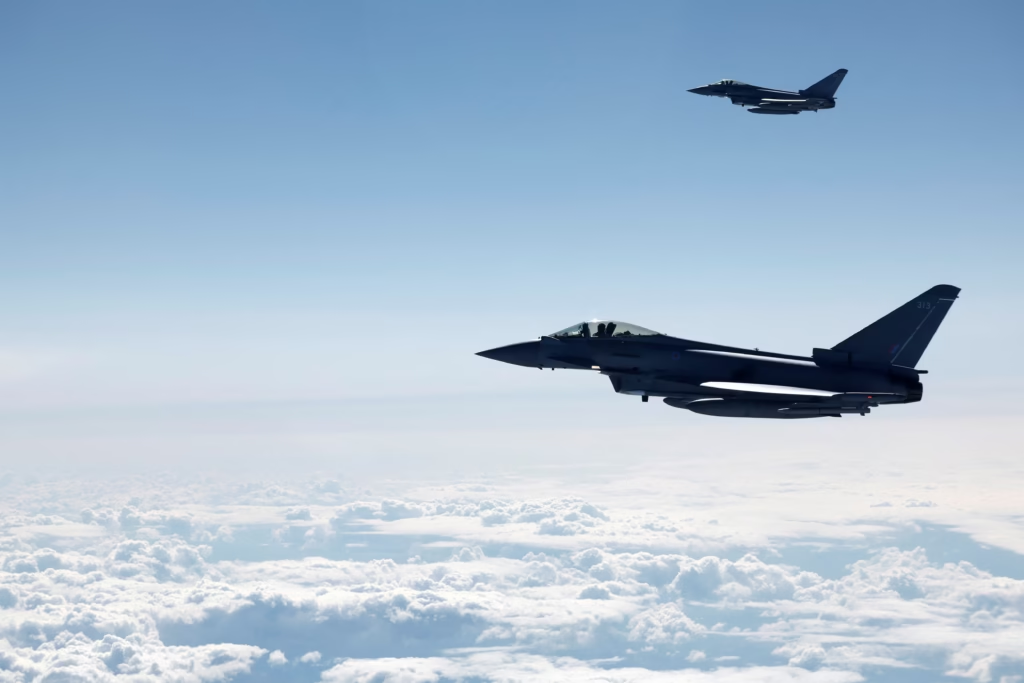
On a cool September morning, Estonian radar picked up three Russian MiG-31 interceptors entering Estonian sovereign airspace and lingering for roughly 12 minutes before NATO-policed jets escorted them out. Tallinn called the episode “unprecedentedly brazen” and triggered formal alliance consultations under Article 4, a diplomatic mechanism to discuss threats to a member’s security. Within days the event became a test of NATO readiness and the resiliency of airspace norms in Europe a flashpoint now summarized in shorthand as theRussia-Estonia Airspace incident. Reuters
This article goes deeper: it explains what happened, why NATO reacted as it did, how Moscow responded, how local citizens feel, and what the episode means for deterrence on the alliance’s eastern flank. It draws on reporting from frontline sources and expert commentary to humanize the technical realities of air policing and the political consequences of an air-space breach. Reuters
What exactly happened in the Russia-Estonia Airspace incident?
Estonia’s defence and NATO sources say three Russian MiG-31 fighter jets crossed into Estonian airspace on Friday and remained for about 12 minutes before being forced out by NATO quick reaction aircraft. The violation was detected by Baltic air-policing assets and prompted immediate consultations in Brussels. Reuters
Moscow denied the incursion, saying the jets remained over neutral international waters and followed international procedures. Kremlin spokespeople called Estonian claims “provocative” and accused Tallinn of inflating events to “whip up tensions.” That mismatch between Tallinn’s radar logs and Moscow’s account is now the crux of the dispute. Reuters
Why the Russia-Estonia Airspace breach matters (beyond the 12 minutes)
Airspace violations are not only technical breaches; they are political signals. The Russia-Estonia Airspace event matters for at least four reasons:
Sovereignty and deterrence: NATO’s promise to defend every inch of member territory only holds if air policing is credible. Incursions undermine that credibility. AP News
Escalation risk: Miscommunication at high speed jets ignoring radio calls, close intercepts can produce accidents with catastrophic consequences. Britain warned the U.N. this week that such incidents risk direct confrontation with NATO. Reuters
Pattern-building: The Estonia case follows other worrying episodes notably a mass of Russian drones that violated Polish airspace earlier this month suggesting a pattern of probing NATO responses. Reuters
Political theatre: For all sides, airspace operations are a way to send messages: deterrence, revenge, or domestic political posturing. The Russia-Estonia Airspace episode is both tactical and highly symbolic. Axios
NATO’s Response: Article 4 consultations and posture
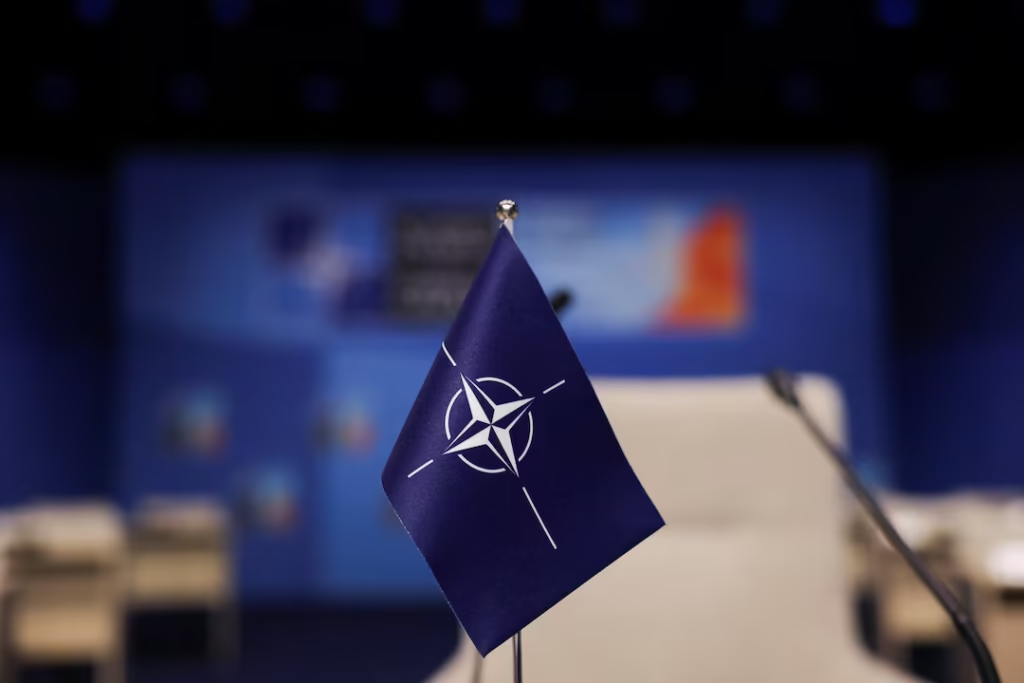
Tallinn invoked NATO’s Article 4 consultations a formal request to allies to meet when a member feels its territorial integrity is threatened. Unlike Article 5, Article 4 does not automatically trigger a military response, but it brings all allies into the same room to coordinate political and military steps. NATO moved quickly to discuss the incident and to reinforce eastern-flank air policing as part of a broader posture named “Eastern Sentry.” AP News
Operationally, NATO scrambled Quick Reaction Alert jets and kept surveillance assets overhead in the days that followed. Allies also debated whether to increase fighter patrol rotations, extend radars, or post additional ground-based air defences measures intended to reduce the odds that the next incursion becomes a surprise. Reuters
Politically, Article 4 consultations sent a strong message: even a brief breach of sovereignty will not be shrugged off. The alliance’s diplomatic chorus at the U.N. Security Council underscored that Washington and European capitals view these moves as deliberate and risky. Reuters
Moscow’s denials and possible motives
Moscow’s immediate reaction was denial. The Russian Defence Ministry said its fighter crews remained in international airspace while Kremlin spokespeople accused Estonia of fabricating the story. That reaction is consistent with previous incidents where differing radar tracks, flight logs, and political posturing produce competing narratives. Reuters
Why might Russia risk such a confrontation or at least be perceived as doing so? Analysts suggest several motives: to test NATO’s reaction times, to signal displeasure with NATO expansion and Baltic support for Ukraine, or to use controlled provocations for domestic political audiences in Moscow. Another possibility is navigational error or tense theatre that spins out of control, which is why NATO stresses robust situational awareness. Axios
Voices from the region humanizing the Russia-Estonia Airspace story
For people living under the radar of great-power rivalry, these incidents are anything but abstract.
An Estonian air traffic controller (speaking on condition of anonymity) told reporters that intercepts are tense, high-speed affairs. “Jets converge in minutes. If radio contact fails, pilots make split-second decisions,” the source said a reminder that human judgment sits behind the data points. Reuters
Residents of Estonian coastal towns, who reported seeing NATO F-35s and Italian jets scramble, described a sense of unease. “You hear planes at odd hours. Children ask if there will be war,” said a local teacher to a regional outlet, capturing how deterrence is also psychological. (see local reporting summarized by Reuters). Reuters
These grounded perspectives matter: the Russia-Estonia Airspace incident is an elite security problem that becomes a lived citizen anxiety in minutes. Reuters
Technical fault lines: Why air policing is harder than it looks
Protecting airspace is a complex choreography of radar coverage, secure communications, and international procedures. Several technical issues make incidents like the Russia-Estonia Airspace breach possible:
Overlapping radar coverage: The Baltic Sea and border regions have variable radar coverage; low-altitude flights can exploit gaps. Reuters
Identification errors: IFF (Identification Friend or Foe) transponder failures or spoofing can cloud a picture. Reuters
Rules of the air: Military flights are supposed to file flight plans and maintain radio contact; when they don’t, standard intercept protocols are triggered but those protocols rely on both parties following the same norms. Reuters
Strengthening air policing requires investment: more persistent AWACS surveillance, better radar networks, and improved information sharing between allies and neutral neighbours. The Russia-Estonia Airspace breach highlights that NATO still has gaps to fill. Wikipedia
The legal and diplomatic angle: Who’s right, who decides?
Estonia’s claim rests on its radar and air traffic data; Russia relies on its flight logs and an argument about staying over international waters. In such disputes, third-party verification satellite tracks, multinational radar correlation, and open data becomes crucial. That’s where NATO’s consultations aim to build a shared picture before public statements escalate. AP News
At the U.N., Western delegations accused Russia of a pattern of incursions and reckless behaviour; Moscow called the session political theatre. Diplomacy now runs in parallel with operations: allies must decide whether to harden posture, seek de-escalation channels, or both. Reuters
Comparative perspective: Not the first time the Russia-Estonia Airspace norm was tested
This is not an isolated event. Since 2022, Russian military flights and drone forays have increasingly tested NATO’s eastern borders. Earlier this month the alliance shot down multiple objects in Polish airspace; Germany and other members have been scrambling jets more frequently. The Russia-Estonia Airspace incident fits a worrying regional pattern. Reuters+1
NATO’s strategy since then dubbed Operation Eastern Sentry in public reporting is to increase presence, visibility, and intercept readiness. Yet, as analysts caution, visibility alone does not reduce miscalculation risk; clearer rules of engagement, crisis communication hotlines, and transparency measures are also needed. Wikipedia
Possible scenarios after the Russia-Estonia Airspace breach
Diplomatic cooling: NATO and Russia may agree to avoid escalatory rhetoric, open hotlines, and clarify flight corridors to reduce accidents. This route protects airspace norms without a large military buildup. Reuters
Hardening posture: NATO increases patrols, deploys more fighters to the Baltics, and supplies Estonia with more ground-based air defences a deterrence-first approach. Wikipedia
Escalation spiral: Misinterpreted intercepts or an accidental shootdown could trigger a wider crisis. That tail risk, while unlikely, is why even brief breaches like the Russia-Estonia Airspace episode are treated with maximum seriousness. Reuters
What NATO must do practical steps beyond words
To reduce the odds of future Russia-Estonia Airspace incidents, practical measures include:
Joint verification mechanisms: Pool radar tracks and AWACS data quickly to produce a joint timeline that can be shared publicly. Reuters
Crisis hotlines: Reopen or expand military hotlines that allow rapid communication when an air contact is ambiguous. Reuters
Public transparency: Release synchronized data so domestic publics understand the timeline, reducing politicized narratives. AP News
Investment in surveillance: More AWACS, drones, and coastal radars to reduce coverage gaps over the Baltic region. Wikipedia
Conclusion — The Russia-Estonia Airspace test for deterrence and diplomacy
The short, 12-minute incursion now memorialized as the Russia-Estonia Airspace incident has done more than trigger alarm talks in Brussels it revealed the thin, human margin between signals and catastrophe. NATO’s ability to convert alarm into coherent deterrence without escalation will be the alliance’s real test in the months ahead. For Estonia and its neighbours, the hope is simple: better prevention, clearer verification, and fewer nights when the sound of jets leaves children afraid.
If NATO can couple credible air policing with disciplined diplomacy verified data, calm consultations, and measured public messages the Baltics will be safer. If not, the next brief incursion could have consequences nobody wants to tally.
Abhi Platia is a financial analyst and geopolitical columnist who writes on global trade, central banks, and energy markets. At GeoEconomic Times, he focuses on making complex economic and geopolitical shifts clear and relevant for readers, with insights connecting global events to India, Asia, and emerging markets.