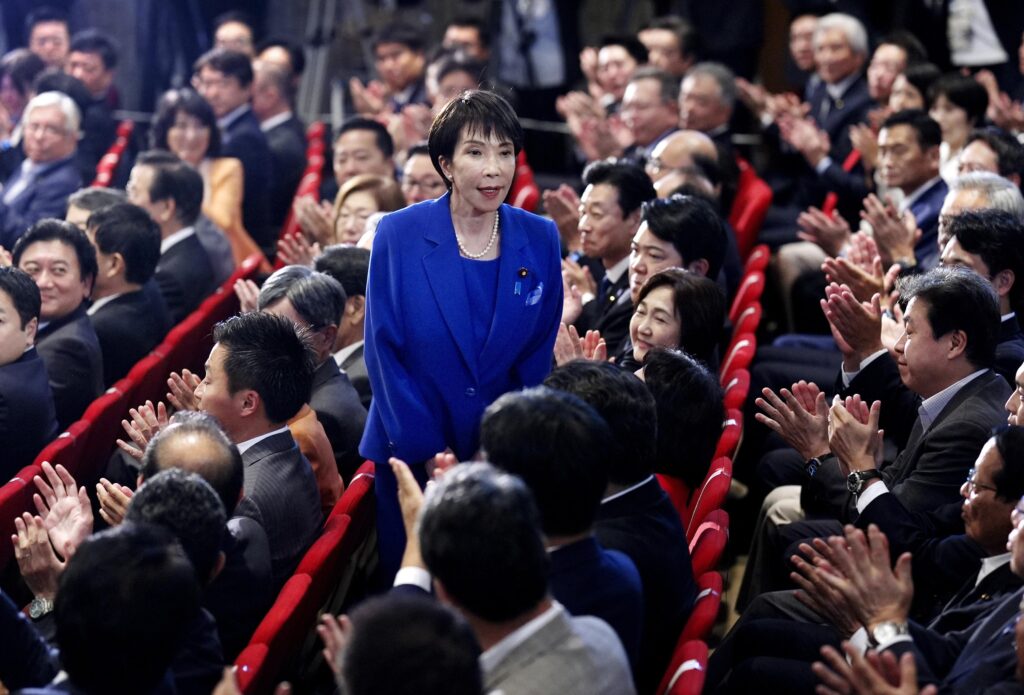
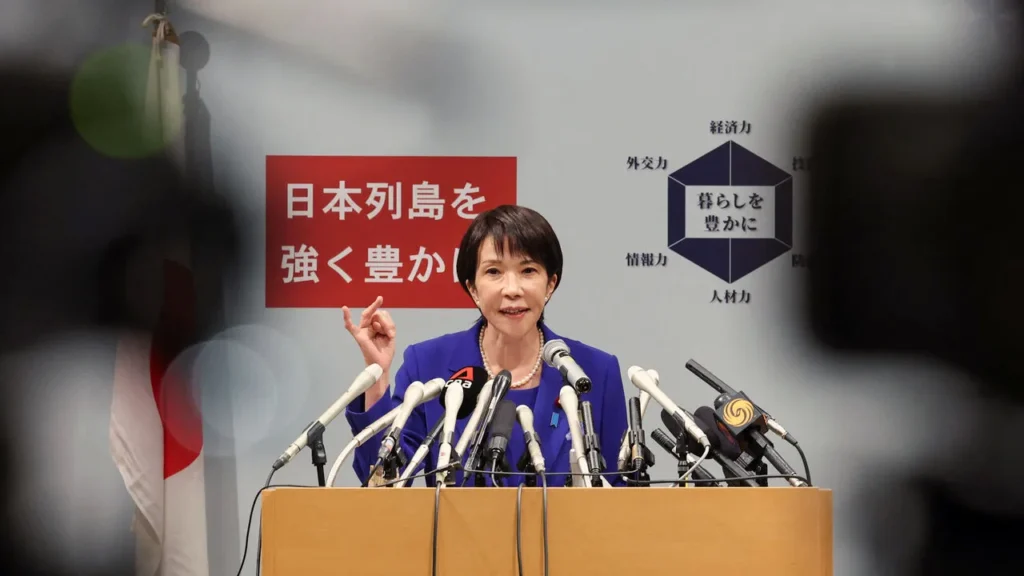
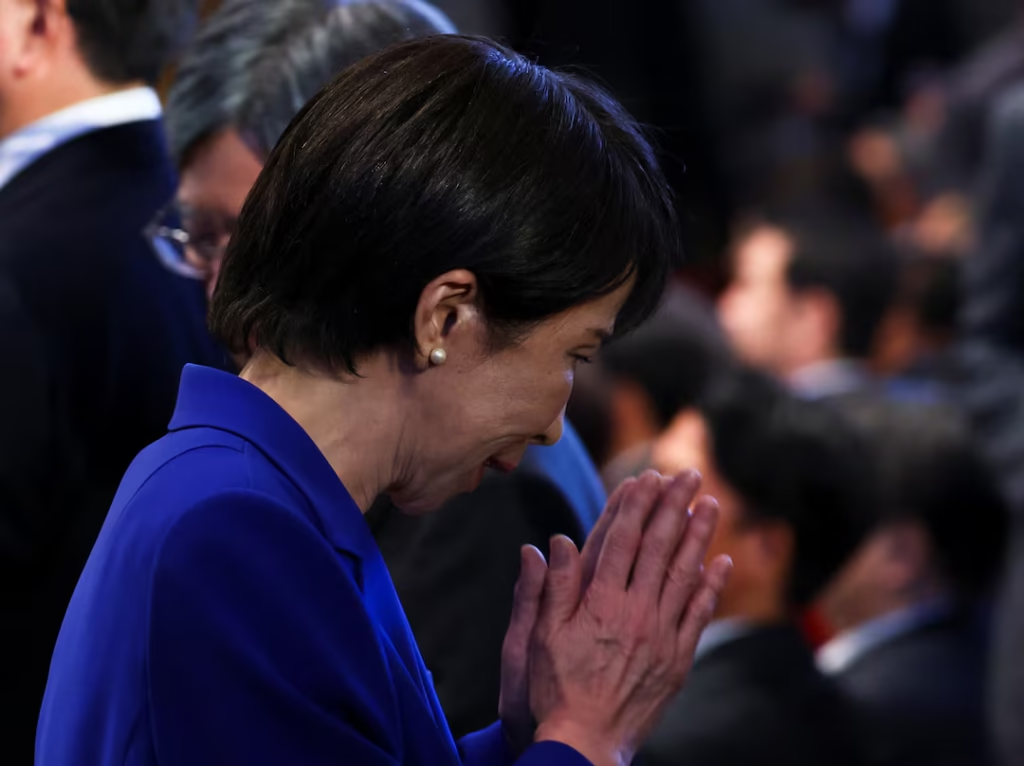
Japan has taken a historic, yet bold turn. On October 4, 2025, the Liberal Democratic Party (LDP) elected Sanae Takaichi as its new leader, positioning her to become the country’s first female prime minister. Known as one of the party’s staunchest conservatives, Takaichi’s ascendancy could mark a pivot in policy direction: more aggressive fiscal expansion, hawkish security posture, and renewed emphasis on national identity. The question now is: will she merely inherit power, or transform it?
This transition is not just symbolic. In a party and society long dominated by men, this move signals new dynamics. It also arrives at a fraught moment for Japan grappling with sluggish growth, a weak yen, ballooning debt, and rising regional tension. How Takaichi navigates these pressures could recalibrate not just Japanese policy but its strategic alignment across Asia and beyond.
Shigeru Ishiba, who had been prime minister since late 2024, found himself weakened after repeated electoral losses. In July 2025, the LDP lost control of both houses of the Diet a shock for a party that has ruled almost continuously since 1955. Faced with mounting internal discontent, Ishiba resigned on September 7, paving the way for a leadership contest.
The party’s internal fault lines between moderate reformers and a more assertive conservative faction came into sharper view. In the 2025 LDP leadership race, Takaichi and Shinjiro Koizumi emerged as front-runners in the first round, pushing a runoff that Takaichi won by 185 votes to 156.
Takaichi’s victory marks three firsts: the first female LDP leader, a shift toward the right in party policy, and a possible stabilizing force for an LDP losing public trust.
Who Is Sanae Takaichi? Profile of a Conservative Leader
Takaichi, 64, is no political novice. A longtime LDP stalwart and close ally of former Prime Minister Shinzo Abe, she has held prominent roles including Minister of Economic Security and Minister of Internal Affairs.
Her political identity is clear: nationalist, hawkish, and unapologetically conservative. She has visited the Yasukuni Shrine, emphasized constitutional revision, and opposed progressive gender reforms like separate surnames for married couples.
Yet in this campaign, she attempted to soften her image: pledging a cabinet with “Nordic-style gender balance” and signaling readiness to widen appeal beyond her core conservative base.
Her economic platform leans expansionary. She has proposed a paradigm she terms “crisis management investment”, where Japan would channel state resources into strategic sectors AI, semiconductors, defense, advanced medicine while still monitoring fiscal sustainability.
Policy Shift: From Abenomics Continuation to Fiscal Boldness
Takaichi’s agenda builds directly on Abenomics, but with bolder strokes. She criticizes recent Bank of Japan rate hikes and signals deeper fiscal intervention to jump-start growth.
She is likely to:
Increase state investment in strategic future sectors (e.g. biotechnology, defense, semiconductor supply chain).
Reassess trade deals, including renegotiation of U.S.–Japan pacts initiated under Trump-era frameworks.
Tighten immigration controls and enforce stricter entry policies, especially in reaction to local security concerns.
Push for constitutional revision, particularly around Article 9 (self-defense forces) and bolstering of Japan’s military role.
This shift may unsettle markets wary of Japan’s already high debt-to-GDP ratio (~260%), testing the bond markets and yen stability.
Regional & Global Ramifications: India, China, U.S.
For India
Strategic convergence: Takaichi’s hawkish posture toward China may align with India’s security interests opening doors for stronger cooperation in defense and maritime security.
Economic opportunity: Her push for “crisis management investments” could invite Indian firms in biotech, pharma, and semiconductors to deepen trade ties or joint ventures.
Diplomatic hedging: As Tokyo shifts right, New Delhi may act as a moderate anchor in Asia, balancing between U.S., Japan, and Russia.
Against China
Takaichi’s nationalism and security-first agenda will likely sharpen Japan’s competition with Beijing over islands, trade routes, and regional influence. Her likely strengthening of Japan’s Self-Defense Forces may provoke a strategic response from China, especially in East China Sea and Taiwan theatres.
Though ideologically more conservative, Takaichi will need to recalibrate Tokyo’s alliance with Washington. Her stance on trade renegotiation may cause friction, but her security alignment (Japan as a U.S. partner in Indo-Pacific containment) remains indispensable.
If she leans too aggressively, Tokyo could find itself squeezed between U.S. expectations and Japanese domestic interest.
Historical Comparisons & Lessons
Japan has cycled through leadership frequently in past decades what some call the “revolving-door prime ministers.”
Takaichi’s rise may break that cycle if she consolidates power. She brings a mix of ideological clarity and political stamina. Unlike former leaders who pivoted for broad appeasement, she seems set to push core beliefs forward.
But she also echoes Margaret Thatcher a rare conservative leader with both conviction and control a comparison she often cites.
Scenarios to Watch
Scenario
Likelihood
Implications
Moderate Consolidation
Medium
Takaichi tempers some far-right elements to maintain coalition (Komeito), pushing fiscal stimulus with caution.
Bold Conservative Push
Low–Medium
Aggressive defense posture, tariffs renegotiation, constitutional revision risking backlash from neighbors and markets.
Stagnant Inaction
Low
A weak coalition constrains boldness; she becomes caretaker, preserving status quo.
Markets, regional partners, and opposition will test her from day one.
Expert Voices
Yoshihiro Sato, political analyst at the Japan Institute for National Strategy, notes:
“Takaichi’s election reflects the LDP’s pivot to ideological clarity over centrism. Her leadership may stabilize internal factions but could also alienate moderate voters.”
Akiko Tanaka, research fellow at the Asia Program, say:
“Her conservative image is strong, but she’s shown pragmatism in messaging. Her success will depend on delivering growth without excessive fiscal stress.”
Conclusion: A New Chapter Conservative, Female, Ambitious
Sanae Takaichi’s ascendancy is more than a milestone. It’s a signal that Japan may be ready to chart a sharper, more assertive course. In her hands lies the balancing act: strong national vision tempered by coalition realities, fiscal boldness that won’t spook markets, and conservative ideology modernized for a global era.
For India and Asia, this is a moment to watch not just symbolically, but strategically. How Tokyo positions itself under her leadership could redefine alliances, trade flows, and regional security calculations.
If she succeeds, Takaichi may be remembered not just as Japan’s first female prime minister, but as the leader who shifted Japan from cautious center to confident conservatism.
Abhi Platia is a financial analyst and geopolitical columnist who writes on global trade, central banks, and energy markets. At GeoEconomic Times, he focuses on making complex economic and geopolitical shifts clear and relevant for readers, with insights connecting global events to India, Asia, and emerging markets.