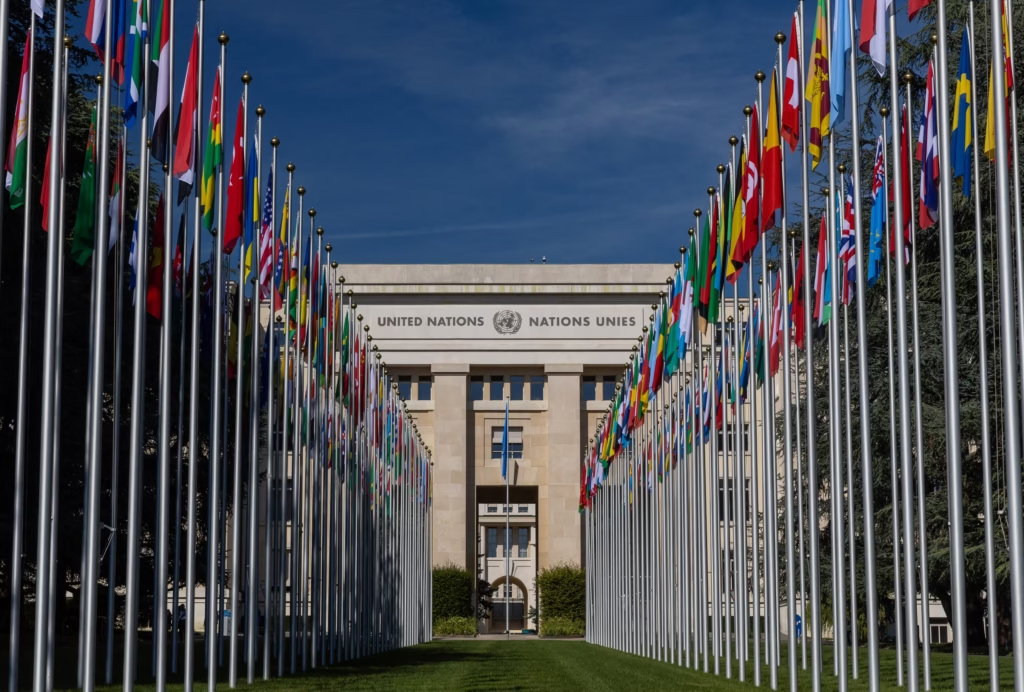
The United Nations Human Rights Council (UNHRC) session in Geneva yesterday unfolded in a way no one anticipated a heated diplomatic confrontation. What began as a dialogue about human rights quickly devolved into a fierce exchange, with Israel, Pakistan, and India hurling accusations of hypocrisy and terrorism at one another.
Israel’s Charge: “Pakistan is a State Sponsor of Terror”
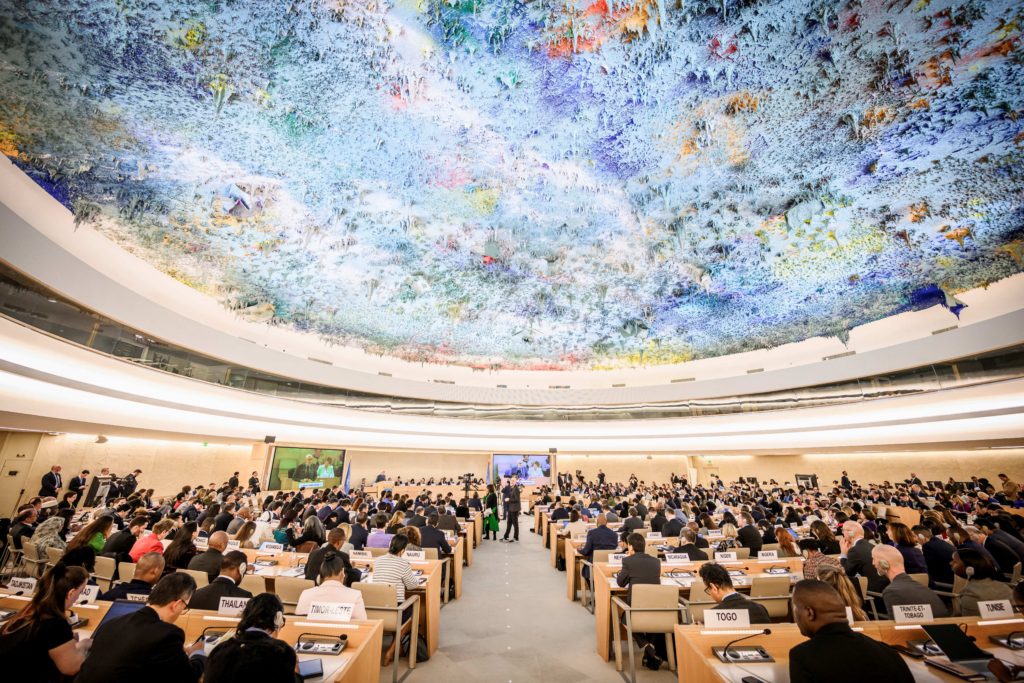
The most dramatic moment came when Hillel Neuer, human rights lawyer and director of UN Watch, took the floor. In less than five seconds, Neuer declared:
“Pakistan is another state sponsor of terror.”
His statement drew immediate protests from the Pakistani delegation. But Neuer doubled down, referencing the 2011 U.S. raid that killed Osama bin Laden in Abbottabad, inside Pakistan. He asked pointedly: if Pakistan objects to Israel’s targeted strike on Hamas leaders in Doha, then why did it harbor wanted terrorists in its own territory? (NewsonAir)
This wasn’t just an isolated jab. Israel has consistently argued that its operations against Hamas are no different from U.S. or Western counterterrorism actions. By drawing the Bin Laden comparison, Neuer highlighted what he described as Pakistan’s “double standards.”
Pakistan’s Counterattack: Accusing Israel of Violations
Pakistan’s UN envoy, Asim Iftikhar Ahmad, fired back strongly. He described Israel as a “serial violator” of international law and accused it of committing grave human rights abuses in Palestine. According to Ahmad, Israel is not a victim but rather “an occupier hiding behind the language of security.” (Anadolu Agency)
He dismissed Neuer’s accusations as false analogies and insisted that Pakistan had “suffered enormously” from terrorism itself, losing tens of thousands of lives over the past two decades. For Islamabad, Israel’s rhetoric was an attempt to deflect attention from its own controversial strikes in Gaza and beyond.
Ahmad’s words echoed Pakistan’s long-standing position: that the international community is too lenient toward Israel, while disproportionately critical of Muslim countries.
India Steps In: Taking on Switzerland and Pakistan
While Israel and Pakistan clashed, India seized the opportunity to make its presence felt. Indian diplomat Kshitij Tyagi responded sharply to remarks from Switzerland, which had raised concerns about minority rights and press freedom in India. Tyagi dismissed the Swiss criticism as “surprising, shallow, and ill-informed,” emphasizing that India is the world’s largest democracy with deep constitutional safeguards.
But Tyagi reserved his most blistering comments for Pakistan. He called Pakistan a “failed state” that has “conjured its own credibility crisis” by supporting terrorism while pretending to be a victim. Citing the presence of Osama bin Laden in Abbottabad and terror attacks like Pahalgam, Tyagi accused Pakistan of “recycling lies” at every UN session. (Times of India)
“We need no lessons from a terror sponsor … no advice from a state that has conjured its own credibility,” Tyagi declared, drawing applause from sections of the room.
Key Quotes That Defined the Clash
Hillel Neuer (Israel/UN Watch): “Pakistan is another state sponsor of terror.” (TOI)
Asim Iftikhar Ahmad (Pakistan): Israel is “a serial violator of the UN Charter and international law … an occupier … playing the victim.” (AA)
Kshitij Tyagi (India): “We need no lessons from a terror sponsor.” (Indiatimes)
Reactions Around the World
In India
Social media users celebrated Tyagi’s fiery response. Many saw it as a symbol of India asserting itself confidently in the global arena. Hashtags praising India’s “diplomatic clapback” trended on X (formerly Twitter). (Indiatimes)
In Pakistan
The mood was defensive. Commentators accused Israel and India of ganging up to delegitimize Pakistan. Local media emphasized Islamabad’s sacrifices in the global war on terror, while framing Israel as the true aggressor. (AA)
In Israel
Israeli commentators largely backed Neuer’s remarks, seeing them as a long-overdue acknowledgment of Pakistan’s alleged duplicity. By invoking the Bin Laden raid, Israel reinforced its narrative that targeted operations against militants are justified.
Why This Matters
1. Diplomatic Escalation
These speeches weren’t your average diplomatic exchanges. Israel went as far as to label Pakistan a terror sponsor, while India claimed Pakistan was a failed state. Such direct language signals a hardening of positions.
2. The Double Standards Debate
The clash brought up a bigger issue: why do some counterterror actions get defended while others face criticism? Israel’s comparison to the U.S. raid in Abbottabad highlighted this contradiction clearly.
3. Impact on Public Opinion
The heated exchanges quickly gained traction in national media. In India, it bolstered government narratives of strength; in Pakistan, it reinforced the notion of being victims.
4. Policy Consequences
Constantly labeling Pakistan as a ‘terror sponsor’ in international forums could eventually affect aid, trade, and diplomatic relations. Moreover, India’s firm response to Switzerland might indicate a more assertive approach in foreign policy.
The Human Side of the UN War of Words
Amid all the sharp rhetoric, it’s easy to forget the real stakes:
- Families in Kashmir and Pahalgam grieving after terror attacks.
- Palestinian civilians enduring bombings in Gaza.
- Pakistani citizens who have themselves been victims of extremist violence.
Behind every diplomatic insult are ordinary people who pay the highest price for these conflicts.
Looking Ahead
Evidence vs. Accusations: For global credibility, claims of terror sponsorship need to be backed with hard evidence.
Consistent Standards: If the UN condemns one state for cross-border operations, it must condemn all, to avoid charges of bias.
Dialogue Over Drama: While fiery speeches make headlines, peace demands dialogue and compromise.
Conclusion
The UNHRC session in Geneva will likely be remembered more for its dramatic confrontations than for any policy outcomes. Israel labeled Pakistan as the ‘epicenter of terror,’ while Pakistan accused Israel of global violations. India, on the other hand, silenced both Pakistan and Switzerland with sharp counterarguments.
Ultimately, these clashes show how global platforms often focus less on finding common ground and more on shaping narratives. In an already divided world, yesterday’s UN session added another chapter to the ongoing story of countries battling not just over borders, but also through words.

Abhi Platia is a financial analyst and geopolitical columnist who writes on global trade, central banks, and energy markets. At GeoEconomic Times, he focuses on making complex economic and geopolitical shifts clear and relevant for readers, with insights connecting global events to India, Asia, and emerging markets.