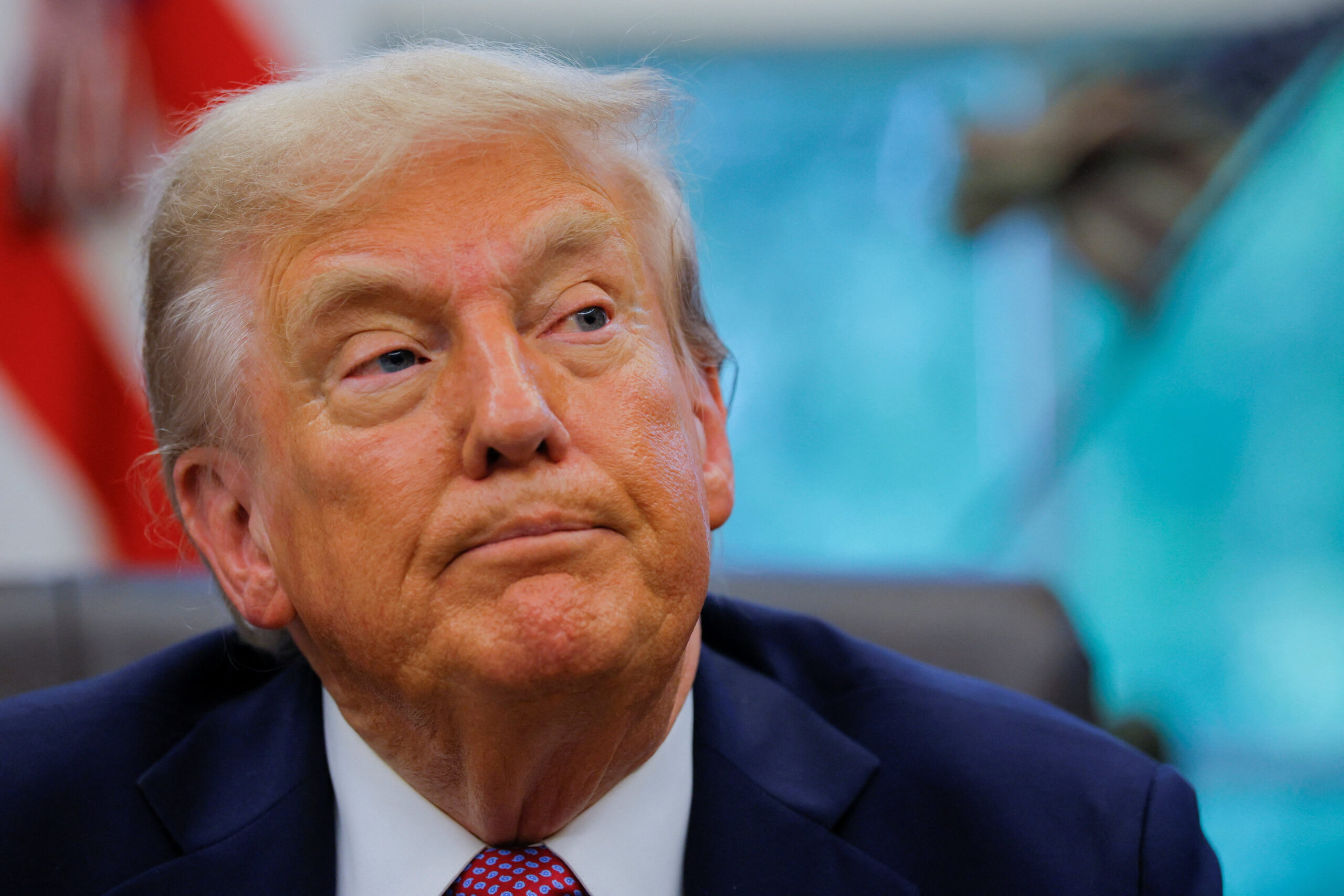
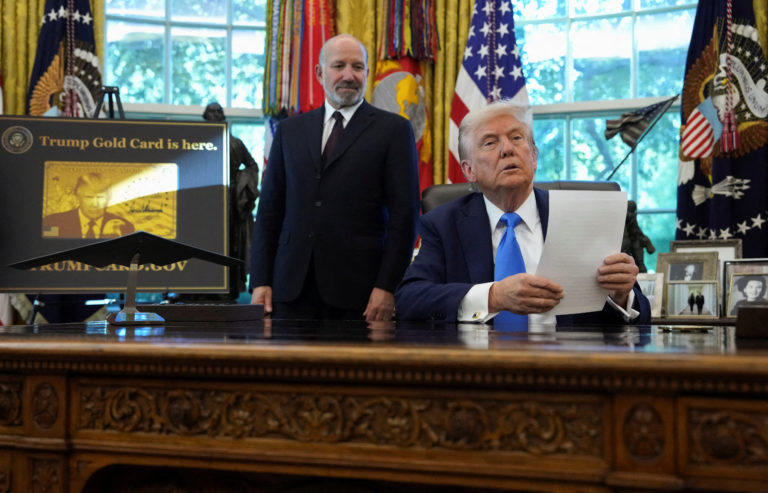
India’s GST Reform has arrived at a crucial moment, just as the country faces one of its toughest trade challenges with the United States. In mid-2025, India’s trade ties with the United States faced a serious challenge. In August, President Donald Trump announced a hefty 50% tariff on Indian goods. This move was partly in reaction to India’s ongoing imports of Russian oil and partly a continuation of Trump’s long-standing protectionist stance. The fallout was significant.
The impact is heavy. Analysts estimate India’s economy could lose $55–60 billion from these “draconian” tariffs (Economic Times). Nearly $57.7 billion worth of India’s $86.5 billion in exports to the U.S. are at risk (India Times).
Economists warn the tariffs could reduce India’s GDP by 0.6–1 percentage point. Reuters reported that FY26 growth may slow to around 5.8%, down from 6.5–6.8% earlier forecasts. Fitch’s research arm BMI expects FY27 could slip further to 5.4% (Deccan Herald).
This was no minor inconvenience it shook confidence across India’s export-driven industries, from textiles and gems to automobiles and IT services.
2. India’s Strategic Response
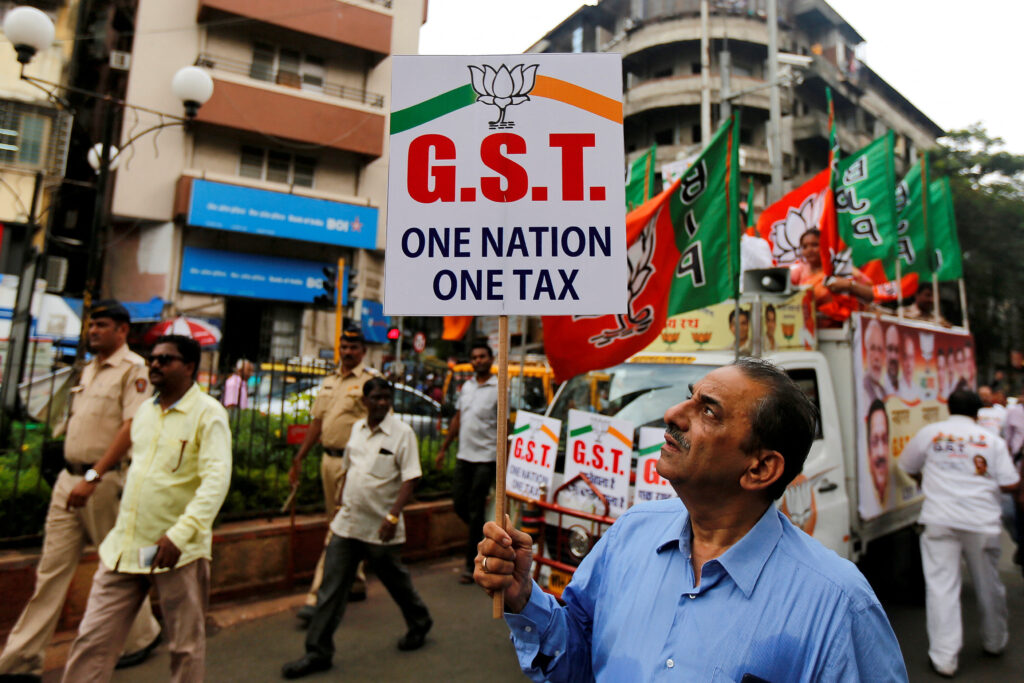
Rather than retaliating with counter-tariffs, India decided to turn its focus inward focusing on boosting domestic demand and streamlining the tax system. On September 3, 2025, the GST Council introduced the most significant tax reform since the inception of the Goods and Services Tax.
The new framework reduces the complex array of tax slabs to just two primary rates: 5% and 18%, along with a hefty 40% tax on luxury and sin goods.
“Watch the Finance Minister, Nirmala Sitharaman, explain the GST reform and its benefits in a concise press briefing:”
Key features included:
Essentials became cheaper: items like toothpaste, shampoo, and packaged foods saw a drop from 18% to 5%.
Consumer durables became more affordable: small cars, televisions, and air conditioners saw their rates cut from 28% to 18%.
Financial relief was provided by exempting life and health insurance from GST.
Luxury items faced a squeeze: high-end cars, alcohol, and tobacco now faced the 40% rate (Reuters).
Prime Minister Modi branded the reform as “wide-ranging” and a direct benefit to the common citizen’s finances (Times of India).
3. The Economics of GST Reform
Of course, these tax reductions come at a fiscal price. The government anticipates a revenue loss of around ₹48,000 crore (≈ $5.5 billion) (Reuters). However, the hope is that increased consumption will offset this loss.
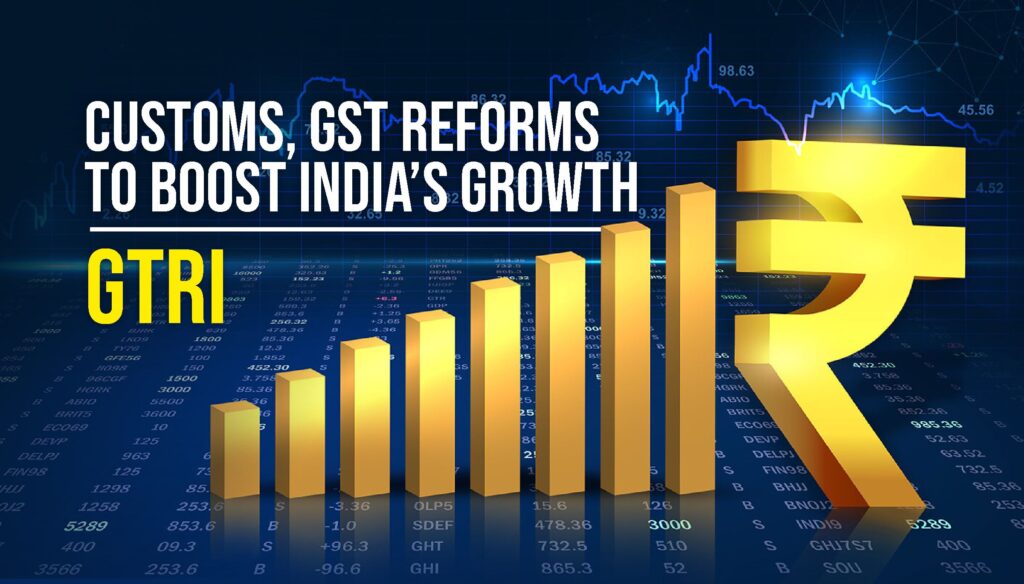
GDP implications: Analysts predict that the reform could contribute an additional 0.6% to 1.2% to GDP growth in the coming year (Livemint).
A growth rebound is expected: FY26 might witness growth bounce back to 6.5%, and FY27 could even reach 7% if demand maintains its momentum (Times of India).
Market confidence surged stocks soared, with the Sensex climbing over 700 points and Nifty exceeding 24,900 as shares in consumer goods and automobiles rallied (Economic Times).
Essentially, the government opted for short-term tax sacrifices in exchange for long-term economic vitality.
4. Sector-by-Sector Impact
a) Autos: With the GST on small cars slashed from 28% to 18%, demand is projected to skyrocket, benefiting companies like Maruti Suzuki and Tata Motors.
b) FMCG (Fast-Moving Consumer Goods): Everyday essentials such as soaps and toothpaste are now more affordable. Major players like Hindustan Unilever and Nestlé India are likely to experience increased sales volumes.
c) Insurance: The removal of GST on life and health insurance means lower premiums, encouraging middle-class families to secure more coverage. This will be advantageous for private insurers like HDFC Life and SBI Life.
d) Luxury Goods: The 40% tax slab ensures that luxury items continue to be heavily taxed, maintaining a balance between affordability for the general public and fair revenue collection.
e) Exports: While GST reforms don’t directly address tariff issues, improved domestic demand could provide exporters some relief, with new markets in Europe and Asia helping to mitigate risks.
5. Balancing the Scales: Tariff Loss vs GST Gain
Metric
U.S. Tariffs Impact
GST Reform Impact
Dollar Loss
$55–60 billion exports hit
Govt revenue loss $5.5 billion
GDP Effect
–0.6% to –1.0% growth
+0.6% to +1.2% growth
FY26 GDP Forecast
~5.8% (with tariffs)
~6.5% (with GST reforms)
FY27 GDP Forecast
~5.4%
Potential ~7.0%
India may suffer export losses, but the surge in domestic consumption is set to bridge that gap.
6. The Human Side
For Indian families, the benefits are tangible. A household purchasing groceries, toiletries, and insurance will experience genuine savings each month. Middle-class parents looking to buy a small car for Diwali will find prices significantly lower.
Small shopkeepers will benefit from the simplified two-slab GST, easing compliance burdens. With reduced paperwork and lower rates, they can better compete with larger retail chains.
For young workers, the rising demand could lead to new job opportunities in manufacturing, sales, and services helping to cushion the impact of layoffs in export sectors.
7. Global Ripples: U.S., Europe, and Free Trade Pressure
India’s reforms are also reshaping the international dialogue. By boosting its own market, India demonstrates its strength against U.S. tariffs.
In Europe, India is intensifying trade discussions with the EU, particularly focusing on Germany. Recently, External Affairs Minister S. Jaishankar highlighted that changes in the global landscape make Europe an increasingly attractive ally (Livemint).
As for the United States, there’s a twist: U.S. companies might start pushing their own government to establish a Free Trade Agreement (FTA) with India. Why? Because a market of 1.4 billion people, with growing disposable incomes, is too appealing to let European, Japanese, and Korean competitors dominate. Companies like Apple, Ford, and Walmart may eventually urge Washington to come to the negotiating table.
Looking ahead
India’s decision to forgo retaliatory tariffs and focus on internal reforms serves as a powerful lesson in economic resilience. While tariffs can cost billions, reforms have the potential to create even greater demand.
The cut in GST is more than just a minor adjustment; it symbolizes confidence. It conveys that India will continue to progress, regardless of external challenges. It reassures that our domestic market is robust enough to see us through tough times.
In Conclusion
the tariffs imposed by Trump were designed to harm India, yet they may have ignited a reform movement that ultimately strengthens the nation. True, the economy might face a loss of $55–60 billion in exports and experience a growth dip of up to 1%. However, the GST reforms are projected to contribute back 0.6–1.2% to GDP, restoring growth to about 6.5% in FY26 and possibly reaching 7% by FY27.
For the average Indian, these changes won’t just be numbers on a page they’ll be reflected in lower grocery prices, more affordable cars, and cheaper insurance. For businesses, it translates to increased sales and simplified tax processes. On a global scale, it signifies that India’s market is more accessible than ever.
In the long run, American companies might find themselves questioning their government: why not pursue a fair trade agreement with India? If they don’t, companies in Europe and Asia will readily step in to seize the opportunity.
India turned an external shock into an opportunity and that’s what smart, resilient economies do.
Abhi Platia is a financial analyst and geopolitical columnist who writes on global trade, central banks, and energy markets. At GeoEconomic Times, he focuses on making complex economic and geopolitical shifts clear and relevant for readers, with insights connecting global events to India, Asia, and emerging markets.

















great