


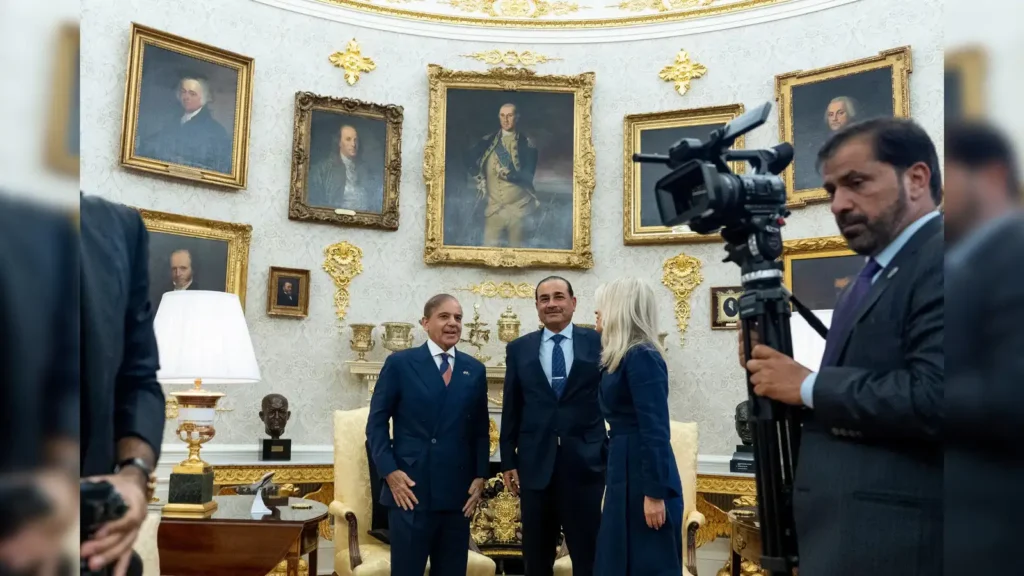
In a move that has set off a wave of concern across South Asia, the United States is reportedly preparing to supply Pakistan with AIM-120 Advanced Medium-Range Air-to-Air Missiles (AMRAAMs) compatible with Pakistan’s F-16 fleet. While the deal is framed as part of renewed defense cooperation, it has revived questions about the strategic balance in the region and whether India might be the implicit focus of this new alignment.
This development comes amid shifting global power equations, where the U.S. appears to be recalibrating its approach toward both Islamabad and New Delhi. The implications go far beyond defense hardware, touching upon deterrence, geopolitics, and regional stability.
The Deal at a Glance
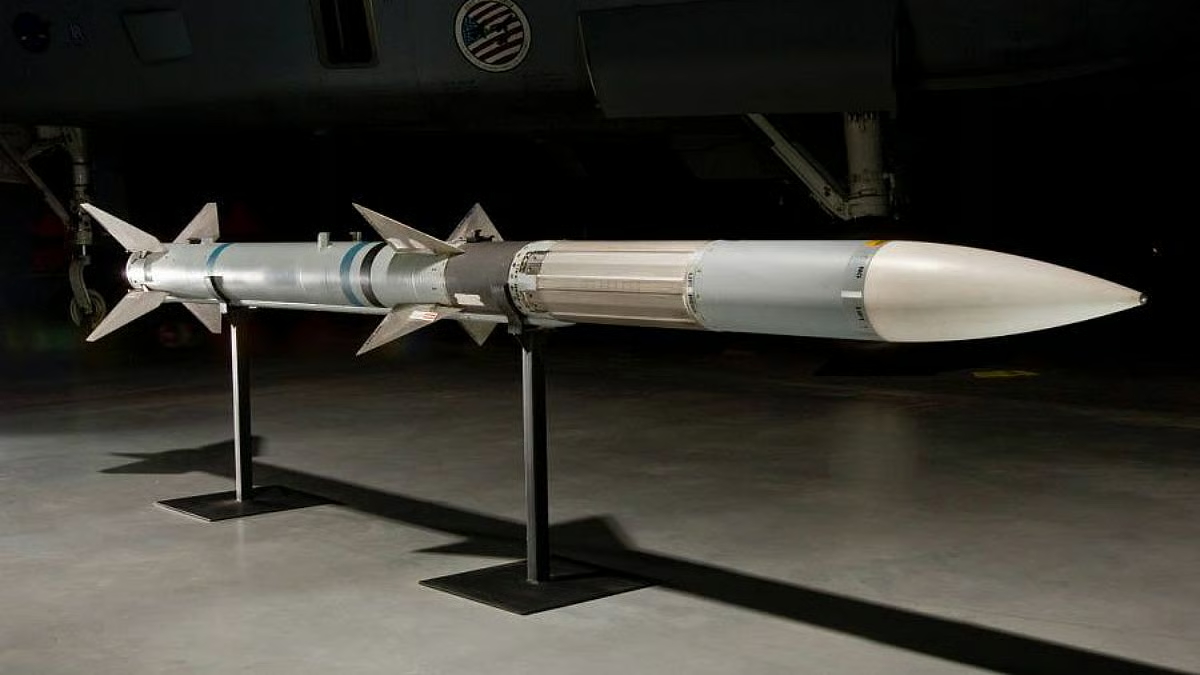
According to reports, the U.S. Department of Defense has added Pakistan as a buyer for AIM-120 AMRAAM’s C8 and D3 variants through a contract modification. Raytheon, the missile’s manufacturer, is now authorized to produce and deliver these systems through May 2030. The entire package, spanning multiple nations, is estimated at more than 2.5 billion dollars.
For Pakistan, the AMRAAM deal revives its decades-long reliance on U.S.-made weapons. These missiles, known for their precision and range, can significantly enhance the operational effectiveness of Pakistan’s F-16 fighter jets.

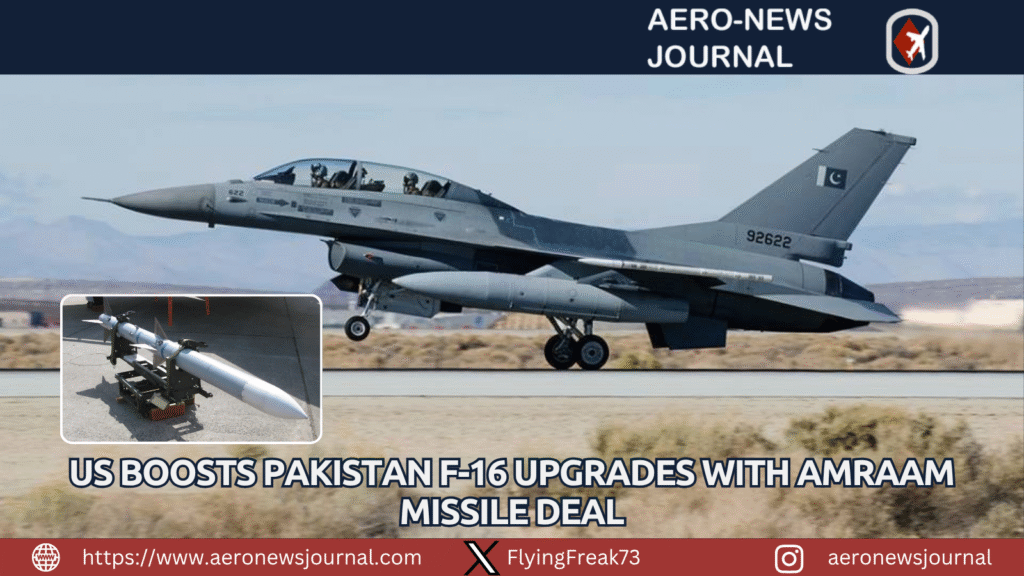
For Washington, this sale is not just about weapons. It signals a re-engagement with Islamabad after several years of limited cooperation and a reminder that the U.S. remains a relevant player in South Asia’s security dynamics.
Historical Context and Patterns
U.S.-Pakistan defense ties have always been cyclical, rising and falling with shifting strategic interests.
During the Cold War, Washington supplied Islamabad with weapons to counter Soviet influence in Afghanistan. In the early 2000s, post-9/11 counterterrorism cooperation brought another wave of support. However, these ties later soured as the U.S. drew closer to India, especially through the Indo-U.S. Civil Nuclear Deal and subsequent defense pacts.
The return of U.S. weapons sales to Pakistan, therefore, carries historical echoes. It recalls the 1980s and early 2000s when Washington balanced its partnerships in South Asia, often using arms deals as a diplomatic tool.
Is India the Real Target?
The question that dominates policy circles is whether this new deal indirectly targets India’s growing regional dominance.
Upgrading Pakistan’s Air Defense
India’s air superiority, anchored by Rafale, Mirage 2000, and Su-30MKI aircraft, has long given New Delhi the edge. The addition of AIM-120s provides Pakistan with the means to challenge this balance. The missiles can engage targets well beyond visual range, improving Pakistan’s deterrence capabilities and complicating India’s aerial planning.
A Symbolic Message
Beyond military capability, arms deals serve as strategic signals. By rearming Pakistan, the U.S. sends a subtle message that it still holds sway over both major South Asian powers. This signal also keeps Washington’s diplomatic leverage intact, especially as India deepens its ties with Russia for defense and with the Gulf for energy security.
Balancing Relationships
For the U.S., maintaining some level of engagement with Pakistan is pragmatic. It prevents Islamabad from tilting too far toward China, especially given the deepening Beijing-Islamabad economic and defense links through the China-Pakistan Economic Corridor (CPEC).
At the same time, Washington must reassure India that this deal does not signify a reversal of their growing strategic partnership.
Implications for India and the Region

The immediate concern for India lies in the enhanced capability of Pakistan’s F-16 fleet. These upgrades could improve Pakistan’s defensive and offensive postures along the western border and potentially increase risks during aerial confrontations, as seen during the 2019 Balakot episode.
For India
India will likely respond by further modernizing its air force and investing in next-generation platforms. Programs such as the indigenous Tejas Mk2, AMCA stealth fighter, and the S-400 air defense system will gain renewed urgency. The Defense Ministry may also seek deeper collaboration with France, the U.S., and Israel to expand missile and electronic warfare capabilities.
For Pakistan
The deal boosts Pakistan’s morale at a time of economic hardship and political uncertainty. It allows Islamabad to signal that it retains strategic relevance for Washington. However, it also increases dependency on U.S. technology and exposes Pakistan to future conditionalities, such as usage restrictions or inspection protocols.
For the U.S.
The move allows Washington to maintain a balancing act between two nuclear-armed rivals. It strengthens its influence in Pakistan while reassuring India through parallel defense initiatives such as technology-sharing under the Quad framework.
For the Region
The risk of an arms race looms large. With both countries modernizing their arsenals, miscalculations during border skirmishes could escalate quickly. The U.S. may find itself in a difficult position should another crisis like Balakot or Pulwama erupt.
Expert Perspectives
According to defense analyst Vikram Singh, “Including Pakistan in the AMRAAM supply chain restores a degree of deterrence symmetry in the region. However, it also raises the risk of tactical misjudgment during high-tension episodes.”
Islamabad-based scholar Dr. Ayesha Malik argues that “the deal is not about preparing for a direct conflict with India but about retaining diplomatic leverage and deterrence credibility in a volatile neighborhood.”
Former U.S. diplomat Robert Caldwell believes the move represents “Washington’s effort to ensure Pakistan remains responsive to Western influence rather than drifting completely into China’s orbit.”

Possible Scenarios Ahead
| Scenario | Likelihood | Key Implications |
|---|---|---|
| Deterrence Rebalancing | High | Pakistan feels more secure; India enhances its countermeasures; tensions managed but at higher alert levels. |
| Escalation Risk | Moderate | Miscommunication or overconfidence during standoffs could trigger limited air clashes. |
| U.S. Conditional Oversight | High | Washington imposes strict guidelines on missile deployment to prevent misuse. |
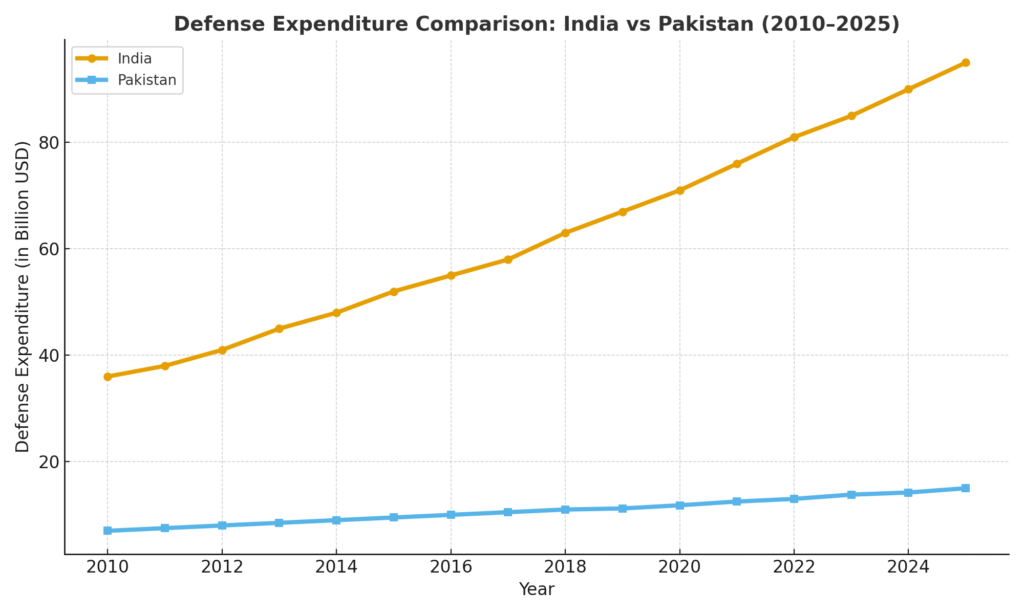
| Regional Arms Competition | Moderate | Both sides increase purchases, raising defense expenditures without improving long-term security. |
The most probable outcome is a cautious equilibrium, where both India and Pakistan modernize while avoiding open confrontation.
Strategic Consequences and Long-Term Outlook
In the long term, this deal underscores a familiar truth: arms sales are as much about politics as they are about security. The U.S. is not simply arming Pakistan; it is preserving influence in a region where China and Russia are expanding theirs.
For India, the challenge is two fold to maintain its defense edge while preserving diplomatic flexibility. New Delhi may deepen its partnerships with Europe and the U.S., but it will also seek to diversify suppliers to prevent dependence.
For Pakistan, the transaction is a reminder that global powers continue to see it as a strategic asset, albeit a conditional one.
Ultimately, whether this arms transfer stabilizes or destabilizes South Asia will depend on how responsibly both neighbors manage deterrence. A fine line separates balance from brinkmanship, and the region has walked that line before.
Conclusion
The proposed U.S. missile supply to Pakistan is not an isolated event but part of a broader strategic recalibration. It reflects Washington’s attempt to retain regional influence, Islamabad’s pursuit of parity, and New Delhi’s challenge of maintaining strategic superiority.
While the U.S. calls this a defensive transaction, the regional ripple effects are anything but neutral. The deal reshapes perceptions of deterrence, diplomacy, and dependency in South Asia. For India, the signal is unmistakable: defense preparedness and diplomatic agility must go hand in hand in an era where alliances are fluid and power is increasingly transactional.


Abhi Platia is a financial analyst and geopolitical columnist who writes on global trade, central banks, and energy markets. At GeoEconomic Times, he focuses on making complex economic and geopolitical shifts clear and relevant for readers, with insights connecting global events to India, Asia, and emerging markets.