


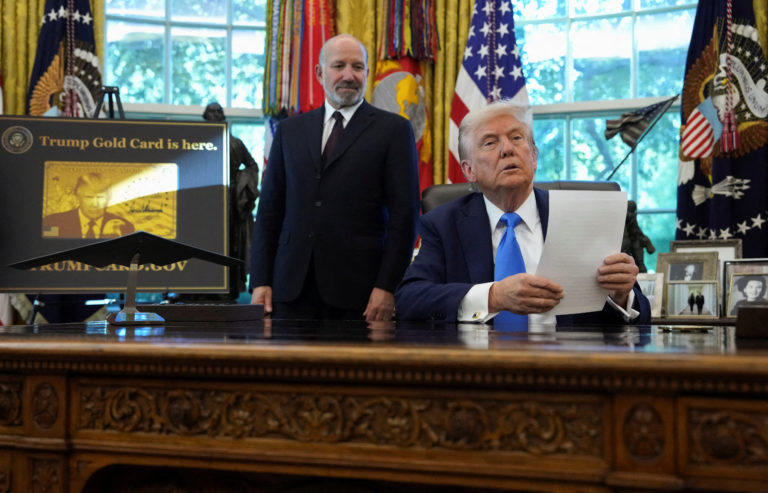
For years, the U.S. H-1B visa program has been a launchpad for thousands of Indian tech workers and graduates offering opportunity, stability, and a pathway to innovation. But on 19 September 2025, the Trump administration signed a proclamation that may shatter that pathway: companies sponsoring new H-1B visa holders now must pay a $100,000 fee. The cost, once a few hundred or a few thousand dollars administrative fee, has spiked nearly 50-100x.
India, which accounted for over 70% of approved H-1B visas last year, stands to lose the most under this change. While the U.S. frames this as protecting American jobs, many Indians are asking: What about our dreams? What about the benefits we have given? This article digs into what India gained from H-1Bs before, what it now stands to lose, who will be hurt the worst, and what this means for the future of global tech and immigrant talent flows.
What India Benefited From Under the Old H-1B System
Before this fee hike, the H-1B program was more than just a visa; it was a bridge between two innovation economies. Some of the biggest benefits for India:

- Massive Employment & Remittances
Tens of thousands of Indian professionals software developers, engineers, researchers worked in the U.S. under H-1B visas. Their incomes abroad translated into remittances back to India, supporting families, real estate, education, and boosting India’s domestic consumption. - Skill & Knowledge Flow
Working in the U.S. exposed Indian tech workers to cutting-edge tools, advanced research, high standards, collaboration with global teams. Many of them later contributed to startups in India or helped Indian firms scale by adopting best practices. - Global Reputation & Soft Power
Indian talent became synonymous with tech excellence. Leading U.S. firms like Microsoft, Amazon, Google, and many others hired heavily from Indian colleges. India’s universities and graduates gained prestige, drawing investment, partnerships, and brain circulation that worked both ways. - Corporate Collaboration and Outsourcing Growth
Indian IT firms Tata Consultancy Services, Infosys, Wipro, Cognizant grew rapidly in part because the U.S. H-1B model allowed them to place staff in the U.S., manage cross-border work, and reinforce India’s role in global tech supply chains.
In short, the H-1B regime wasn’t just about visas; it was a key ingredient in India’s global rise in technology, innovation, and middle-class prosperity.
What Trump’s $100,000 Fee Change Actually Says
Here’s what the new policy is, what it applies to, and why it’s causing heartburn in India’s tech ecosystem.

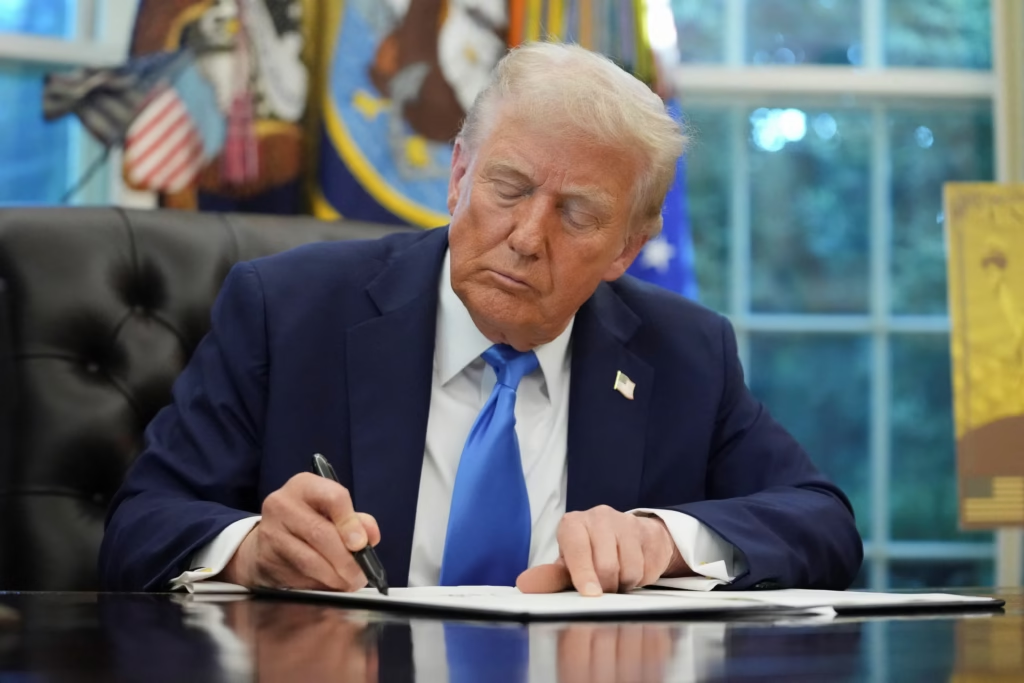
- Fee Amount & Applicability: The fee is $100,000, to be paid by companies sponsoring new H-1B applicants. Existing H-1B holders, renewals, or those already inside the U.S. are NOT required to pay. (Reuters)
- Purpose Given By U.S. Government: The stated aim is to “prioritize American workers,” reduce misuse of the visa program, and force companies to weigh whether foreign high-skilled labor is worth the steep cost. Commerce Secretary Howard Lutnick said that this would discourage relying on foreign workers for mid-level and lower wage roles. (Washington Post)
- Timing & Uncertainty: Implementation kicks in almost immediately for new applicants. There has been confusion over whether “annual” applies or if it’s a one-time fee. The White House clarified that current visa holders are exempt. Still, business continuity, travel plans, and renewals are being surveilled with anxiety. (Times of India)
How This Hurts India: On the Ground Impacts
India benefits (as described above) were real; now the pain points are many:
- Indian Tech Workers & Families Disrupted
Indians make up roughly 71–72% of H-1B visa holders. With such a high proportion, many families are now scrambling to understand what happens if their employer doesn’t sponsor under the new fee or if roles they held under the previous cost structure disappear. Some visa holders outside the U.S. now fear they won’t be able to re-enter unless their employer has paid the new fee. (India Today) - IT Firms May Pass Costs or Pull Back
Companies in India that do a lot of work for U.S. firms face pressure on contracts. If they sponsor people for U.S. work, the $100,000 fee adds significantly to project costs. Some clients may demand cheaper alternatives or move work to other countries with lower visa costs, such as Eastern Europe, Southeast Asia, or Latin America. Indian IT players will have fewer incentives to place engineers in the U.S. and may do more remote or offshore work instead. - Impact on Startups and Mid-Sized Businesses
Large tech giants might absorb the cost, but startups and smaller firms cannot. In India, many coding startups, R&D labs, or research collaborations with U.S. partners may suffer. If the cost is passed on, product prices, salaries, or hiring practices may shift toward reducing reliance on U.S. placements. - “Brain Gain” or Reverse Migration?
Some Indian experts believe this could push talented professionals to either stay in India or return. Former NITI Aayog CEO Amitabh Kant noted that while the policy is harsh, it might “turbocharge India’s technological sector” by bringing back talent and letting them build India’s innovation capacity at home. (Times of India) - Family & Social Hardships
Many Indian H-1B workers maintain families in and out of the U.S. Visa challenges have consequences like travel restrictions, inability to visit sick relatives, or disruptions for children’s schooling. India’s government has warned the U.S. that the policy may disrupt families. (Reuters)
Why More Than 70% Benefit to India Before Makes This Harder
Because India got so much out of the older system, the sudden fee hike feels especially harsh:
- Historical dominance: In recent years, Indians accounted for ~70%+ of approved H-1Bs. That means Indian professionals were deeply embedded in U.S. tech, academic, medical, and research sectors. The “benefits” described above weren’t marginal they were fundamental for many Indian families and companies.
- Economic interdependence: Indian IT firms depended on H-1B placements for prestige, billing rates, employee growth, and leadership training. Professionals often used U.S. exposure to return and found senior roles in Indian multinationals, exporting knowledge back home.
- Talent pipeline: India’s young graduates (engineers, CS, STEM) often looked to U.S. opportunities via H-1B as a stepping stone. Scholarships, internships, jobs abroad all tied into that system. Losing easy access changes career calculations.
The U.S. Side: What’s the Gain And Are Promise and Reality Diverging?
To provide balance, here’s what the U.S. government believes it gains and some checks to those beliefs.
Perceived benefits Trump admin cites:
- Protect American workers from wage suppression and alleged underbidding by foreign skilled labor.
- Reduce abuse and overuse of the H-1B system by companies using it for cheap labor rather than high skill.
- Encourage companies to invest more in domestic talent (U.S. graduates, STEM fields).
Potential downsides & contradictions:
- Tech sector resistance: Many U.S. tech giants rely heavily on foreign talent for roles that are hard to fill domestically. Reducing that pipeline could slow innovation, delay product dev timelines, and embolden outsourcing back to home countries.
- Higher costs for businesses: A $100,000 additional fee per employee is high. Costs may be passed to consumers, or companies may shrink operations, hire fewer foreign workers, or move jobs abroad.
- Risk of legal challenges: Some experts believe this kind of fee hike may exceed what the executive branch can impose under current law, especially when Congress sets visa categories. Lawsuits or court injunctions seem likely. (Washington Post)
- Geopolitical fallout: India has expressed concern that this policy strains U.S.-India relations, especially following recent trade tensions. The benefit to the U.S. in terms of “American first jobs” may be offset by loss of trust, collaborative opportunities, and global soft power.
Voices & Reactions: Interviews and Commentary
To humanize the impact, here are voices from people and experts:

- Indian Tech Worker (Delhi → Seattle)
“My company wants me to come back under H-1B next month. Now I’m worried they can’t afford the $100,000 fee. If they don’t, I’ll lose the job offer. Everything I planned children’s education, housing hinges on this.” - Startup Founder (Bengaluru)
“We’ve built collaboration with U.S. firms, offering talent, delivering modules remotely. This fee means we may lose those contracts. Clients will ask if cheaper alternatives exist. India may gain some work, yes, but we lose prestige and exposure.” - Former Policy Advisor (India/U.S.)
“When India got 70% of H-1Bs, the benefits were visible: immigration networks, remittances, leadership roles. Now, the sudden cost change feels like pulling the rug. If handled badly, it could reverse decades of positive mobility.” - U.S. Tech Executive
“For firms, paying $100,000 for every foreign skilled worker isn’t a small tax. It changes headcount forecasts, internal compensation structures. U.S. software houses may demand higher output from fewer people or shift work elsewhere.”
Possible Paths Forward & What India Should Do
To mitigate harm, adapt, and possibly turn this into opportunity:
- Advocacy & Diplomacy
India should engage the U.S. government, industry bodies, and legal channels to seek exceptions, gradual phase-ins, or waivers for certain categories (e.g. health, startup, critical R&D). - Strengthening Domestic Innovation Ecosystem
Invest more in Indian higher education, startup incubation, R&D labs, so returning diaspora can find meaningful work and build local product innovation instead of just service/export roles. - Alternative Global Pathways
With U.S. doors harder to open, India and Indian professionals may seek more attractive immigration/visa options in Canada, Australia, Europe, UAE, or places recruiting tech talent aggressively. - Upskilling & Specialization
Indian workers may need to specialize in high-end, very niche fields where U.S. firms can’t bypass needing their unique expertise even with such high fees. Think: AI, quantum computing, advanced biotech. - Start-up & Company Strategy Adjustments
Indian IT firms might shift more toward remote work models, fewer physical placements in the U.S., more alliances, setting up more development centers in India rather than sending staff abroad.
Conclusion: Is It a Collapse or Shift?
What Trump’s new $100,000 H-1B fee does is force a reckoning. For years, India reaped the rewards of a system that allowed its tech professionals to go to the U.S., gain experience, earn remittances, and build connections. That system underpinned startups, careers, hopes.
Now, the cost change threatens to reverse much of that not overnight, but over time. Many Indians will find opportunities shrinking. Big firms will adapt; some will absorb cost, others will move. But for smaller individuals, families, and regional centers, the pain will be real.
Still, there’s a potential silver lining: this might force India to lean even harder into its own innovation, to build local ecosystems that are less dependent on foreign visas. If managed well, India could emerge more self-reliant and competitive.
But it’s a gamble. High stakes. And as one Indian tech worker said: “For 20 years, the door to the American Dream was open for us. Now it feels like the wall has moved.”


Abhi Platia is a financial analyst and geopolitical columnist who writes on global trade, central banks, and energy markets. At GeoEconomic Times, he focuses on making complex economic and geopolitical shifts clear and relevant for readers, with insights connecting global events to India, Asia, and emerging markets.