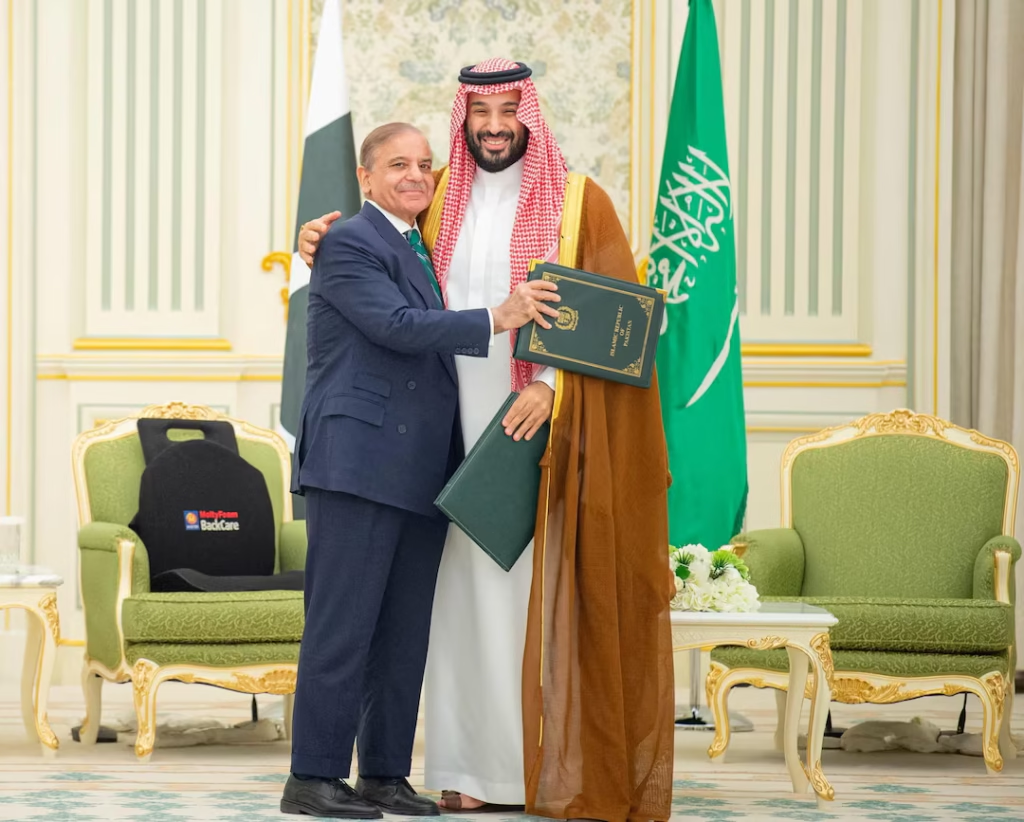
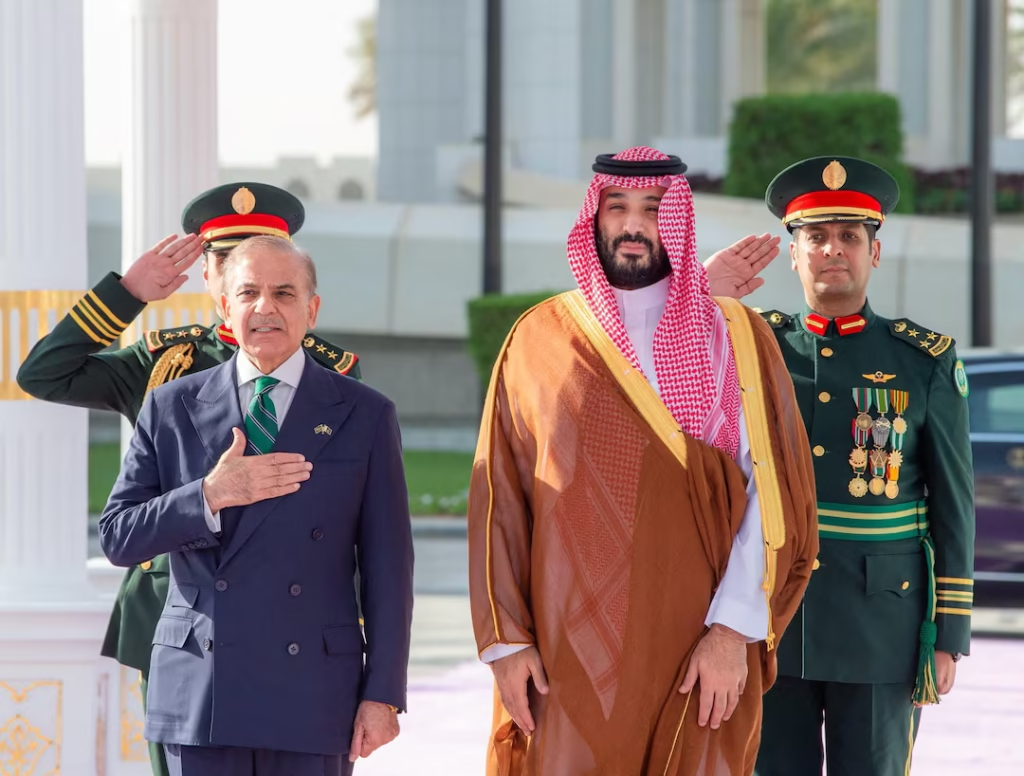
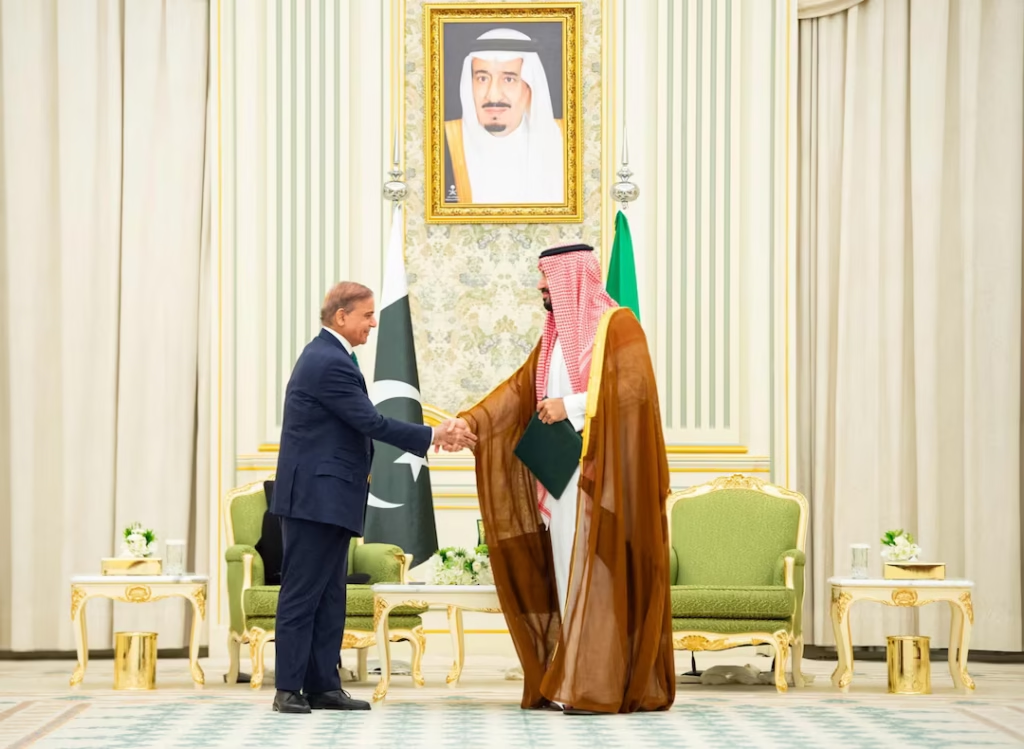
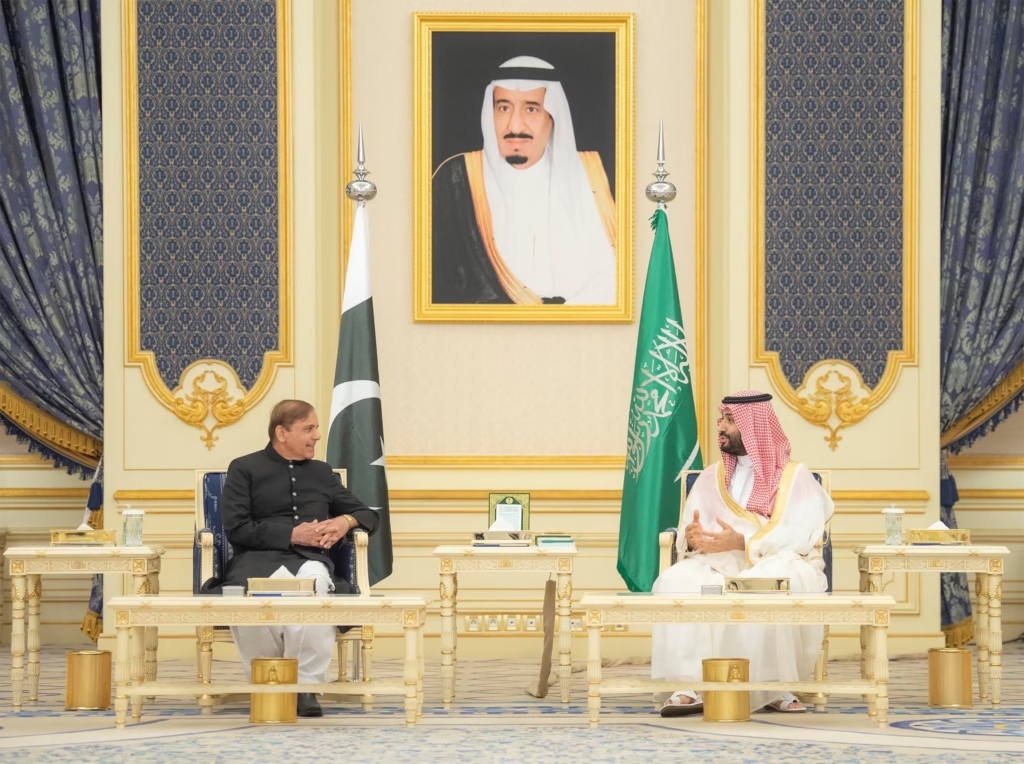
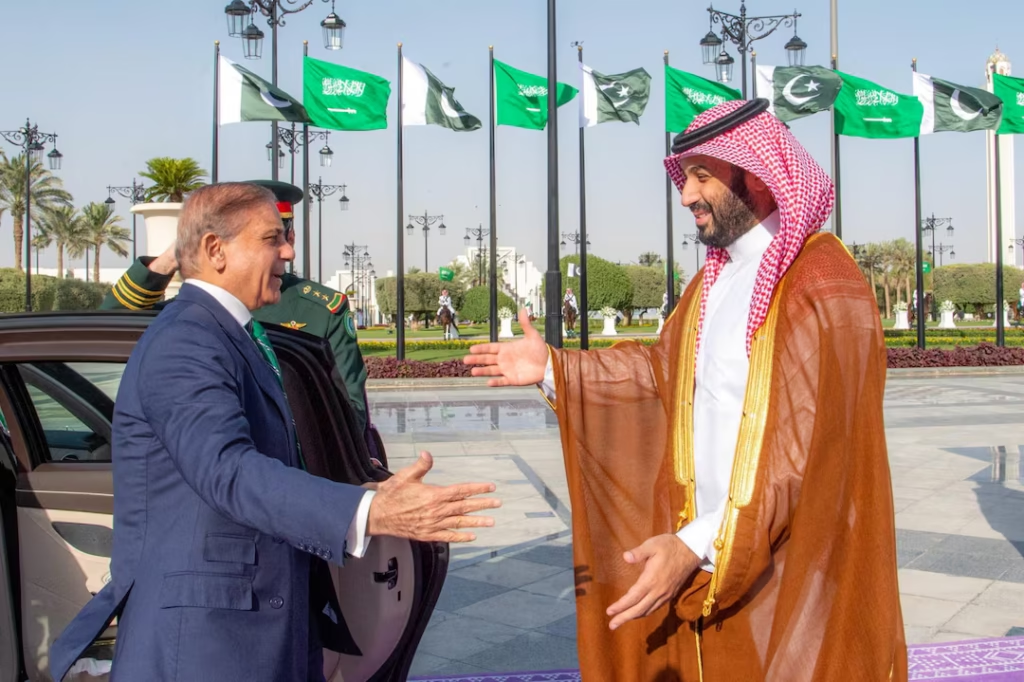
The Saudi Arabia Pakistan defence pact, signed on September 17, 2025, is being hailed as a turning point in the strategic landscape of the Middle East and South Asia. The agreement, which pledges a mutual defence commitment, means that an attack on one country will be considered an attack on both. This pact not only reflects deepening ties between Riyadh and Islamabad but also has profound implications for India, Iran, the United States, and the broader Muslim world.
According to Al Jazeera, the deal was signed in Riyadh and described by both nations as a “historic step towards ensuring collective security.” Pakistan, a nuclear-armed state with a formidable military, brings significant deterrence value, while Saudi Arabia, the largest Arab economy and a central power in the Gulf, provides strategic depth and vast financial resources.
The Saudi Arabia Pakistan defence pact outlines that both countries will respond jointly to any external aggression. This clause is reminiscent of NATO’s Article 5 and is designed to reassure both Riyadh and Islamabad that they will not stand alone in times of crisis.
As reported by Reuters, Saudi officials hinted that one driver of this pact was a growing sense of doubt about U.S. reliability in the region. Over the past decade, U.S. foreign policy has shown signs of strategic recalibration, with Washington increasingly focused on Asia-Pacific competition with China rather than Middle Eastern security guarantees. For Riyadh, strengthening ties with Islamabad provides an alternative shield.
For Pakistan, the pact secures not only military cooperation but also promises economic relief. Riyadh has long been a key financial backer for Islamabad, offering oil on deferred payments, loans, and investments. Linking defence to economics strengthens the interdependence of the two states.
A Step Toward an “Islamic NATO”?
Observers argue that the Saudi Arabia Pakistan defence pact could be the first step toward a broader Islamic defence alliance. Pakistan already has deep military ties with Gulf states, with thousands of Pakistani officers and troops serving in Saudi Arabia, the UAE, and Bahrain.
The former Pakistani army chief, General Raheel Sharif, even led the Islamic Military Counter Terrorism Coalition (IMCTC), a Saudi-backed alliance formed in 2015. However, the IMCTC was more symbolic than operational. Now, with this formal mutual defence treaty, the foundation for a true military bloc in the Muslim world appears stronger.
As AP News highlighted, the agreement treats an attack on one country as an attack on both a clause that could transform the security dynamics of the Middle East.
Implications for India
For India, this pact introduces new uncertainties. New Delhi has traditionally enjoyed cordial relations with Riyadh, especially on trade and energy. India imports significant amounts of crude oil from Saudi Arabia and hosts a large diaspora working in the Kingdom.
However, Pakistan is India’s archrival, and the idea of Riyadh aligning militarily with Islamabad could complicate the balance. Analysts in India Today have speculated whether Saudi Arabia would intervene militarily if India and Pakistan went to war again. While direct Saudi involvement in South Asian conflicts seems unlikely, the psychological effect of this alliance could embolden Pakistan.
Impact on Iran and Regional Rivalries
Iran is perhaps the most concerned neighbor after this announcement. Tehran and Riyadh only recently restored diplomatic relations after years of hostility, brokered by China in 2023. Yet, Iran’s rivalry with Saudi Arabia remains deeply rooted in sectarian divides, proxy conflicts, and geopolitical competition.
The Saudi Arabia Pakistan defence pact could be seen in Tehran as an effort to encircle Iran with hostile Sunni powers. Pakistan has historically tried to balance relations between Riyadh and Tehran, but this defence treaty may tilt Islamabad decisively toward the Saudi camp.
This shift could have ripple effects in Yemen, Syria, and Iraq, where Saudi and Iranian interests collide.
The U.S. and China Factor
Washington has traditionally been the security guarantor for Saudi Arabia, but strained ties especially after the 2018 murder of Jamal Khashoggi and the U.S. pivot away from the Middle East have left Riyadh seeking alternatives.
By allying with Pakistan, Riyadh signals its willingness to look beyond Washington. For the U.S., this development may complicate its Middle East strategy, particularly if it leads to greater nuclear cooperation between Islamabad and Riyadh.
At the same time, China, which has strong ties with both Saudi Arabia and Pakistan through the Belt and Road Initiative (BRI) and the China-Pakistan Economic Corridor (CPEC), may welcome this pact. It enhances China’s influence by binding two of its key partners closer together.
Economic Dimensions of the Pact
Beyond defence, the agreement carries economic and strategic weight. Saudi investments in Pakistan, particularly in energy and infrastructure, are expected to rise. In return, Pakistan could deepen its role in protecting Saudi Arabia’s vital oil infrastructure and shipping lanes, especially in the Persian Gulf and the Red Sea.
Energy cooperation may also extend to nuclear technology. While speculative, there have long been rumors that Riyadh might seek access to Pakistan’s nuclear expertise if Iran crosses the nuclear threshold.
Historical Parallels
The pact draws comparisons with the 1971 Indo-Soviet Treaty of Peace, Friendship and Cooperation, which guaranteed mutual support and altered South Asia’s strategic landscape. Just as that treaty cemented India’s alignment with Moscow during the Cold War, this Saudi-Pakistan agreement signals a new axis that could reshape alliances in the Muslim world.
United States: Cautious, emphasizing continued security ties with Saudi Arabia but urging “balance.”
India: Concerned, with analysts debating whether Riyadh can remain neutral in South Asian disputes.
Iran: Alarmed, warning against “militarized blocs” that could destabilize the Gulf.
China: Supportive, seeing the pact as complementary to its regional strategy.
These varied responses show how the Saudi Arabia Pakistan defence pact reverberates far beyond the two signatories.
Future of the Saudi Arabia Pakistan Defence Pact
Looking ahead, the effectiveness of this pact will depend on practical cooperation. Will Riyadh and Islamabad conduct joint military exercises, establish command structures, or create shared intelligence networks? Or will the treaty remain more symbolic than operational?
According to Reuters, diplomats familiar with the deal say follow-up meetings are already planned to operationalize its clauses. If successful, this could be a prelude to an “Islamic NATO”-style alliance an idea long discussed but never fully realized.
Conclusion
The Saudi Arabia Pakistan defence pact is not just a bilateral agreement; it is a geopolitical game-changer. For Saudi Arabia, it provides a credible security partner beyond the U.S. For Pakistan, it delivers both military backing and economic lifelines. For the wider region, it reshapes the balance of power, with India, Iran, the U.S., and China all recalibrating their strategies in response.
Whether this treaty ushers in stability or sparks new tensions will depend on how responsibly Riyadh and Islamabad wield their newfound partnership. But one thing is certain: the Middle East and South Asia will never look quite the same again.
Abhi Platia is a financial analyst and geopolitical columnist who writes on global trade, central banks, and energy markets. At GeoEconomic Times, he focuses on making complex economic and geopolitical shifts clear and relevant for readers, with insights connecting global events to India, Asia, and emerging markets.







1 thought on “Saudi Arabia Pakistan Defence Pact: 10 Critical Insights You Need to Know”