The already fragile Pakistan–Afghanistan border has exploded into one of the most violent confrontations since the Taliban took control of Kabul in 2021. According to emerging reports, more than 200 soldiers have been killed in fierce fighting across the Durand Line, with both nations accusing each other of starting the assault.
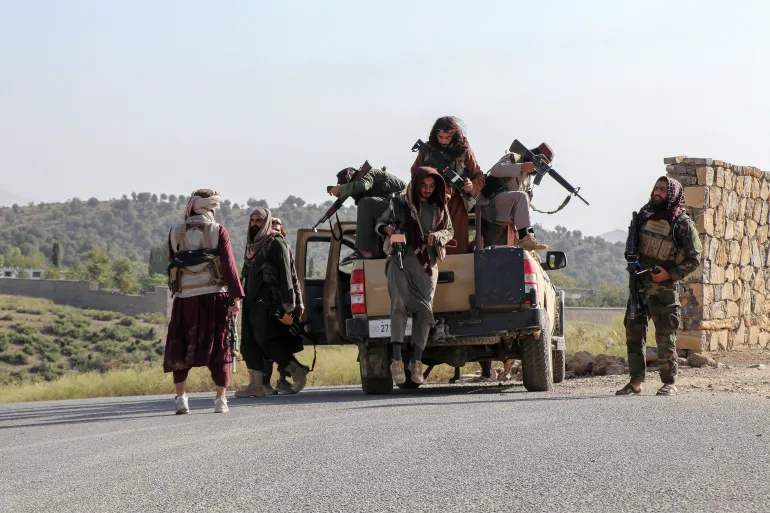
The conflict began when Afghan fighters reportedly launched a coordinated attack on several Pakistani outposts in North Waziristan and Kurram districts. Videos circulating on social media show intense gunfire, explosions, and Pakistan Army personnel abandoning posts under heavy Taliban fire. Islamabad initially claimed that it had killed “over 200 Afghan militants” in retaliation. However, Afghan officials countered, saying only 20 fighters were lost while 58 Pakistani soldiers were killed and several positions were overrun.
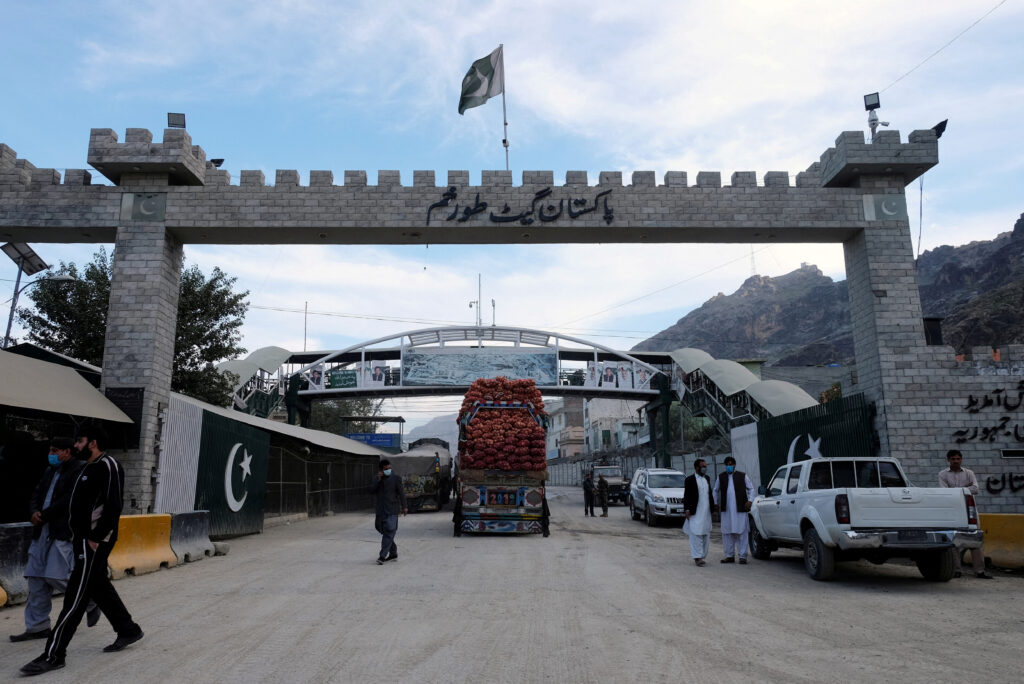
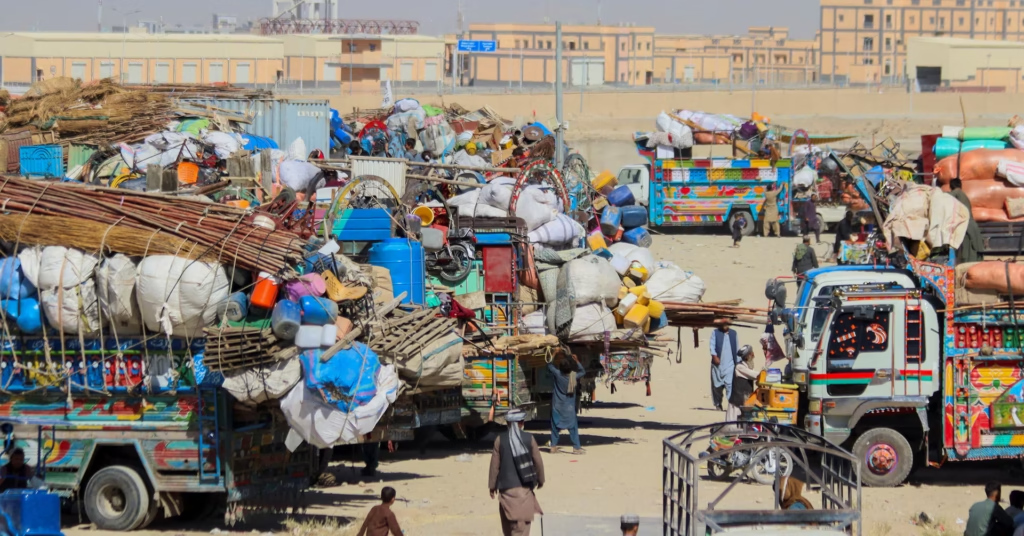
FILE PHOTO: A general view of the border post in Torkham, Pakistan, December 3, 2019. REUTERS/Alasdair Pal/File Photo
Independent verification remains difficult, but footage from Afghan sources showing captured Pakistani equipment and outpost flags suggests Kabul’s version may carry more credibility.
For decades, Pakistan saw Afghanistan as a strategic buffer, supporting the Taliban during the U.S. war to maintain influence in Kabul. But now that relationship has spectacularly collapsed.
The Taliban’s refusal to act against the Tehrik-i-Taliban Pakistan (TTP) a militant group that continues to attack inside Pakistan has enraged Islamabad. Pakistan conducted limited airstrikes inside Afghanistan earlier this year, claiming to target TTP hideouts. That action appears to have provoked this week’s massive counterattack.
This is not a border skirmish it’s an undeclared war between two ideologically aligned but politically divided Islamic states. For Pakistan, which already faces an economic meltdown and domestic protests, fighting on its western front could prove catastrophic.
Saudi Arabia Steps In But Its Influence Fades
As fighting intensified, Saudi Arabia reportedly attempted to mediate between Islamabad and Kabul. Riyadh’s concern isn’t purely diplomatic. Pakistan has long been Saudi Arabia’s security partner and recipient of oil credits. A full-blown war could destabilize a key ally and threaten Riyadh’s broader security architecture in the Muslim world.
However, Saudi Arabia’s reaction has been unusually neutral and cautious. Despite signing a defense pact with Pakistan earlier this year, the Kingdom refrained from issuing any strong condemnation against Afghanistan.
Middle East analysts suggest Riyadh’s hesitation reflects shifting priorities especially after improving ties with Iran and pursuing a balancing act between regional powers.
A senior Gulf analyst told Arab News:
“Saudi Arabia doesn’t want another endless Islamic conflict. It’s already recalibrating its foreign policy the old reflex to immediately back Pakistan is fading.”
Afghanistan’s Taliban regime appears emboldened by Pakistan’s internal chaos. Reports indicate that Taliban foreign minister Amir Khan Muttaqi’s recent visit to India strengthened Kabul’s diplomatic standing.
In an unprecedented move, Afghanistan publicly stated that “Jammu & Kashmir is part of India” a declaration that stunned Pakistan’s foreign ministry and was celebrated quietly in New Delhi.
For India, this is a strategic diplomatic win. It reflects how Islamabad’s once-loyal proxies are drifting toward India’s sphere of influence.
A retired Indian diplomat commented:
“Pakistan’s nightmare is coming true it’s losing influence in Kabul while fighting fires on multiple fronts. India didn’t need to lift a finger; its patience paid off.”
While Islamabad claims victory, the lack of visual evidence or media access from its side weakens its narrative. Afghan social media channels, on the other hand, are flooded with combat footage, suggesting they had the upper hand in at least one sector.
According to security think tank South Asia Monitor, “Pakistan’s defensive posture and immediate withdrawal from forward posts indicate an unexpected level of Afghan coordination and planning.”
Global Reaction: Unease and Calculation
1. China The Silent Worrier
Beijing, which invested billions in the China-Pakistan Economic Corridor (CPEC), is deeply concerned. Any conflict spilling into western Pakistan threatens Chinese engineers, supply convoys, and infrastructure projects.
2. The United States Watching from a Distance
The U.S. has not intervened directly but has reportedly warned Islamabad to prevent any escalation involving nuclear assets. Washington fears that instability could revive terror networks like ISIS-K, undermining the fragile counterterrorism balance in Central Asia.
3. Iran A Quiet Beneficiary
Iran, traditionally wary of the Taliban, now finds itself in a position of leverage. A divided Pakistan-Afghanistan front indirectly strengthens Tehran’s influence in the region and weakens Saudi Arabia’s Sunni bloc leadership.
Why This Conflict Matters: A Domino Effect for South Asia
The Afghanistan–Pakistan confrontation could redraw the region’s security map.
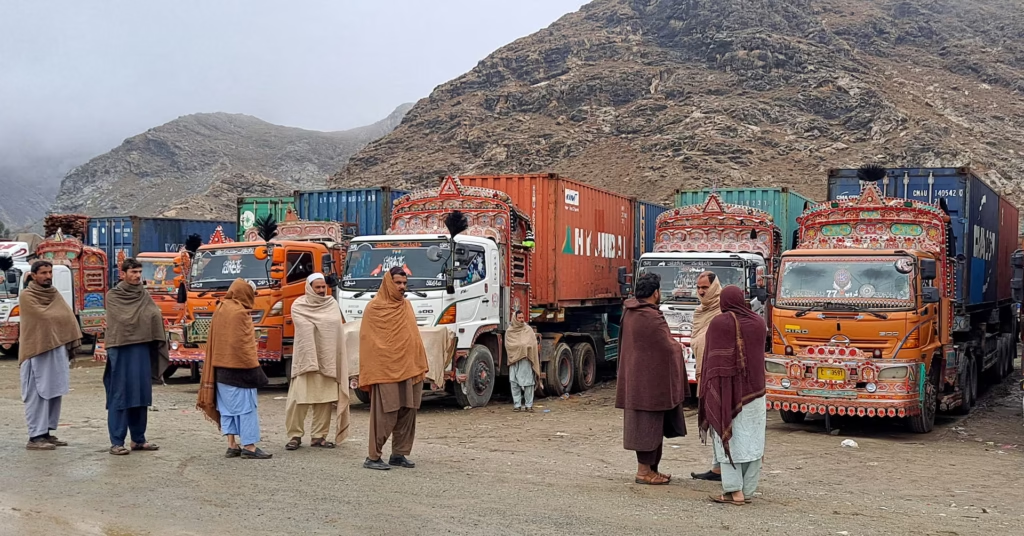
Economic impact: Pakistan’s currency, already fragile, slipped further amid war rumors. Cross-border trade worth $1.2 billion annually between the two countries has halted.
Refugee crisis: The UNHCR estimates that over 50,000 civilians might flee border zones if the conflict continues.
Extremist surge: Groups aligned with the Islamic State Khorasan Province (ISKP) are reportedly regrouping in the chaos.
If this continues, South Asia might see a new security crisis on par with the early 2000s war-on-terror years.
India’s Geopolitical Window
The situation inadvertently opens a strategic window for India. While Pakistan faces threats on both its eastern (India) and western (Afghanistan) borders, New Delhi can strengthen its diplomatic and economic outreach to Kabul.
In recent months, India has reopened its Kabul embassy, restarted infrastructure projects, and begun talks for mineral exploration in Afghanistan something that could give India long-term influence over Central Asia’s natural resources.
If managed smartly, India could emerge as the only stable partner in a region unraveling under military and sectarian tensions.
Timeline: Escalation Along the Durand Line (2022–2025)
Year
Event
Impact
2022
Taliban refuses to curb TTP attacks inside Pakistan
Rising border friction
2023
Pakistani airstrikes inside Afghanistan
Taliban vows retaliation
2024
Sporadic cross-border shelling
Dozens killed
2025 (Present)
Full-blown firefight, 200+ soldiers dead
Diplomatic panic in Gulf capitals
Expert Opinions: A Turning Point in South Asian Power Balance
Dr. Ayesha Siddiqa, Pakistani defense scholar, notes:
“Islamabad’s Afghanistan policy has imploded. What it nurtured for 20 years is now biting back. The military overestimated its control and underestimated Taliban nationalism.”
From Kabul, political analyst Abdul Qadir Rahmani offers a blunt view:
“Pakistan is learning what every empire learned Afghanistan bows to no one. This time, the Taliban fight not as proxies but as sovereign defenders.”
Possible Scenarios Ahead
Limited Conflict with Saudi Mediation – Both sides de-escalate after pressure from Riyadh, Beijing, and the UN.
Full Border War – A multi-front fight erupts, dragging in external powers like China and Iran.
Internal Collapse in Pakistan – Ongoing protests and political instability merge with war pressure, leading to a domestic crisis.
Conclusion: A Region on the Brink
The Pakistan–Afghanistan clash is more than a border fight it’s a reckoning for decades of flawed strategy and shifting loyalties. Pakistan faces isolation, Afghanistan feels empowered, and the Middle East watches nervously.
If this crisis spirals further, it could reshape alliances across Asia, weaken Pakistan’s central authority, and trigger a new era of instability stretching from the Khyber Pass to the Persian Gulf.
In the words of a South Asian diplomat:
“This is not just a military clash. It’s the beginning of a new geopolitical alignment one where Pakistan may find itself with fewer friends than ever before.”
Abhi Platia is a financial analyst and geopolitical columnist who writes on global trade, central banks, and energy markets. At GeoEconomic Times, he focuses on making complex economic and geopolitical shifts clear and relevant for readers, with insights connecting global events to India, Asia, and emerging markets.