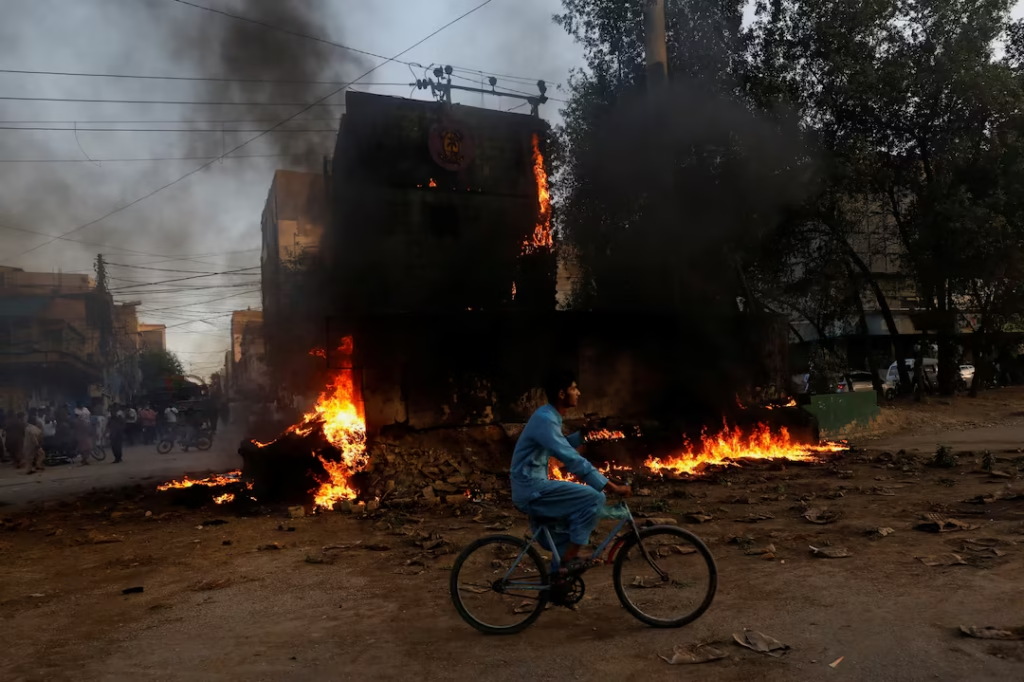
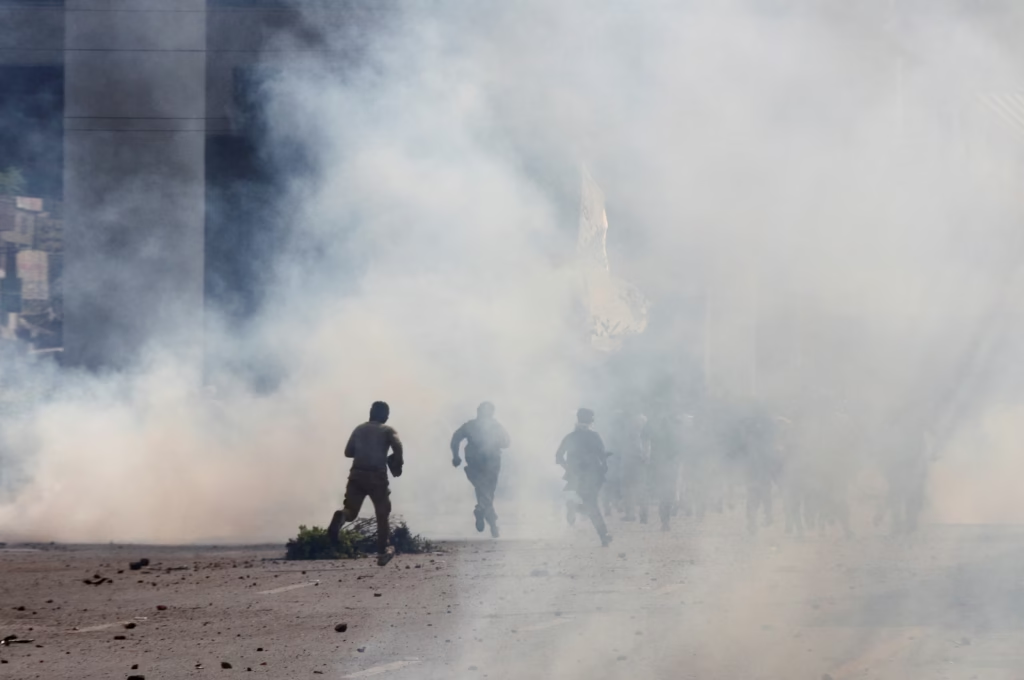
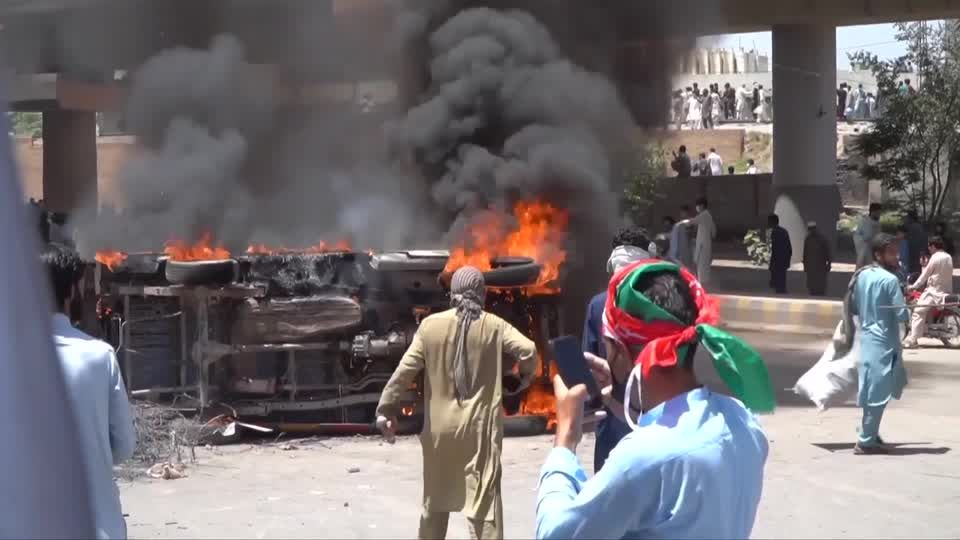
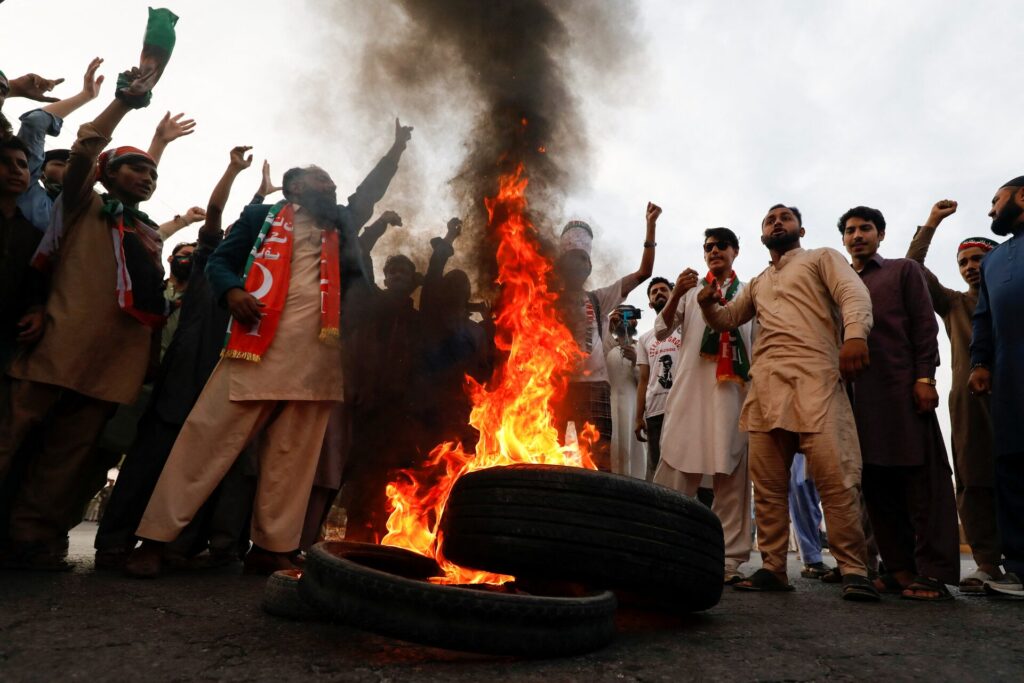
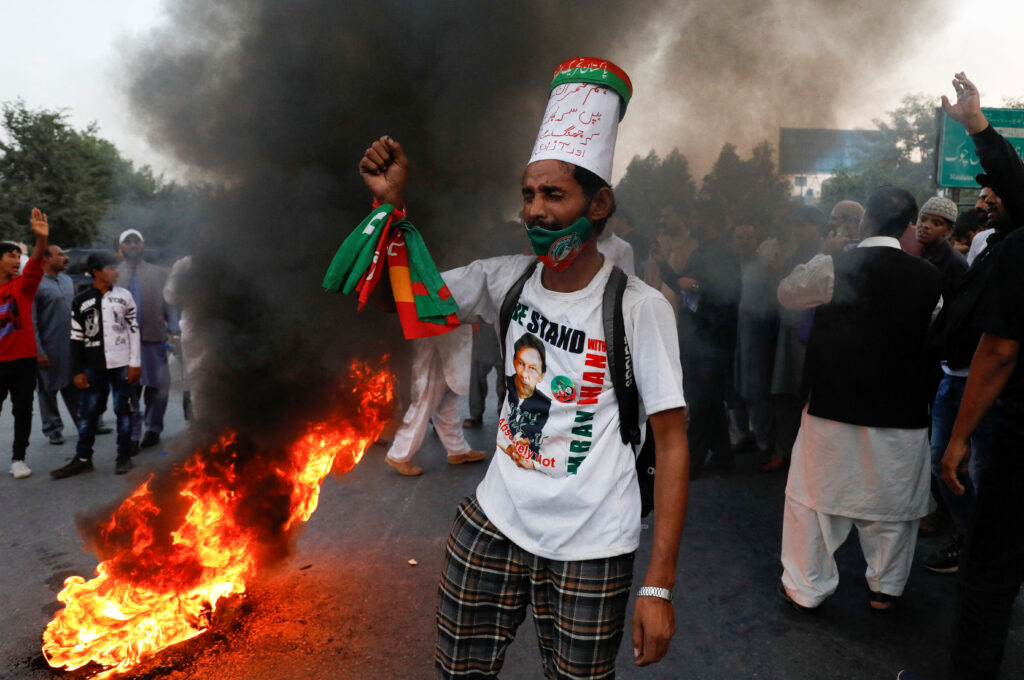
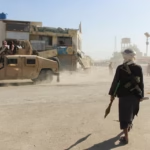
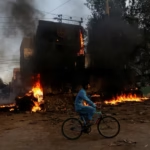
While the guns have fallen silent over Gaza after Israel’s ceasefire, Pakistan is now burning over Palestine. In a shocking twist, violent clashes have erupted across Punjab province from Lahore and Rawalpindi to Islamabad after pro-Palestinian protests turned deadly. Viral videos show Pakistan’s paramilitary rangers firing live rounds at civilians waving Palestinian flags.
At least 15 people are confirmed dead, hundreds injured, and dozens missing many believed to be detained or killed during crackdowns that began around October 9, 2025.
But behind the chaos lies a deeper question: Why is Israel being mentioned in Pakistan’s internal turmoil and how did a protest for Gaza turn into Pakistan’s biggest domestic crisis in years?
The unrest began when Tehreek-e-Labbaik Pakistan (TLP) a hardline Islamist political group known for its mass street power announced a rally called the “Labbaik Ya Aqsa Million March.” Its goal: to protest in solidarity with Palestinians and march toward the U.S. Embassy in Islamabad, seen as the symbol of American and Israeli influence.
The government immediately banned the rally, citing national security and fears of violence near the diplomatic zone. But the ban only fueled anger. Tens of thousands defied restrictions, marching under the banners of “Free Palestine” and “Death to Israel.”
What followed was a complete breakdown of order.
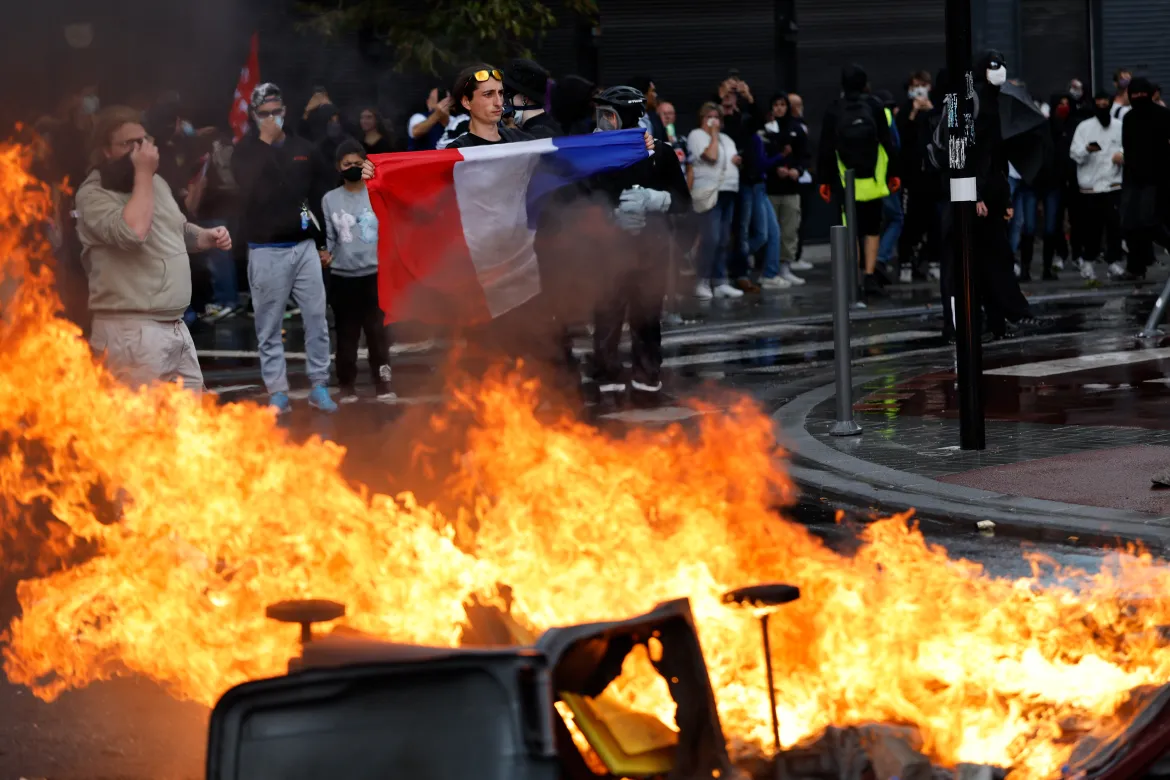
Security forces responded with tear gas, rubber bullets, and later live ammunition. Dozens of videos now viral on social media show rangers beating protesters, dragging away bodies, and even firing into crowds carrying Palestinian flags.
One eyewitness in Lahore said, “We were chanting for Gaza, but they treated us like enemies of the state.”
Shocking Visuals and Disappearing Leaders
The most disturbing footage came from Rawalpindi, where protesters cornered several rangers after they fell during a scuffle and instead of retaliating, civilians shielded them, declaring,
“These are the same men who shot our brothers, but we will protect them.”
That act of restraint was hailed online as a rare moment of moral clarity amid chaos.
But anger quickly returned when reports surfaced that TLP’s leader, Saad Rizvi, has gone missing. Authorities claim he’s “safe,” but insiders suggest he was either detained or possibly killed during early crackdowns. The uncertainty has turned him into a symbol of resistance and if his death is confirmed, analysts warn of “civil war-like violence” across Pakistan.
How Israel Got Pulled Into the Crisis
At first glance, it seems absurd: why would Israel be “involved” in Pakistan’s riots when the two countries have no diplomatic ties? The answer lies in timing and perception.
Pakistan’s establishment has reportedly been under quiet U.S. and Gulf pressure to normalize relations with Israel following in the footsteps of the Abraham Accords nations like the UAE and Bahrain.
Rumors swirled online that Islamabad was preparing to “recognize Israel” in exchange for economic relief and diplomatic support. That possibility enraged Pakistan’s deeply religious population, already disillusioned with government corruption and military dominance.
A Middle East analyst from Doha explains:
“For many Pakistanis, Palestine is not just a foreign cause it’s emotional, religious, and symbolic. The thought that their government might align with Israel feels like betrayal.”
This anger, combined with years of poverty, inflation, and political instability, has made Pakistan a powder keg waiting for a spark. Gaza’s ceasefire provided that spark.
The violence is heavily concentrated in Punjab, Pakistan’s political heartland a region critical for both the military and ruling elites. This geographic concentration raises fears of a wider uprising if the unrest spreads into Sindh or Khyber Pakhtunkhwa.
Past Parallels: When Religion Meets Power in Pakistan
This is not Pakistan’s first brush with religious street power.
In 2017, TLP blockaded Islamabad over blasphemy laws, forcing the government to concede.
In 2021, the same group protested French cartoons, leading to dozens of deaths. But the 2025 Gaza protests are different.
This time, it’s not about local policy it’s about global identity and Pakistan’s perceived role in the Islamic world. The army, already discredited after political failures and economic decline, is facing a crisis of legitimacy.
“Every time the military tries to suppress religion-driven protests, it loses a piece of public trust,” says Pakistani sociologist Dr. Nazia Khan. “People see soldiers attacking those waving the Palestinian flag that image alone can haunt Pakistan for years.”
Economic and Political Dominoes
Pakistan’s economy is already barely functional inflation above 26%, reserves covering only six weeks of imports, and an IMF loan pending. Now, with protests disrupting major cities, logistics, and trade routes, economists fear a national shutdown.
Indicator
Before Protests (Oct 1)
After Protests (Oct 14)
Pakistani Rupee (vs USD)
285
302
Karachi Stock Exchange
+1.2%
-4.8%
Fuel Prices (avg/litre)
PKR 293
PKR 315
Internet Disruptions
Minimal
Nationwide throttling reported
Foreign investors are already fleeing, and Saudi remittances a lifeline for Pakistan’s economy could slow if instability worsens.
How This Affects India and the Middle East
For India:
India is watching quietly but carefully. A destabilized Pakistan reduces cross-border aggression but raises refugee and terror risks. Security agencies are reportedly on alert along the Punjab and Rajasthan borders in case protests mutate into militant infiltration.
An Indian intelligence officer told The Hindu: “Chaos in Pakistan is unpredictable it can reduce organized hostility but increase rogue actions. That’s a dangerous mix.”
Gulf countries particularly Saudi Arabia and the UAE are deeply anxious. They’ve supported Israel’s normalization efforts and can’t afford Pakistan’s instability to spill over into the wider Muslim world. If Islamabad collapses politically, the power vacuum could empower radical groups who oppose normalization, threatening Gulf security.
Expert Voices: What’s Next for Pakistan
Dr. Ayesha Jalal (Tufts University, historian):
“Pakistan has always externalized its internal crises blaming India, the U.S., or Israel. But now the chaos is homegrown. The military’s monopoly on faith and nationalism is cracking.”
Michael Kugelman (Wilson Center, South Asia expert):
“If Saad Rizvi’s death is confirmed, expect Pakistan’s largest civil unrest since 1971. The military’s response will define whether the country remains governable.”
Local Analyst, Lahore:
“This is the first time pro-Palestine sentiment has turned against Pakistan’s own government. People feel their rulers serve foreign powers, not Islam.”
Possible Scenarios Ahead
Scenario
Description
Likelihood (as of Oct 15, 2025)
1. Contained Crackdown
Military restores order through force, internet shutdowns, arrests.
🔸 60%
2. Leader Martyrdom & Uprising
Saad Rizvi declared dead → massive nationwide riots.
🔸 25%
3. Political Realignment
Civilian parties unite against military rule amid public outrage.
🔸 10%
4. International Mediation
OIC or Saudi Arabia steps in to cool tensions.
🔸 5%
If violence spreads beyond Punjab, Pakistan could face its most severe internal collapse since the fall of East Pakistan in 1971.
A Nation at the Crossroads
The crisis unfolding in Pakistan is not just about Gaza. It’s about identity, legitimacy, and survival. A country built on Islamic solidarity now finds its own citizens shot for holding a Palestinian flag. Its leadership is silent, its economy broken, and its army overstretched fighting both its people and its reputation.
For now, Gaza is quiet. But Pakistan burns caught between faith and fear, pride and paralysis. And as global powers look away, one truth remains: No foreign enemy has ever weakened Pakistan as much as its own crises now do.
Abhi Platia is a financial analyst and geopolitical columnist who writes on global trade, central banks, and energy markets. At GeoEconomic Times, he focuses on making complex economic and geopolitical shifts clear and relevant for readers, with insights connecting global events to India, Asia, and emerging markets.