


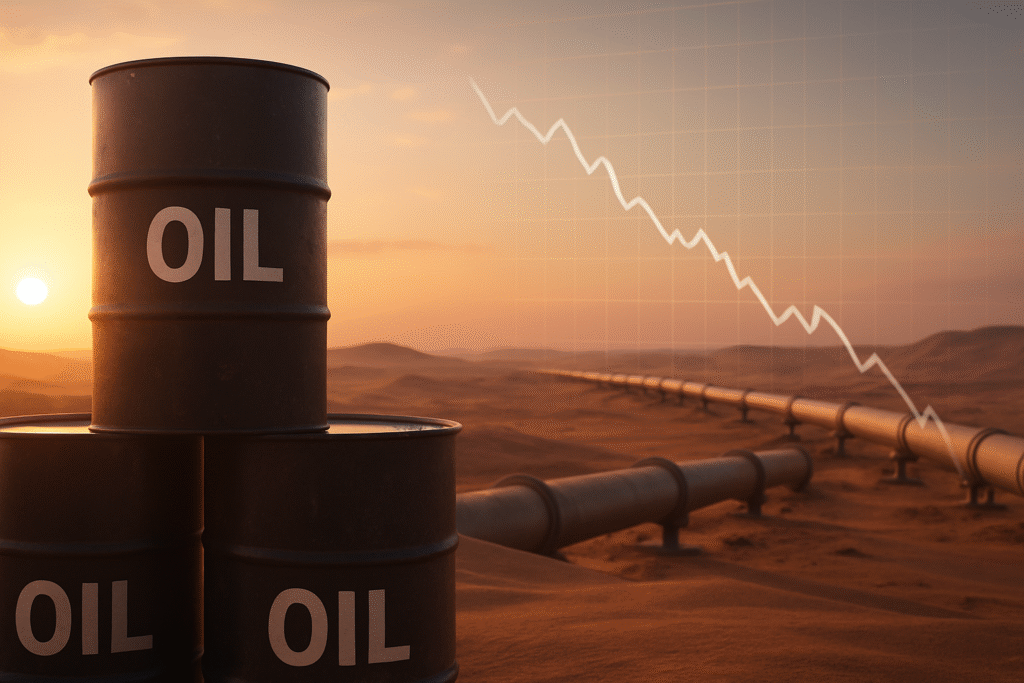
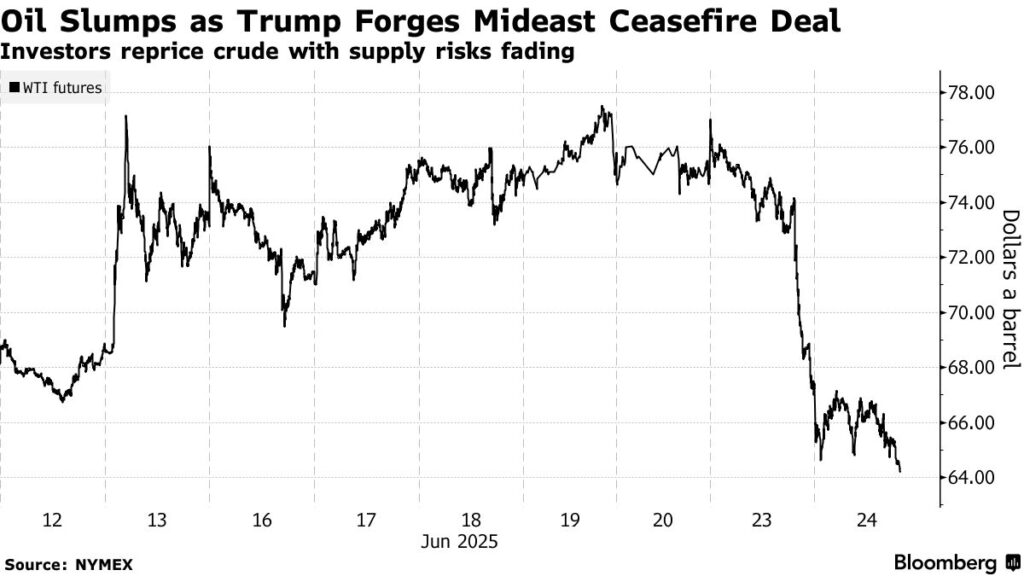
Global oil prices eased this week following reports of a tentative ceasefire agreement in Gaza, signaling a potential de-escalation in one of the world’s most geopolitically sensitive regions. Brent crude fell nearly 3.5% to around $81 per barrel, while West Texas Intermediate (WTI) slipped below $78 the lowest in almost two months.
For months, markets had priced in a significant “risk premium” over fears that the Israel–Hamas conflict could spill into a broader regional war involving Iran, Lebanon’s Hezbollah, or the Red Sea shipping routes. The ceasefire, mediated by Qatar and the United States, has temporarily cooled those fears, leading traders to unwind some of their defensive bets.
But the real question is: is this relief sustainable, or merely a pause before the next geopolitical flare-up?
Understanding the ‘Risk Premium’ in Oil Markets
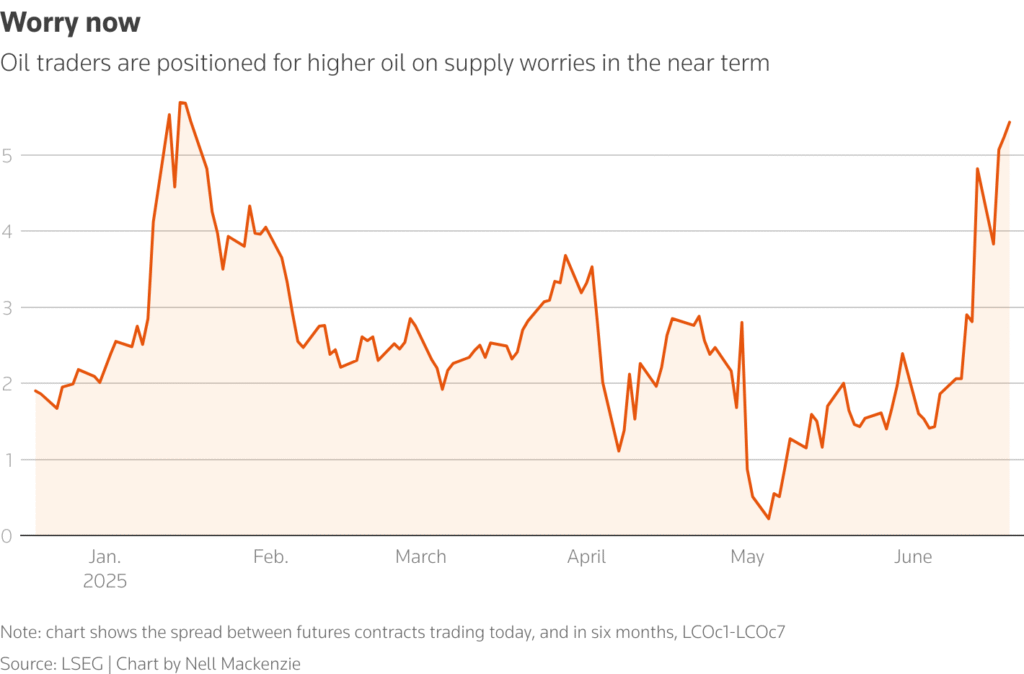
Oil markets are notoriously sensitive to geopolitical tensions. The “risk premium” essentially an extra cost added to crude prices due to instability had climbed as high as $5–7 per barrel during peak conflict fears in early September.

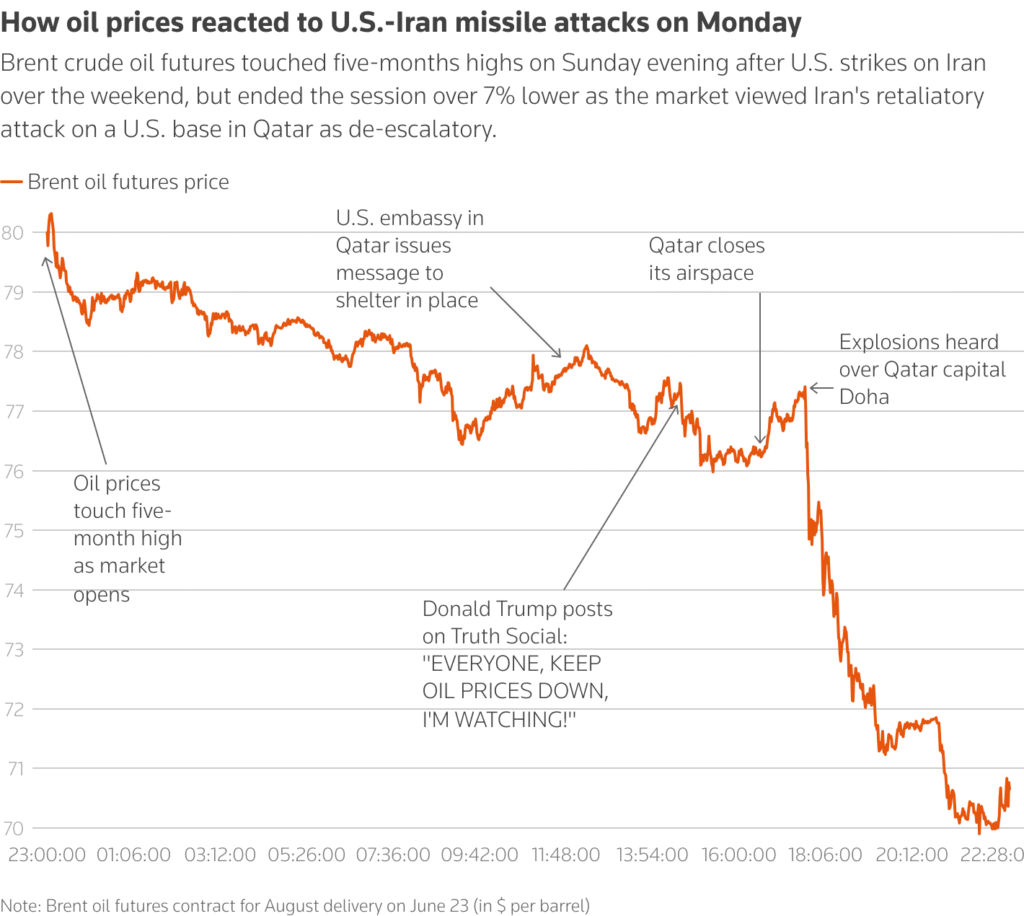
Analysts at Goldman Sachs estimated that nearly $6 per barrel of Brent’s value came purely from geopolitical risk, not supply-demand fundamentals. The Gaza ceasefire, if sustained, could erase most of that premium within weeks, bringing prices closer to pre-conflict averages around $75–78 per barrel.
“Markets have breathed a sigh of relief,” says Dr. Leila Haddad, an energy strategist at the Middle East Economic Forum. “The risk of a regional oil supply disruption especially involving Iran or shipping through the Strait of Hormuz has significantly decreased.”
However, she cautions that “the ceasefire is fragile, and traders know how quickly these risk premiums can return.”
Economic Ripples Winners and Losers
Winners: Oil Importers
Countries like India, Japan, and South Korea stand to benefit immediately. India, the world’s third-largest oil importer, imports about 85% of its crude needs. A $5 per barrel drop in oil prices could save New Delhi nearly $5 billion in monthly import costs, strengthening its currency and easing inflation pressures.
Cheaper oil will also give India’s central bank (RBI) more breathing room, potentially allowing it to hold interest rates steady while maintaining growth momentum.
“Lower crude prices are a boon for India’s trade balance and fiscal stability,” says Ravi Singh, chief economist at ICICI Securities. “But the government will likely maintain current fuel taxes rather than pass on the full benefit to consumers, preserving fiscal discipline before elections.”
Losers: Oil Exporters
On the other hand, oil-dependent economies like Saudi Arabia, Russia, and Iran face renewed pressure. Saudi Arabia recently extended its voluntary production cuts to keep Brent above $85, but the price drop challenges that policy’s effectiveness.
“Riyadh’s budget requires oil around $90 per barrel,” notes Caroline Bain, commodities analyst at Capital Economics. “If prices stay lower for long, expect a response from OPEC+ either deeper cuts or stronger rhetoric to stabilize sentiment.”
Comparison with Past Events
This is not the first time Middle East ceasefires have triggered rapid price corrections. Historical parallels can be drawn with the 2014 Gaza conflict, where crude lost 10% within weeks after a truce, and the 2020 Iran-U.S. tensions, where prices spiked but normalized quickly once diplomatic channels reopened.
The current episode, however, is happening in a very different macroeconomic context:
- Global growth is slowing.
- Central banks are cautious about inflation.
- Renewable energy adoption is accelerating.
This means the oil market’s sensitivity to political shocks is lower today than in the early 2000s when demand growth was roaring.
The Middle East Angle Fragile Peace, Strong Repercussions

The ceasefire deal, reportedly brokered with strong involvement from Egypt, Qatar, and the U.S., represents more than a diplomatic win it’s a momentary relief for regional trade corridors.
If fighting subsides, Suez Canal shipping which carries roughly 12% of global trade and 9% of seaborne oil will likely return to normal. Insurance costs for tankers passing through the eastern Mediterranean could drop by 15–20%, according to Lloyd’s of London underwriters.
Still, uncertainty lingers. Iran’s influence in the region, the political situation inside Israel, and Hamas’ fractured structure make long-term stability unlikely.
“This is a tactical ceasefire, not a strategic peace,” says Dr. Omar Rahman of the Brookings Doha Center. “As long as core grievances persist, the region remains one incident away from reigniting tensions.”
Section 5: Global Market Impact
1. Energy Stocks
Oil majors such as ExxonMobil and Chevron saw share prices dip by 2–3%, while European counterparts like BP and Shell also retreated.
2. Currencies
The U.S. dollar strengthened slightly, while the euro and Japanese yen gained modestly a reflection of reduced safe-haven flows into the dollar.
3. Bonds & Inflation
Lower oil prices could temper inflation expectations globally, especially in Europe, where energy costs remain a key driver of price pressure. Bond yields in France and Germany edged lower by 5–8 basis points in response.
India’s Strategic View
For India, this development plays into its broader energy security calculus. New Delhi continues to diversify oil imports now sourcing roughly 35% from Russia post-Ukraine war but Middle East stability remains vital. Nearly 60% of India’s crude imports still pass through the Strait of Hormuz.
A lasting Gaza truce means lower freight rates, stable supply, and reduced pressure on the rupee. It also helps Indian refiners like IOC and Reliance plan long-term purchases without the volatility that spooks markets.
Moreover, India’s diplomatic position maintaining relations with both Israel and Arab states could strengthen as New Delhi is viewed as a stabilizing middle power in a turbulent region.
What’s Next Three Scenarios
- Optimistic Scenario:
The ceasefire holds, OPEC maintains moderate cuts, and global growth picks up. Oil stabilizes between $78–82. Inflation eases worldwide, giving central banks space to cut rates by early 2026. - Baseline Scenario (Most Likely):
Sporadic tensions reappear but no full-scale war resumes. Prices fluctuate between $80–85, with traders oscillating between caution and relief. - Pessimistic Scenario:
Ceasefire collapses, regional militias attack shipping routes, and Iran’s oil exports face renewed sanctions. Prices shoot back to $95+, reigniting inflation concerns.
Expert Opinions

“This is a reminder of how tightly politics and energy markets are intertwined,” says Daniel Yergin, author of The Prize. “Every flare-up or ceasefire in the Middle East can instantly reshape global economics.”
“While traders cheer lower prices, policymakers should not assume peace is permanent,” adds Fatih Birol, Executive Director of the International Energy Agency (IEA). “Energy diversification and strategic reserves remain key to resilience.”
Final Analysis Relief, But Fragile
The drop in oil prices reflects temporary optimism, not structural change. The Middle East’s political volatility, combined with OPEC’s determination to defend price floors, means crude could rebound swiftly at the next sign of tension.
Still, for now, global markets are enjoying rare calm, and importers like India, Japan, and the EU are breathing easier. Energy inflation a key thorn in the post-pandemic recovery may finally be easing, at least for the quarter.


Abhi Platia is a financial analyst and geopolitical columnist who writes on global trade, central banks, and energy markets. At GeoEconomic Times, he focuses on making complex economic and geopolitical shifts clear and relevant for readers, with insights connecting global events to India, Asia, and emerging markets.