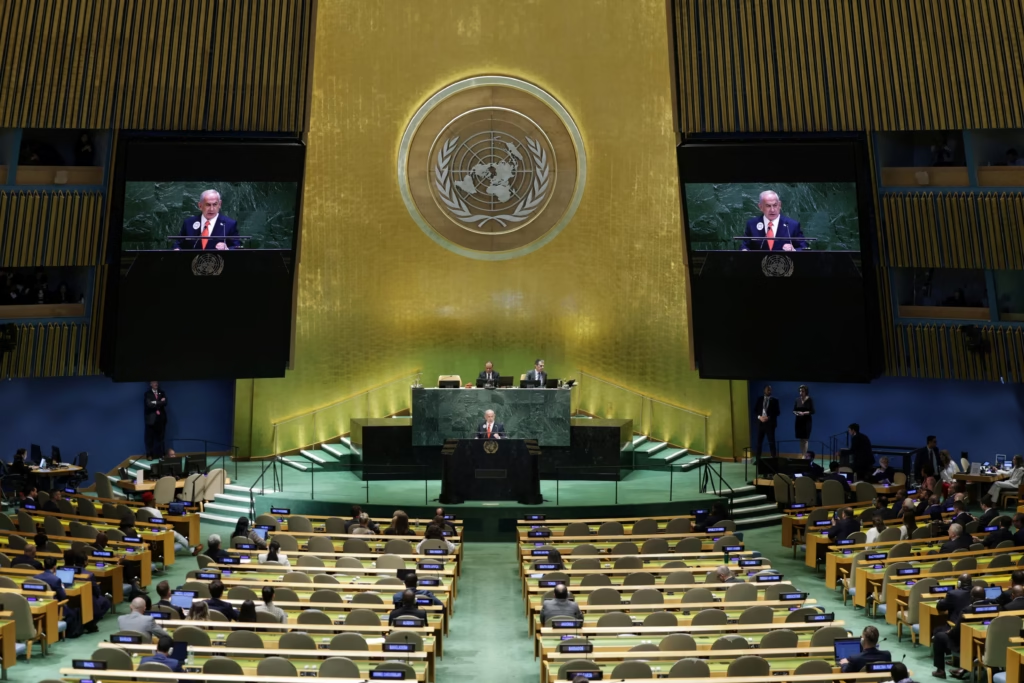
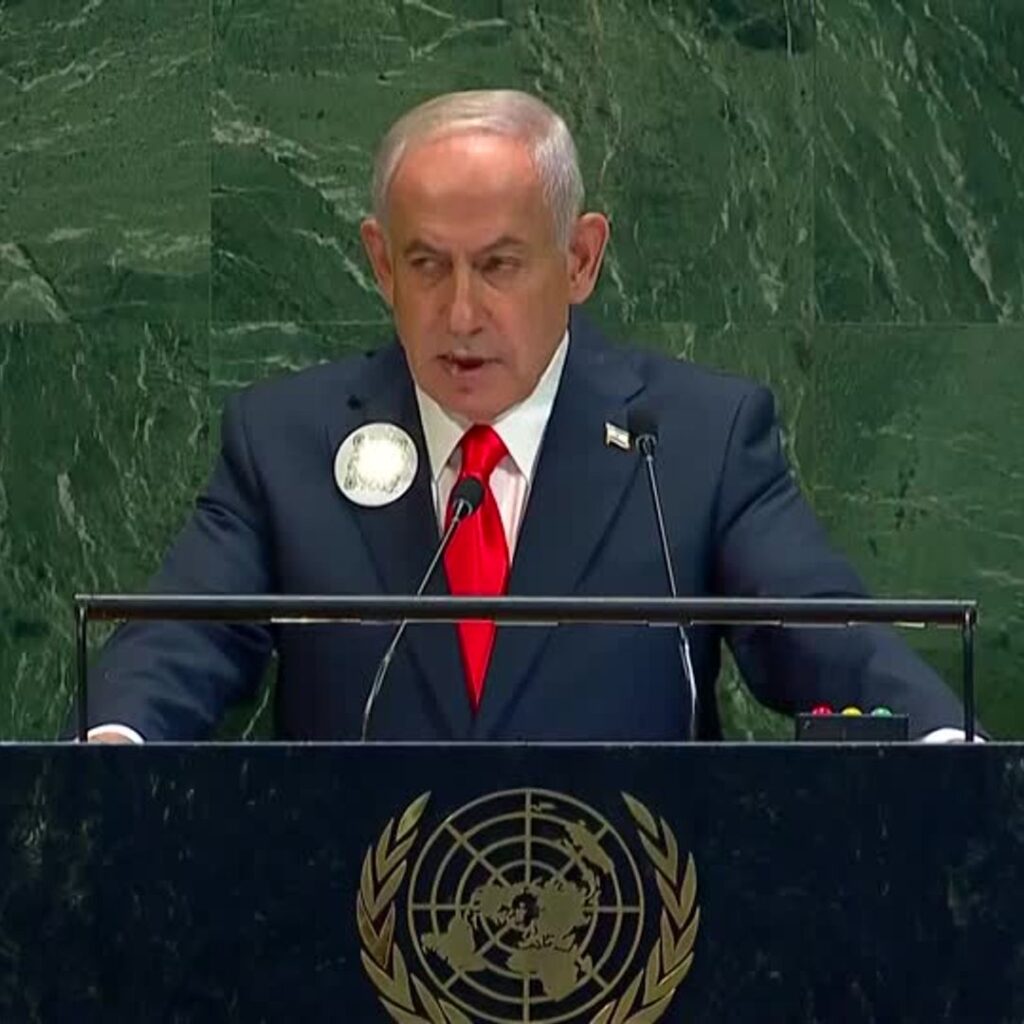
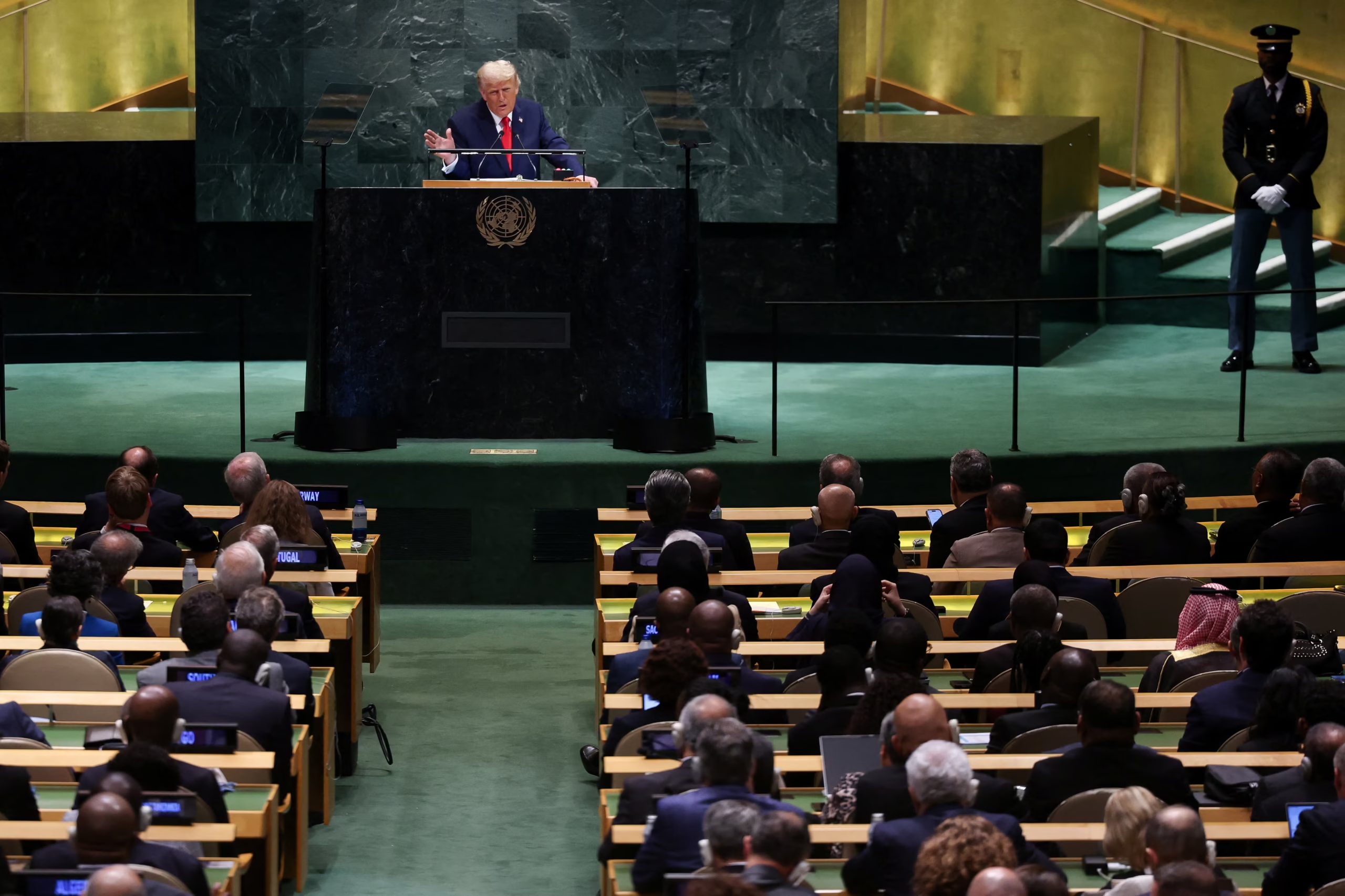
Israeli Prime Minister Benjamin Netanyahu stood before the United Nations General Assembly (UNGA) on Friday in one of his most defiant appearances to date. His declaration that Israel “must finish the job” against Hamas underscored not only his determination but also Israel’s growing international isolation.
The speech, accompanied by diplomatic walkouts, mass protests in New York, and even a psychological operation to broadcast his words directly into Gaza, revealed both the intensity of the conflict and the high-stakes political theatre surrounding it. But beneath the theatrics lies a deeper story: how Israel’s choices are shaping not just the war in Gaza, but its place in the world, its ties with the U.S., and the geopolitics of the Middle East.
According to the Associated Press, Netanyahu’s office confirmed that the Israeli military carried out an “unprecedented operation” to ensure people in Gaza heard his speech. Trucks equipped with loudspeakers were stationed along the border, blaring his words across. In addition, Israel’s intelligence services reportedly hijacked mobile phone networks inside Gaza, forcing devices to stream the prime minister’s address live (AP).
“The Prime Minister’s Office instructed civilian entities, in cooperation with the IDF, to place loudspeakers on trucks on the Israeli side of the Gaza border only, with the aim of broadcasting Prime Minister Netanyahu’s historic speech today at the UN General Assembly into the Gaza Strip,” the PMO said.
Netanyahu directed part of his remarks to Israeli hostages held by Hamas since October 7.
“We have not forgotten you, not even for a second. The people of Israel are with you,” he said.
Turning his words toward Hamas, his tone hardened:
“Lay down your arms. Let my people go. If you do, you will live. If you don’t, Israel will hunt you down.”
This direct messaging was unprecedented for an Israeli leader on the UN stage, combining symbolic theatre with a psychological operation aimed at both Hamas and Gaza’s population.
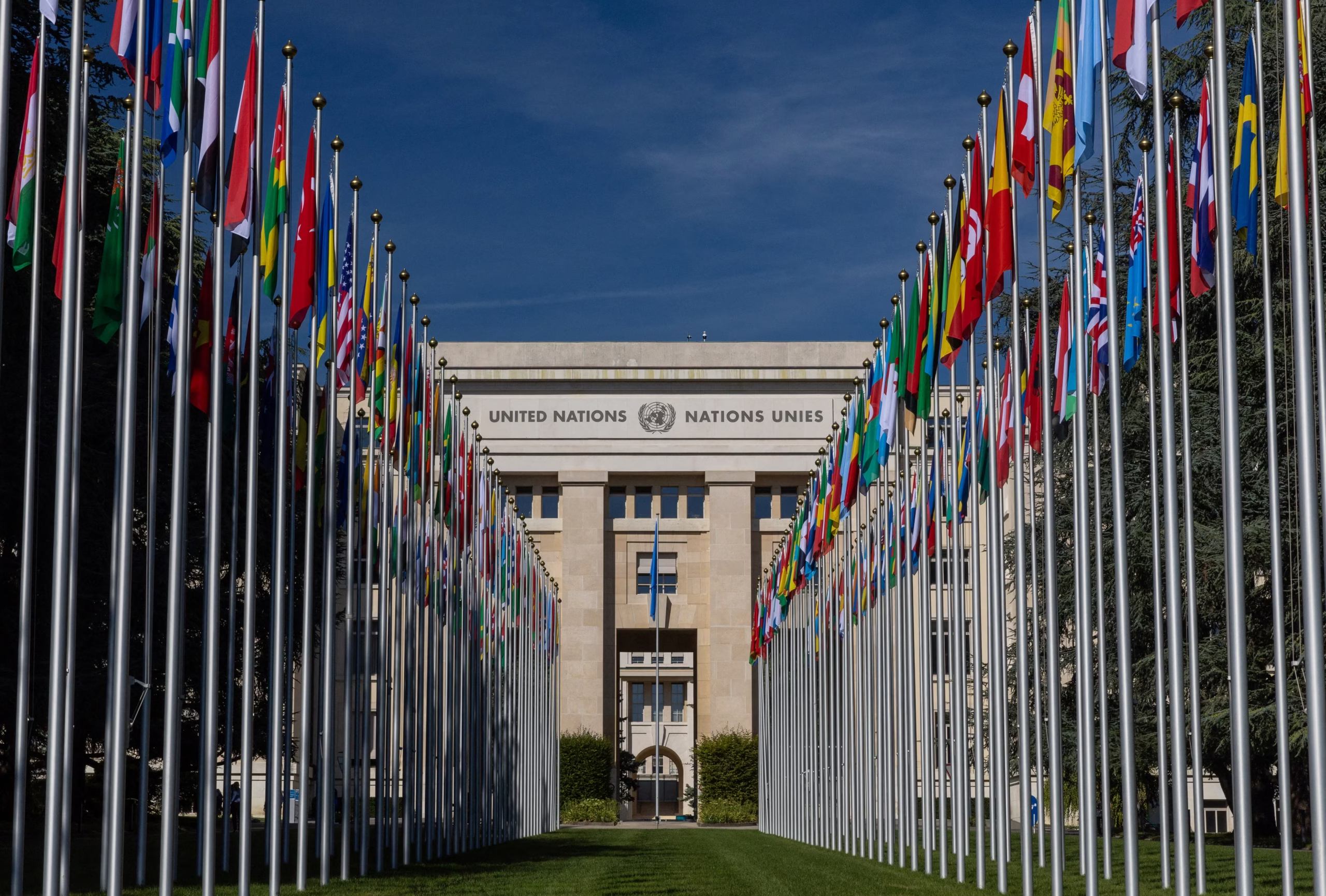
The most striking moment came as Netanyahu took the stage: dozens of diplomats walked out in protest. Delegations from Arab states, parts of the European Union, and Latin America left the hall, leaving behind rows of empty seats.
Reuters reported that more than 50 delegations staged the walkout, while those who stayed were split between silent disapproval and scattered applause (Reuters).
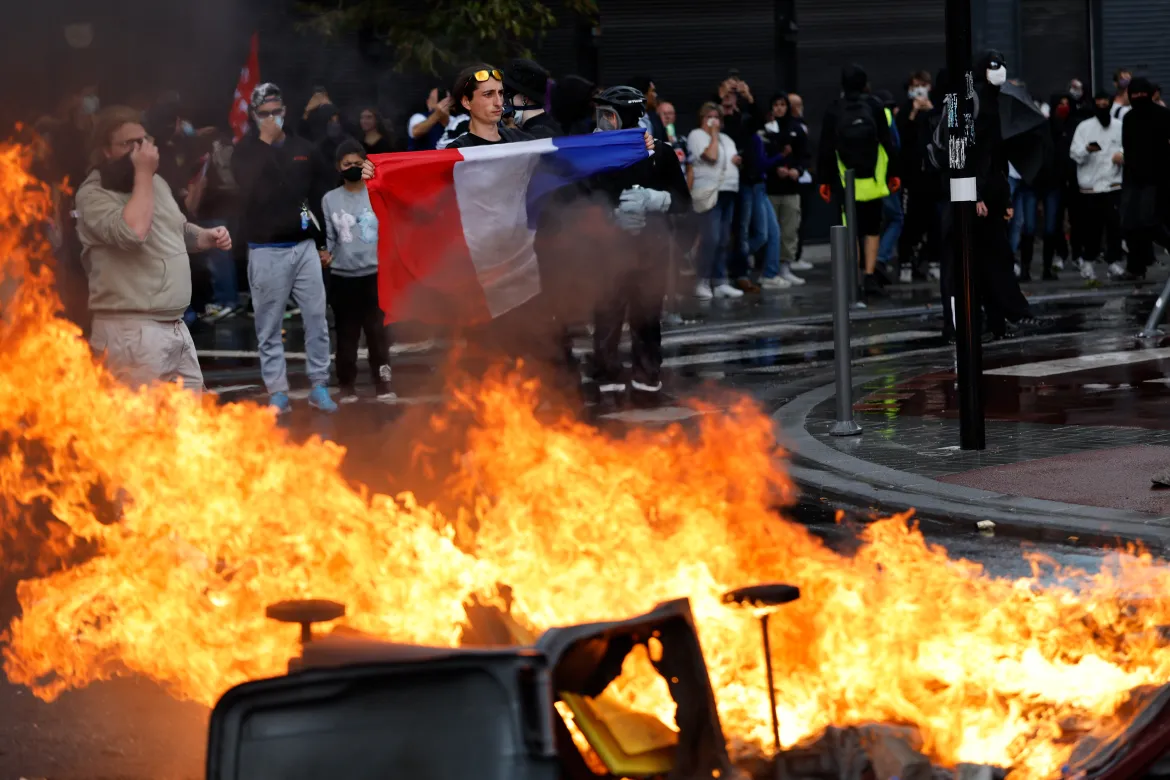
Protests also erupted outside the UN headquarters in New York. Thousands of demonstrators, waving Palestinian flags and chanting “Ceasefire now,” blocked nearby avenues. For many, Netanyahu’s speech symbolised Israel’s refusal to heed humanitarian appeals.
“Israel has chosen a war against every conscientious human being in this world,” said Nidaa Lafi of the Palestinian Youth Movement. “This war was always about the complete ethnic cleansing of Palestine and the stealing of Palestinian land” (AP).
Netanyahu’s Attacks on Critics
Throughout the address, Netanyahu lashed out at countries that have chosen to recognise a Palestinian state. With more than 150 nations now extending recognition, Israel’s opposition to Palestinian sovereignty appears increasingly isolated.
“I will condemn those leaders who, instead of condemning the murderers, rapists, and burners of children, want to give them a state in the heart of Israel,” he said.
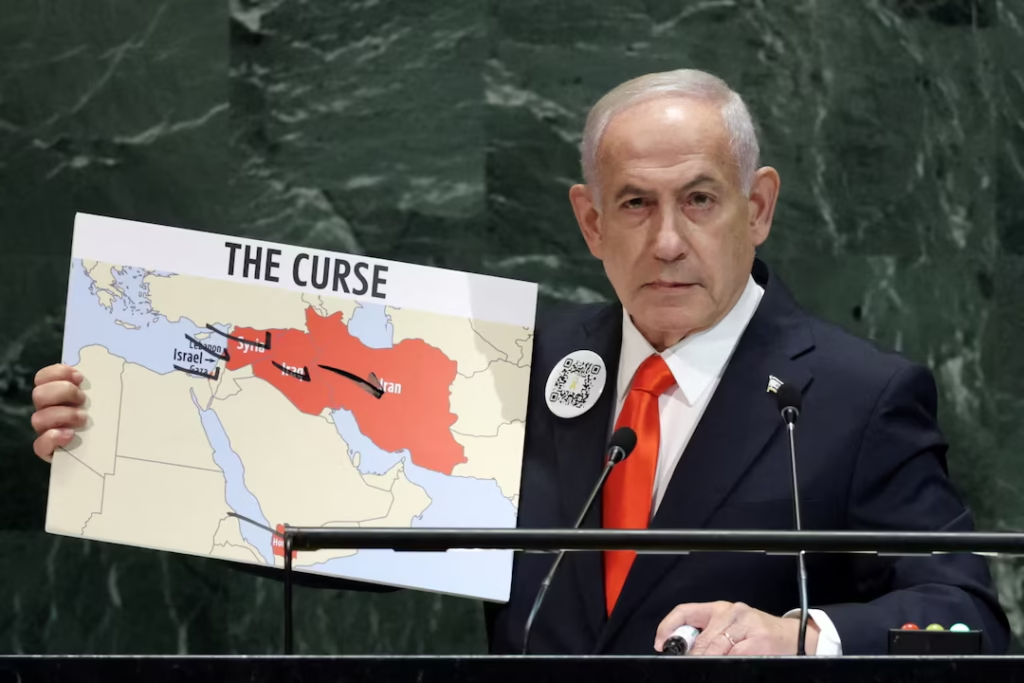
Netanyahu accused these states of rewarding terrorism and betraying Jewish victims. At one point, he held up a map titled “THE CURSE”, framing antisemitism as a timeless threat. He also wore a hostage pin with a QR code, linking to stories of those abducted during the October 7 Hamas assault.
Trump Pushes Back on Annexation
While Netanyahu presented an uncompromising stance, US President Donald Trump sent a different message. Speaking a day before the Israeli leader, Trump said he would not permit Israel to annex the occupied West Bank.
“I will not allow Israel to annex the West Bank. No, I will not allow it. It’s not going to happen,” Trump declared. “There’s been enough. It’s time to stop now” (Reuters).
The statement underlined the growing policy rift between Israel and even its closest ally. Several members of Netanyahu’s coalition openly support annexation and have already pushed settlement expansions that international observers say could permanently block a two-state solution.
Historical Echoes: Netanyahu’s Long UN Record
Netanyahu is no stranger to dramatic UNGA moments. Over the decades, he has used the platform to rally against Iran’s nuclear program, denounce antisemitism, and project Israel’s security concerns. His famous 2012 speech, in which he held up a cartoon bomb diagram to illustrate Iran’s nuclear progress, remains etched in UN history.
Friday’s speech, however, felt different. Rather than focusing on long-term existential threats, it was rooted in the immediacy of war, the bloodshed in Gaza, and the global outrage at Israel’s tactics.
Humanitarian Toll and ICC Charges
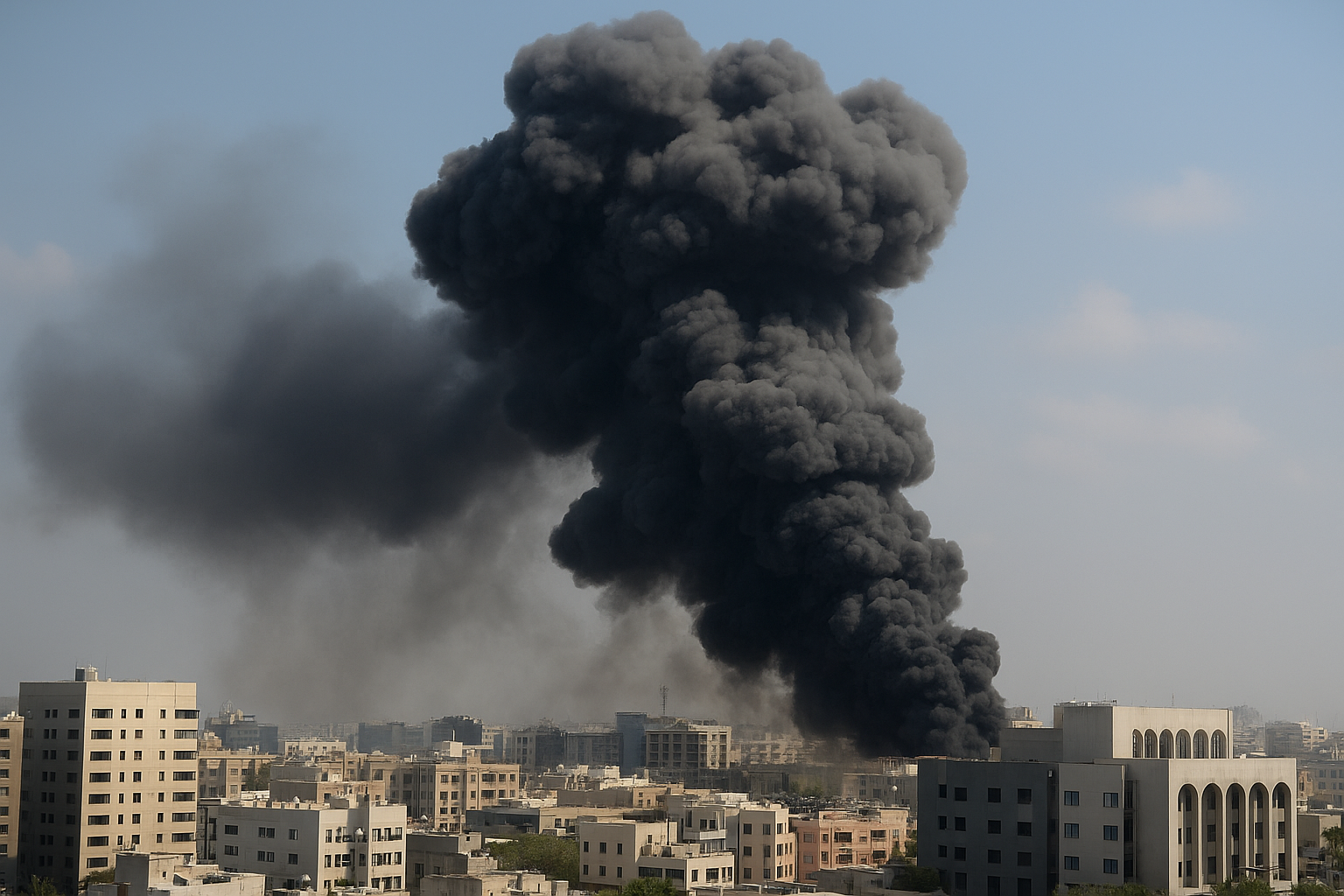
Behind the defiance lies staggering human suffering:
Over 32,000 Palestinians killed since the war began (OCHA).
More than 1.1 million displaced, many living in overcrowded UN shelters.
Hospitals report fuel shortages and collapsed medical systems.
Gaza’s GDP is projected to shrink by over 80% if the blockade continues (World Bank estimate).
Infographic suggestion: Map of Gaza showing displacement flows + timeline of casualties vs. ceasefire calls.
Netanyahu’s refusal to acknowledge this toll at the UN only widened the moral gap between Israel and much of the international community.
Global Reactions: Allies Draw Limits
Even Israel’s closest ally, the United States, showed cracks. While Washington reiterated its security guarantees, President Trump explicitly ruled out allowing annexation of the West Bank. This put him at odds with Netanyahu’s far-right coalition.
Meanwhile, France’s Emmanuel Macron urged Israel to “end destruction in Gaza,” and Jordan branded Netanyahu’s words a “declaration of perpetual war.”
From the Global South, South Africa and Brazil accused Israel of war crimes, with South Africa linking the situation to its own history of apartheid.
For India, which has grown closer to Israel in defense and technology, this speech complicates its balancing act. Delhi must preserve its strategic ties with Israel while not alienating its traditional support base in the Arab world a region critical for energy and remittances.
Inside Israel: Rallying Base, Dividing Public
Domestically, Netanyahu’s message was aimed at shoring up his political base. With his government rocked by protests earlier in the year over judicial reforms, the war has both strengthened and polarised Israeli society.
Many Israelis, particularly families of hostages, welcomed his pledge to stay the course. Yet others fear the war has no endgame and is damaging Israel’s international standing. Israeli newspapers reflected this divide: some praised Netanyahu’s “courage,” while others warned of “strategic blindness.”
Legal and Strategic Consequences
The International Criminal Court has already filed charges against Netanyahu and former defense minister Yoav Gallant. While Israel rejects ICC jurisdiction, the move isolates it further and could limit travel for Israeli leaders abroad.
Strategically, Netanyahu risks creating a scenario where Israel wins battles but loses legitimacy. Without allies willing to defend its actions at forums like the UN or WTO, Israel could face:
Sanctions on arms trade.
Restrictions on settlement goods.
Growing boycott campaigns in Europe and Asia.
This erosion of legitimacy may ultimately matter more than battlefield results.
Expert Views
Amos Harel (Haaretz defense analyst): “Israel may win tactical victories, but it is fighting without an endgame. The speech offered resolve, not strategy.”
Dr. Sanam Vakil (Chatham House, UK): “The war has become a test of how far the West will tolerate Israel’s defiance. If Netanyahu overplays his hand, even Washington may impose conditions.”
Professor C. Raja Mohan (Indian strategist): “For India, Netanyahu’s speech is a reminder that the Middle East is entering a dangerous phase where U.S. policy is divided, Arab anger is rising, and multipolarity is more visible than ever.”
Scenarios Ahead
Prolonged War, Deepening Isolation Israel doubles down militarily, casualties rise, and more nations recognize Palestine.
Ceasefire with Conditions U.S. pressure eventually forces Netanyahu into a limited truce, but without addressing root causes.
Political Fallout Inside Israel Mounting international pressure and hostage families’ protests erode Netanyahu’s domestic support, leading to elections.
Conclusion: A Defiant Leader, a Divided World
Netanyahu’s UNGA speech will likely be remembered for its mix of theatre, defiance, and controversy. From the broadcast into Gaza, to the mass walkouts, to the map titled ‘THE CURSE’, it was a performance crafted to show resolve.
But it also underscored how Israel is increasingly at odds with much of the international community. With war crimes charges pending, humanitarian crises deepening, and allies setting limits, Netanyahu’s insistence on “finishing the job” raises more questions than answers.
For supporters, he is standing tall against terrorism. For critics, he is dragging Israel into moral and strategic peril. Either way, his UN speech confirmed one thing: Netanyahu is not backing down and neither is the storm surrounding him.
Abhi Platia is a financial analyst and geopolitical columnist who writes on global trade, central banks, and energy markets. At GeoEconomic Times, he focuses on making complex economic and geopolitical shifts clear and relevant for readers, with insights connecting global events to India, Asia, and emerging markets.




really great information.