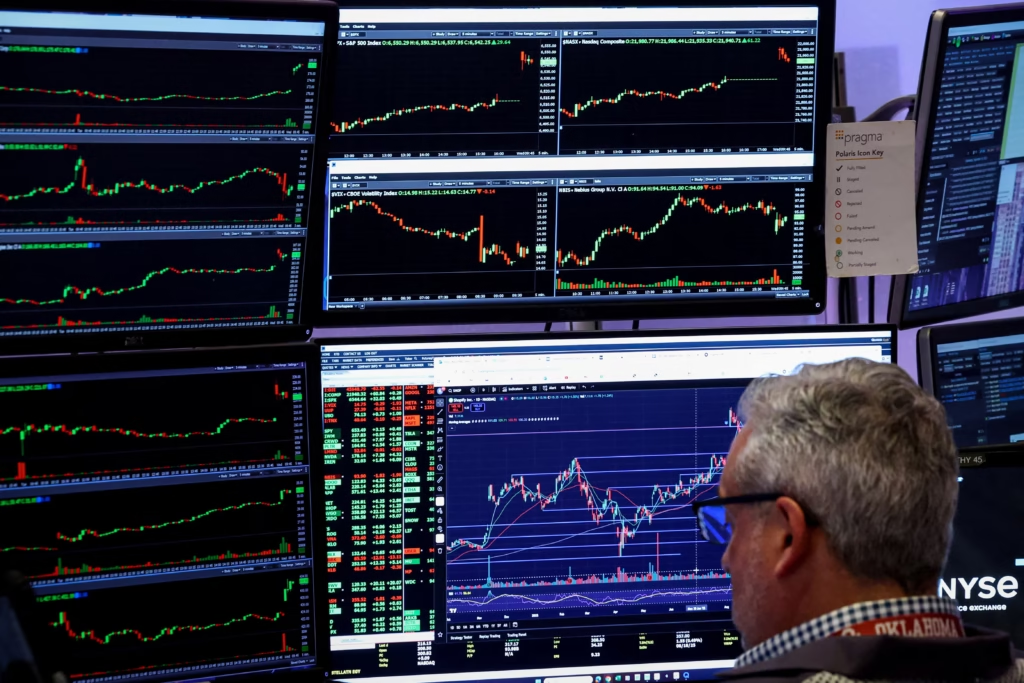
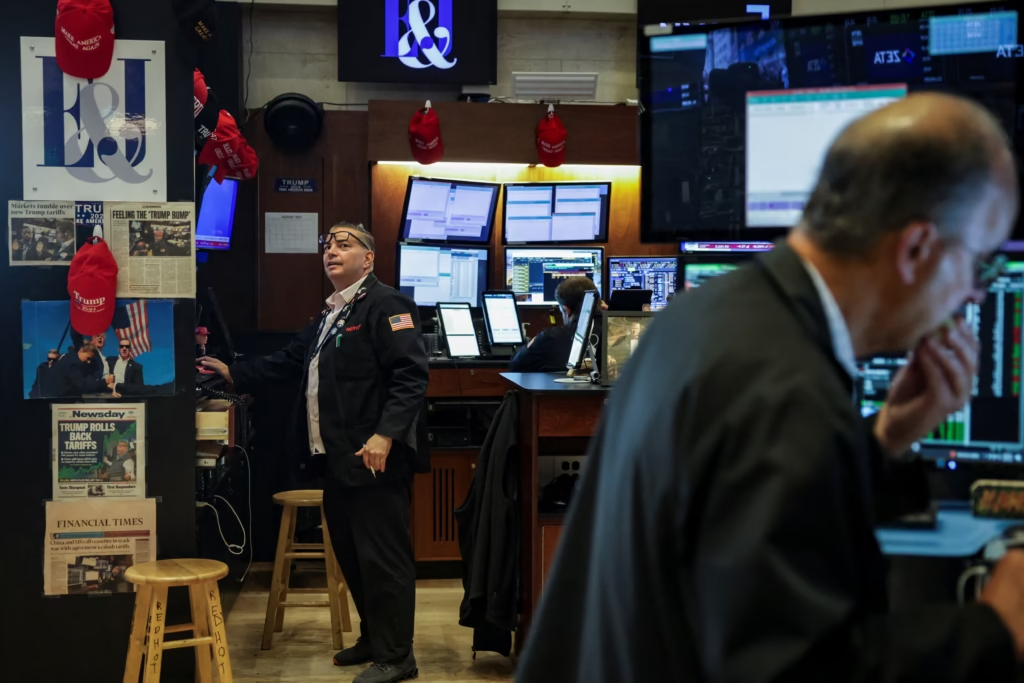
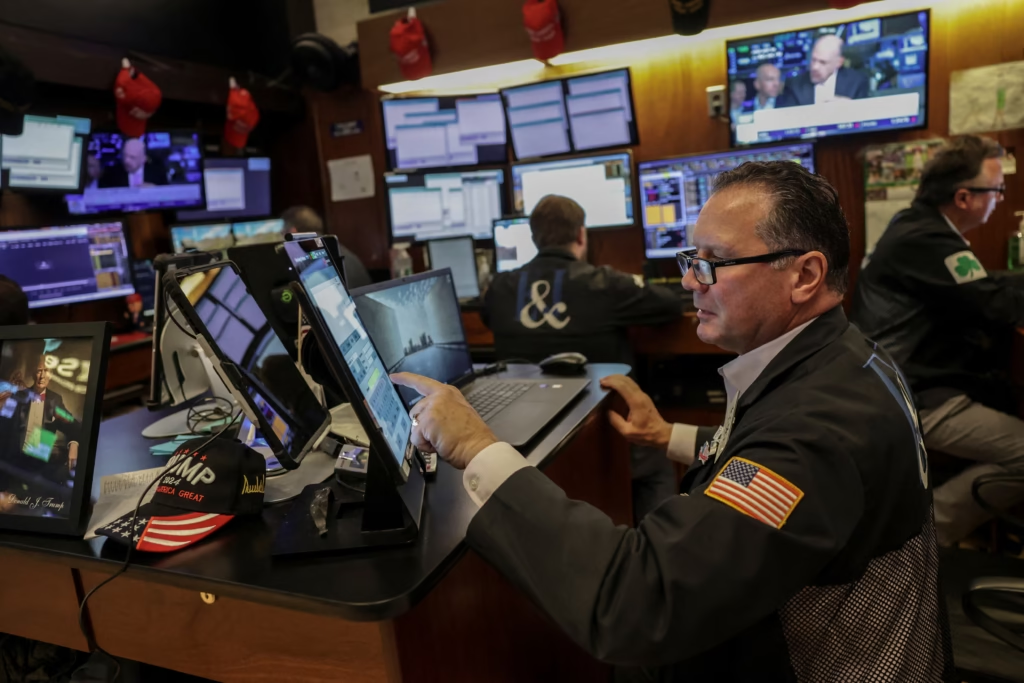
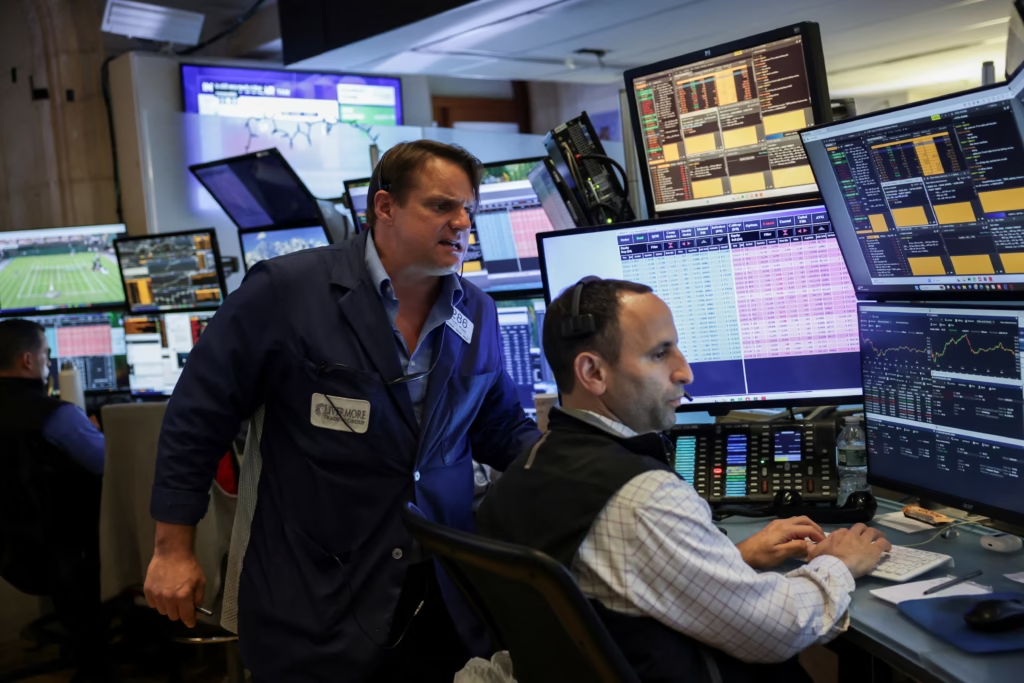
The Nasdaq Composite Index reached a stunning all-time high on Friday, September 12, 2025, marking a significant milestone in Wall Street’s impressive recovery from the challenges of recent years. This tech-heavy index climbed by 0.4%, closing above 18,200 points and surpassing its previous high set back in July.
This remarkable performance highlights the strength of U.S. equity markets, especially in the tech sector, even as the wider economy sends mixed signals from slowing job growth to persistent inflation worries. The rally also sparks discussion about how sustainable this tech-driven momentum is and what it means for global finance.
The contrast highlights how the market’s optimism is increasingly concentrated in a handful of technology giants. While the broader market shows signs of hesitation, the Nasdaq continues to ride a wave of investor enthusiasm for artificial intelligence, clean energy, and digital platforms.
The gains on Friday were largely driven by exceptional performances from several mega-cap companies:
Tesla: Shares jumped over 7%, becoming the biggest contributor to the Nasdaq’s rise as investors reacted positively to news of enhanced production targets for its next-gen electric vehicles, alongside renewed faith in CEO Elon Musk’s leadership.
Microsoft: The stock rose nearly 3% after the company sidestepped a major EU antitrust fine, alleviating regulatory concerns. With its investments in AI-powered offerings like Copilot and Azure Cloud already paying off, this ruling provided Microsoft with extra breathing space.
Nvidia: Saw an uptick of about 2%, driven by robust demand for GPUs in AI data centers, fueling optimism.
Alphabet (Google’s parent): Increased by 1.5%, benefiting from rising advertising revenue and advancements in AI search technologies.
Together, these four firms represent over 35% of the Nasdaq’s total market cap, underscoring how dependent the index is on a few tech behemoths.
3. The Federal Reserve Factor
The most recent surge of the Nasdaq is closely linked to changing expectations around U.S. monetary policy.
Recent labor market data has shown a slowdown in job creation, while inflation has started to cool, dropping to an annualized rate of 2.6% in August. These developments have heightened expectations that the Federal Reserve might cut interest rates as soon as November.
Growth companies like Tesla, Microsoft, and Nvidia depend heavily on future earnings.
When interest rates fall, the present value of those earnings rises.
Lower borrowing costs also reduce capital expenses for companies building AI data centers or EV gigafactories.
As a result, every sign of Fed easing becomes a catalyst for Nasdaq’s upward momentum..
4. Gold, Bonds, and the Dollar: Ripple Effects
Friday’s rally extended its impacts across various asset classes:
Gold steadied around $2,450 per ounce, reflecting a sense of caution among investors. Despite the upbeat mood in equities, many traders are maintaining gold as a safeguard against potential policy missteps.
U.S. Treasury yields dipped slightly, with the 10-year yield falling to 3.82%, as bond markets adjusted to a higher likelihood of Fed cuts.
The U.S. dollar index (DXY) fell by 0.3%, indicating diminished demand for the dollar amid easing-rate expectations.
This interaction highlights how closely the Nasdaq’s performance is tied to the global financial landscape. A rate cut in the U.S. not only enhances tech valuations but also influences currency markets, commodity prices, and capital flows across the globe.
The Nasdaq’s record high sent ripples far beyond Wall Street:
European markets: The Stoxx Europe 600 ended the week slightly lower, with declines in banking and energy balancing out gains in tech. Investors in Frankfurt, Paris, and Milan remarked on Europe’s lack of homegrown counterparts to U.S. mega-cap firms.
Asia: Tech-heavy indices in South Korea (KOSPI) and Taiwan (TAIEX) saw modest gains, given their roles as suppliers to U.S. chipmakers.
Emerging markets: A weaker U.S. dollar eased burdens on countries with dollar-denominated debt, especially in Latin America.
Essentially, the Nasdaq’s ascent acts as a barometer not just for American tech leadership but also for the evolving dynamics of global capital flows.
6. The Human Side: How It Affects Ordinary People
While financial headlines focus on record highs, the implications for ordinary households are more nuanced:
Retirement savings: Millions of Americans with 401(k) plans or IRAs tied to index funds saw portfolio values rise.
Borrowing costs: If the Fed cuts rates, mortgages, auto loans, and credit card interest could ease slightly.
Job security: A slowing labor market could pose challenges for workers, even as corporate stock values rise.
This divergence—Wall Street gains amid Main Street uncertainty—has fueled debate about whether record highs in equity markets truly reflect broader economic well-being.
Overconcentration: More than 50% of Nasdaq’s gains in 2025 have come from just seven companies. A stumble by one or two giants could derail momentum.
Earnings expectations: Analysts project double-digit growth for tech firms in 2026. Any disappointment could trigger sharp corrections.
Geopolitical uncertainty: U.S.–China tensions, particularly over semiconductor technology, remain a wild card.
Inflation rebound: If energy prices climb or supply shocks hit, inflation could reignite, forcing the Fed to keep rates higher for longer.
These risks suggest that while Nasdaq’s record is historic, it is also fragile.
8. A Market of Two Realities
The disparity observed between the Nasdaq and the Dow on Friday illustrates a broader reality: the U.S. market is increasingly divided between the “old economy” and the “new economy.”
The Dow Jones, which includes banks, energy companies, and manufacturers, mirrors the challenges faced by traditional industries.
In contrast, the Nasdaq, led by digital platforms, semiconductors, and green technologies, symbolizes the hope for the future.
This split reflects larger social and economic changes, raising important questions about whether the benefits of record market highs are equitably shared among all Americans.
To understand the Nasdaq’s new peak, it’s essential to consider its turbulent history:
2000: The dot-com bubble pushed Nasdaq above 5,000, only for it to collapse by nearly 80% over the next two years.
2008: The global financial crisis slashed valuations, with Nasdaq falling below 1,300.
2020–21: The pandemic sparked a tech boom, propelling the index above 14,000 by mid-2021.
2022: Aggressive Fed rate hikes led to a brutal selloff, with Nasdaq losing more than 30%.
2023–25: Artificial intelligence mania and renewed investor appetite lifted the index to new records.
This historical lens reminds investors that records are often followed by corrections, and exuberance can give way to caution.
10. What’s Next for Nasdaq?
Looking forward, three different scenarios could unfold:
Bullish case: Fed cuts rates, tech earnings remain strong, and AI adoption accelerates. Nasdaq could extend its rally toward 19,000–20,000.
Neutral case: Markets consolidate at current levels, with gains capped by earnings moderation.
Bearish case: Inflation rebounds or geopolitical crises erupt, triggering a broad correction.
The actual direction will depend on a complex mix of policies, technological advancements, and global events.
Conclusion: More Than Just a Milestone
The Nasdaq Composite’s record close on September 12, 2025, signifies more than just a number. It showcases the significant role technology plays in today’s finance, the influence of monetary policy expectations, and the widespread effects of Wall Street’s momentum across the globe.
Yet beneath the surface of celebration lies a more intricate reality: an economy that contrasts thriving tech giants with traditional sectors struggling to keep up, and a divide between optimistic markets and cautious households.
History has shown us that records can inspire hope while also reminding us of inherent risks. The Nasdaq may be at an all-time high, but the forces that will shape its future from Federal Reserve actions to global political dynamics remain unpredictable.
For now, one fact is clear: technology remains the driving force of the 21st-century economy, and the Nasdaq is its loudest voice.
Abhi Platia is a financial analyst and geopolitical columnist who writes on global trade, central banks, and energy markets. At GeoEconomic Times, he focuses on making complex economic and geopolitical shifts clear and relevant for readers, with insights connecting global events to India, Asia, and emerging markets.