


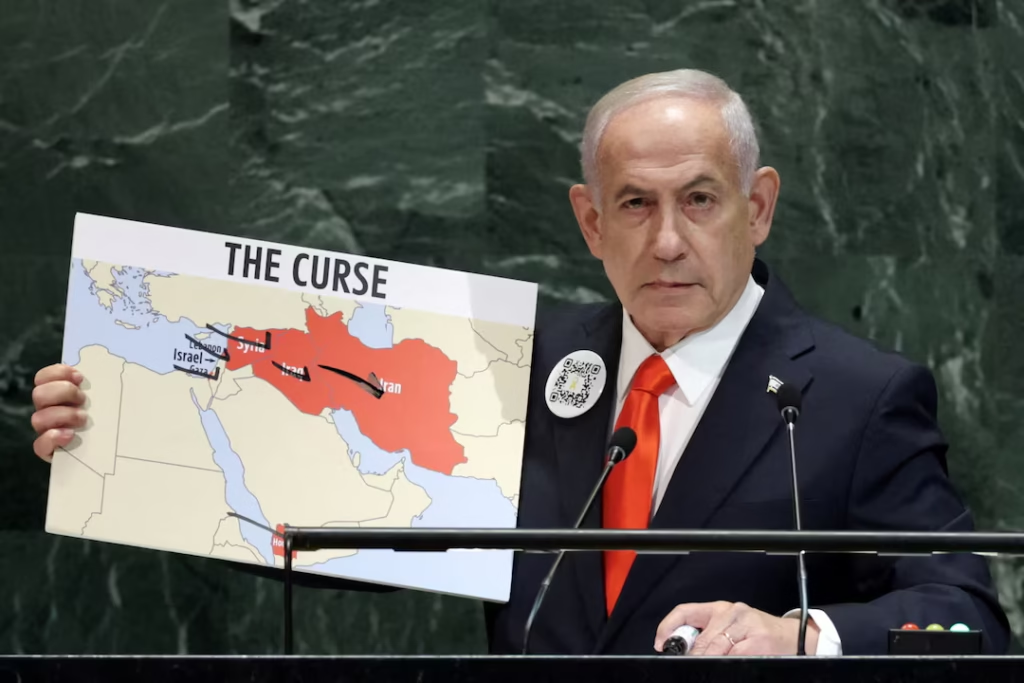
Introduction: More than a Maritime Incident
On September 17, 2025, an LPG tanker anchored near Yemen’s Ras Issa port was struck in an attack widely attributed to Israel. Onboard were 27 crew members 24 of them Pakistanis, alongside two Sri Lankans and one Nepali. Within days, Houthi rebels intercepted the damaged vessel and detained the sailors before eventually releasing them on September 27.
At first glance, this might appear like just another skirmish in the already volatile Red Sea. But a closer look reveals a far deeper story one that intertwines Israeli deterrence strategy, Pakistan’s diplomatic calculations, India’s shipping vulnerabilities, Gulf rivalries, and the global insurance market.
This article goes beyond the headline to examine the incident’s regional implications, historical parallels, expert insights, and possible futures.
What Happened? The Attack and Its Aftermath
According to reports confirmed by Pakistan’s Foreign Office, the LPG tanker was hit while stationed near Ras Issa. The majority of its crew 24 Pakistanis were thrown into chaos as Houthi forces boarded the vessel following the strike.
The Houthis later claimed they were responding to “foreign aggression” in the Red Sea. However, multiple defense analysts and regional media outlets linked the strike to Israel’s ongoing shadow war in the region.
For Pakistan, the immediate crisis was humanitarian: ensuring the safe return of its sailors. By September 27, after intense back-channel contacts through Oman, all 27 crew members were released. But the political silence from Islamabad was notable.

Why Israel? The Strategic Logic
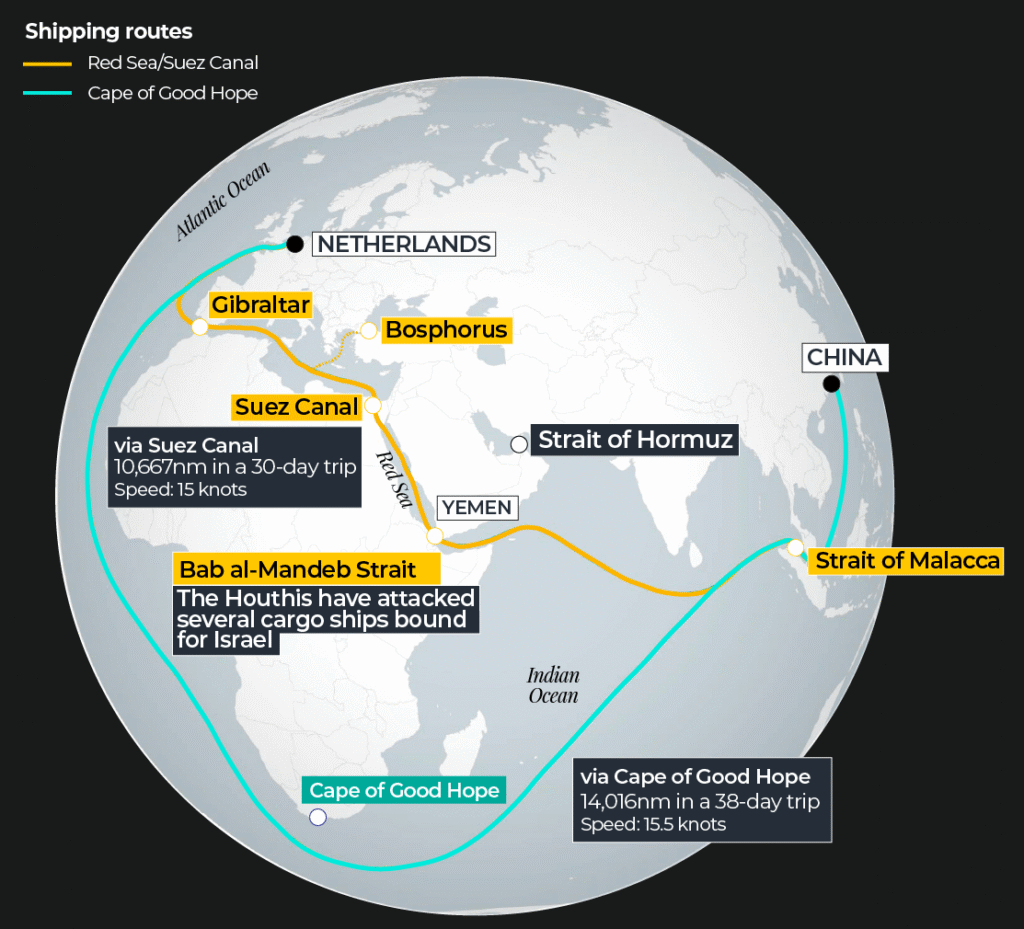
Israel’s shadow campaign against Iranian-linked supply routes has intensified since Houthi forces began attacking commercial shipping in late 2023. Over 100 vessels have been targeted in the Red Sea and Gulf of Aden since then, forcing insurers to raise war-risk premiums from 0.3% to nearly 1% of a ship’s value by mid-2025.
From Tel Aviv’s perspective, striking tankers at or near Yemeni ports sends multiple signals:
- To Iran: that its proxies are never immune, even far from the Strait of Hormuz.
- To Saudi Arabia: that Israel can act decisively in shared maritime corridors.
- To Pakistan: that silence on Red Sea instability will not protect its nationals if Islamabad is perceived as tilting toward Tehran or Riyadh.
In other words, this was not just an attack on a ship it was an act of messaging.
Pakistan’s Silence: A Calculated Non-Reaction
What stood out most was Pakistan’s muted response. Normally quick to denounce Israeli actions, Islamabad issued only a brief Foreign Office statement about “ensuring the safe return of Pakistani crew.”
Why? Analysts suggest two reasons:
- Shehbaz Sharif’s Washington visit: Pakistan’s Prime Minister was preparing for a high-stakes trip to the U.S. Any escalation against Israel risked overshadowing his diplomatic agenda.
- The Saudi–Pakistan defense pact: Signed earlier in 2025, the deal positioned Islamabad as a security partner to Riyadh. But if Pakistan openly accused Israel, it might strain Saudi mediation channels or cast doubt on Pakistan’s credibility as a stable partner.
This restraint reflects Islamabad’s increasingly delicate balancing act: appeasing domestic outrage while maintaining room to maneuver with both Riyadh and Washington.
Media Reactions: Indian and Regional Commentary
Indian media circles picked up quickly on this silence. In one widely watched debate, commentators argued that Pakistan deliberately downplayed the attack to protect Shehbaz Sharif’s U.S. visit.
One panelist quipped: “If Pakistan openly admitted being struck by Israel, it would undermine the entire narrative of its defense pact with Saudi Arabia.”
Others speculated that Israel’s timing was intentional, designed to remind Riyadh and Washington that Tel Aviv remains central to Middle Eastern security.
This Indian framing matters: it highlights how even regional rivals interpret Pakistan’s choices not as weakness but as strategic vulnerability a perception Israel may be eager to amplify.
India’s Angle: A Shipping Vulnerability
While Pakistan faced the crew crisis, India had its own worries. Roughly 70% of India’s westward container trade passes through the Red Sea. Each Houthi strike forces Indian carriers to reroute around the Cape of Good Hope adding nearly 14 days and $1 million in extra fuel costs per voyage.
The Indian Navy has already stepped up escort missions for Indian-flagged vessels, but New Delhi remains wary of entanglement in U.S.-led initiatives like Operation Prosperity Guardian.
Thus, every new attack even one involving Pakistani crew reverberates in Mumbai’s shipping corridors and Delhi’s policy rooms.

International Response: Coalitions and Constraints
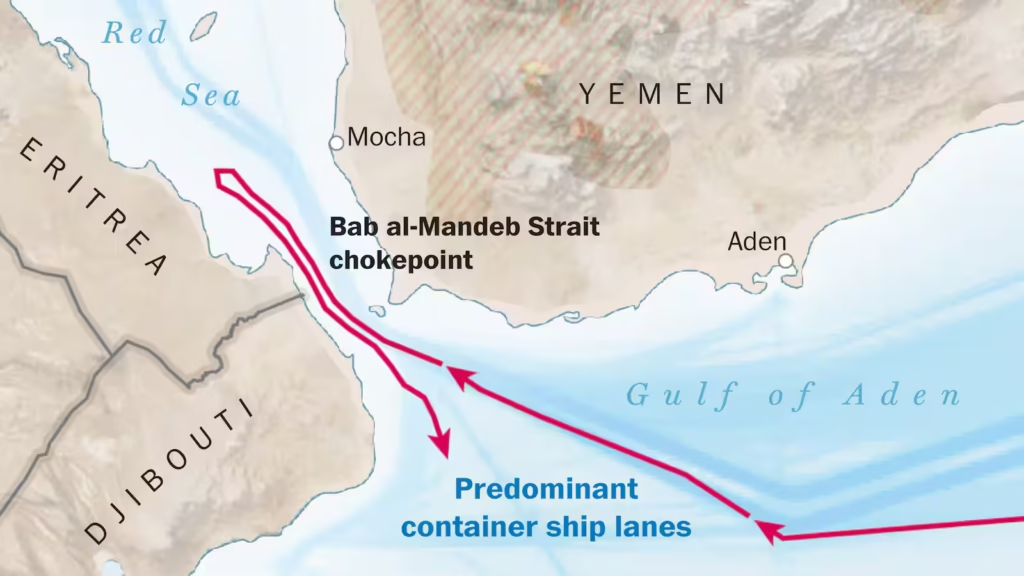
The tanker strike unfolded against the backdrop of multiple naval missions:
- U.S.-led Operation Prosperity Guardian (2023)
- EU’s Aspides mission (2024)
- Independent escorts by India, Japan, and China
Despite these deployments, Houthis and now suspected Israeli actions continue to keep the shipping lanes unstable. This raises uncomfortable questions: can even multilateral patrols truly guarantee maritime safety when regional powers are themselves using the Red Sea as a battleground for messaging?
Historical Parallels
The attack echoes earlier “maritime signaling” episodes:
- The U.S. strike on Iranian oil platforms in 1988 (Operation Praying Mantis).
- Israel’s alleged sabotage of Iranian tankers in 2020–21.
- The 2023–24 Houthi missile campaign in the Red Sea.
Each case illustrates a simple truth: ships are not just commercial assets, but floating billboards of geopolitical intent.
Expert Views: The Larger Risks
- Dr. Sanam Vakil (Chatham House): “Maritime insecurity in the Red Sea has become a proxy arena for great power signaling. Each strike communicates as much to allies as to adversaries.”
- Michael Knights (Washington Institute): “If insurers continue pricing Red Sea risks near 1% of ship value, we could see rerouting costs exceed the 1973 oil shock in real terms.”
These warnings underline that the LPG tanker attack was not just about one vessel or 27 sailors. It’s part of a systemic disruption with ripple effects across global supply chains.
Possible Futures
Looking ahead, three scenarios emerge:
- Escalation – Israel continues targeting vessels linked (even indirectly) to Iran, provoking retaliatory Houthi or Iranian actions.
- Containment – Gulf states quietly mediate to avoid further escalation, allowing limited strikes but preventing direct Israel–Pakistan fallout.
- Normalization of Risk – Insurers and shippers absorb the “new normal,” permanently rerouting traffic and embedding higher costs into global inflation.
Each scenario has implications for South Asia. For Pakistan, the risk is domestic anger if more sailors are endangered. For India, the danger is economic drag from shipping disruptions.
Conclusion: Why This Story Matters
The Ras Issa tanker incident is not a one-off. It is a window into how states weaponize the sea not only against adversaries but also to send messages to partners and rivals.
For Pakistan, it highlighted the limits of quiet diplomacy. For India, it underscored economic vulnerabilities. For Israel, it was another stroke in its long shadow war. And for the global economy, it was yet another reminder that a single strike on a ship can ripple into insurance premiums, inflation, and food security worldwide.


Abhi Platia is a financial analyst and geopolitical columnist who writes on global trade, central banks, and energy markets. At GeoEconomic Times, he focuses on making complex economic and geopolitical shifts clear and relevant for readers, with insights connecting global events to India, Asia, and emerging markets.