


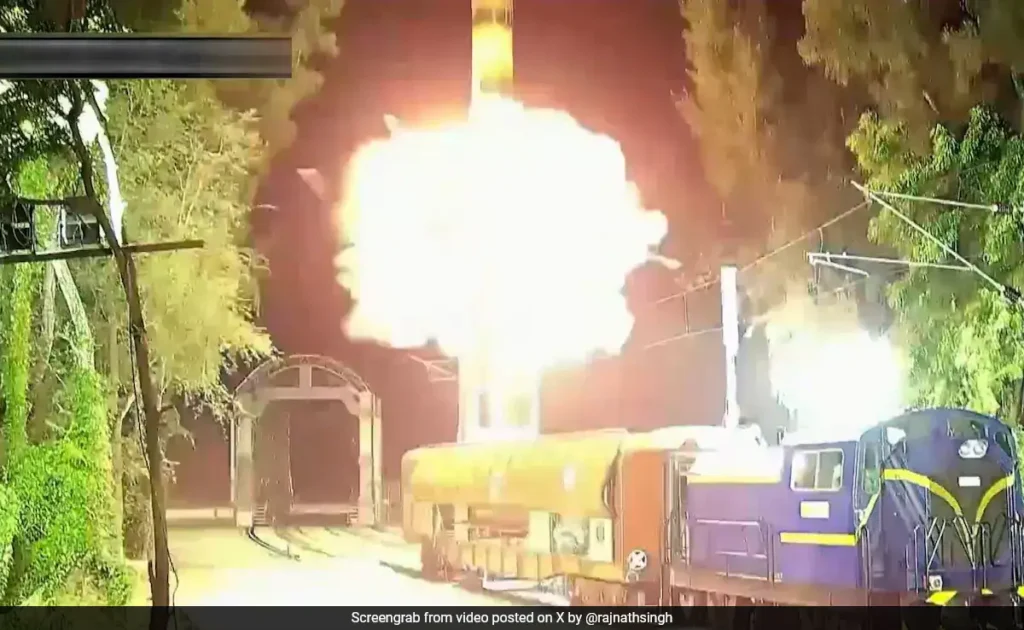
On 24 September 2025, India carried out a missile test that has already made history. The Defence Minister, Rajnath Singh, said early Thursday on X (formerly Twitter) and even shared videos of the explosive lift-off (PIB).
At first glance, it may seem like just another weapons trial. India already has a wide arsenal of short-, medium-, and long-range missiles. But this was no ordinary test. For the first time, India fired its Agni Prime missile a nuclear-capable missile with a range of 2,000 km from a railway-based launcher.
This one achievement puts India in a very small global club. Until now, only Russia, the United States, and China had shown this ability. North Korea also claimed a railway launch in 2021, but experts have long doubted whether its system is fully reliable (Reuters).
India has now demonstrated that it too can launch deadly missiles from a moving rail network, giving the country new strength and flexibility in times of war.
What Makes Rail-Based Launch Special?
Rail-based launches are not just about showing off new technology. They change how a country can plan its defence.
Normally, missiles are kept in silos (underground launch stations) or carried on mobile road vehicles. Both of these can be tracked by satellites. Silos are fixed targets an enemy always knows where they are. Trucks offer some mobility, but their movement is limited by road conditions and military convoys are easier to detect from space.
Rail, however, changes the game.
India’s rail network is the fourth-largest in the world, with nearly 70,000 km of tracks (Indian Railways). With this massive web of rail lines, the military can move missiles across the country faster, keep them hidden in tunnels, and launch them from unexpected locations.
As Rajnath Singh explained, the rail launcher “can move on the rail network without pre-conditions. This allows shorter reaction time and greater mobility.”
In simple words: the missile system can be hidden, moved quickly, and fired before the enemy knows where it is.
Strategic Advantages

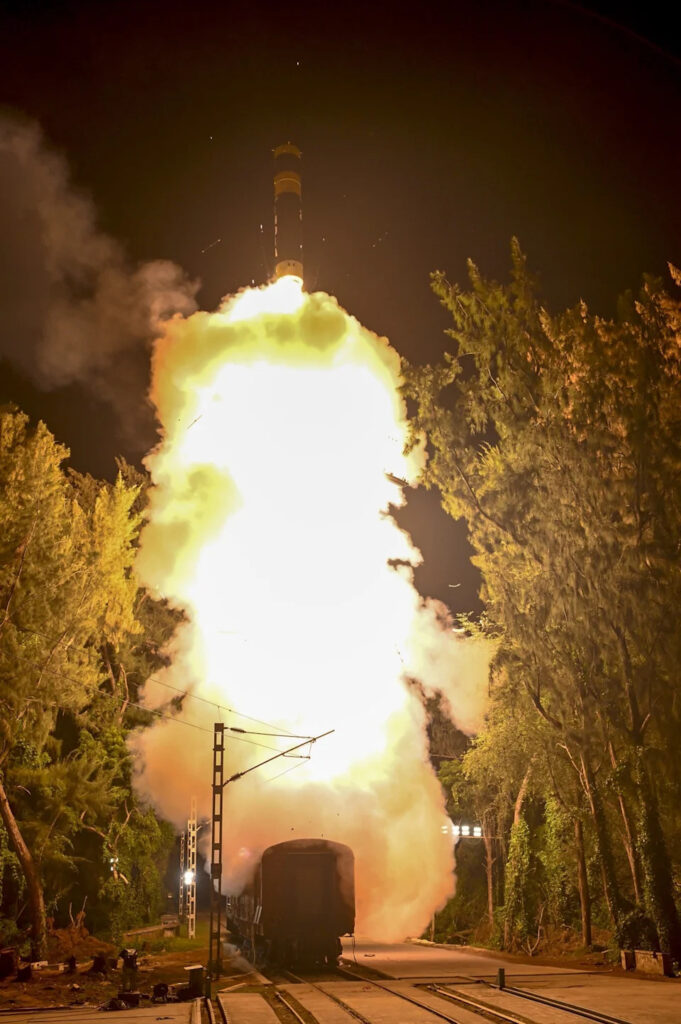
The biggest benefit of a rail-based missile system is surprise.
Imagine this: India stores the Agni Prime missile inside a sealed canister loaded on a train. The train looks ordinary just like any other goods carrier. When the moment comes, the train moves to a tunnel or a remote track. In less than an hour, the missile is upright and launched, leaving the enemy with no time to react.
Some key advantages include:
- Wider Launch Points – As long as there is a railway line, a missile can be fired.
- Hiding in Tunnels – Missiles can remain completely invisible to enemy satellites until the very last second.
- Reduced Target Risk – In war, enemies often strike known missile bases first. A missile on a moving train is much harder to find and destroy.
- Faster Mobility – Railways cover terrain that might be difficult for trucks or heavy launchers.
This is why countries like Russia and the US invested in rail-launched systems during the Cold War. And now, India has joined them.
Possible Drawbacks
Of course, no system is perfect. Rail-based launchers also face challenges:
- Limited to Tracks – Missiles can only move where there are railway lines. If an area has no tracks, the system cannot work there.
- Sabotage Risk – In wartime, rail networks could be attacked or damaged, slowing down movement.
- Launch Precision – Missiles often need specific conditions (like angle, ground stability, direction). Rail launchers may not always give perfect precision.
Even with these issues, experts say the benefits of mobility and surprise far outweigh the risks.
Global Context: Who Else Has Done This?
Rail-launched missiles are not new. The idea dates back to the Cold War.
- Soviet Union (1980s): The USSR built the RT-23 Molodets system, a nuclear missile fired from special trains. Each train looked like a normal freight service but carried deadly ICBMs. (RIA Novosti)
- United States (1980s–1990s): The US created the Peacekeeper Rail Garrison, loading missiles on trains to guarantee survival even if silos were destroyed. The program ended after the Cold War, and one of the trains now sits in a museum. (U.S. Air Force Museum)
- Russia (2010s): Russia planned the Barguzin BZhRK rail-based missile system. It was supposed to be operational by 2020, but reports suggest it has been paused.
- North Korea (2021): North Korea claimed to fire missiles from a “railway-borne system” that flew 800 km before hitting a target. South Korea and Japan confirmed the missile test, but could not verify if it really launched from a train. (BBC)
Now, India has proven it can do the same.
Why This Matters for India

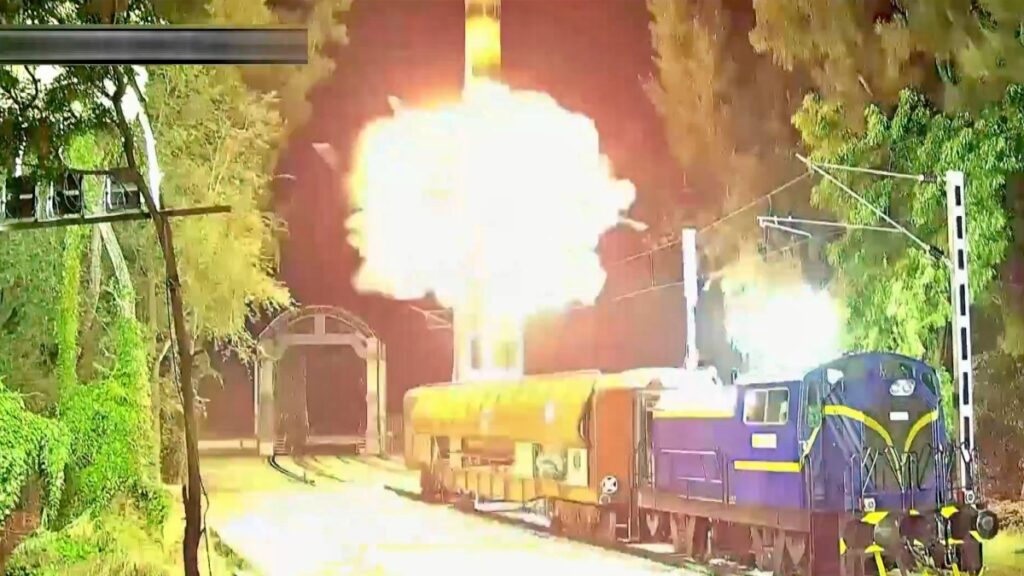
India faces unique security challenges. It shares long, disputed borders with both China and Pakistan. Both of these countries have advanced missile programs and growing military strength.
In 2019, during cross-border tensions, Pakistan even used drones and missiles to target Indian bases. Such attacks highlighted the need for more flexible storage and launch options.
With the Agni Prime now rail-capable, India can:
- Store missiles in more locations.
- Launch from anywhere in the country.
- Avoid being pinned down by enemy satellites.
This means India’s nuclear deterrence is stronger and harder to neutralise.
Expert Views
Military experts see this test as a major leap.
- Ajai Shukla, a defence analyst, noted that “rail-based launchers are not about adding more missiles, but about protecting the ones you already have.” (Business Standard)
- Dr. Rajeswari Pillai Rajagopalan, from the Observer Research Foundation, explained that “rail mobility ensures survivability, which is the backbone of nuclear deterrence.” (ORF)
- Even Western analysts, often cautious about India’s defence moves, admitted this was a “game-changer in South Asia.” (Foreign Policy)
Risks and Concerns
Some critics warn that rail-based missile systems could spark an arms race in the region.
China already has rail systems for missiles. Pakistan, though not yet advanced in this area, could try to counter India’s new capability by investing in similar technologies.
Others worry about the safety of civilian railways. Could mixing military use with public networks create risks? The Indian Army has clarified that dedicated trains and controlled zones would be used, not civilian routes.
Still, questions about security, costs, and long-term maintenance remain.
The Road (or Rail) Ahead

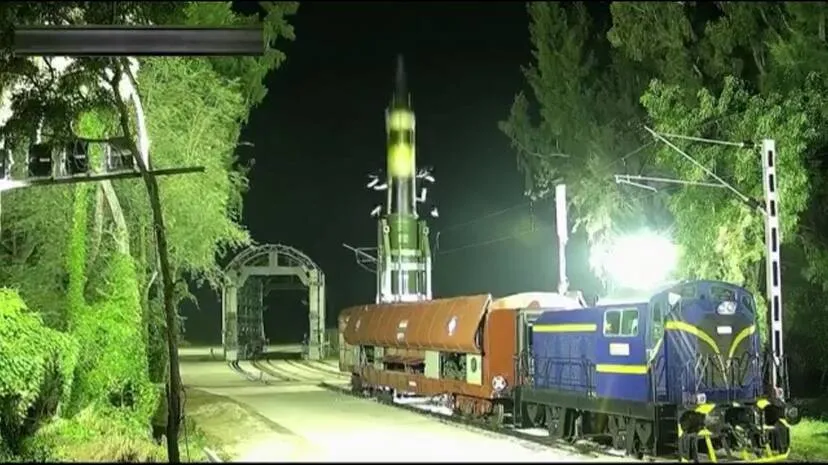
The Agni Prime is only the start. Defence sources suggest India may test other missiles with rail-based systems in the coming years. If this becomes a standard practice, India will have one of the most flexible missile deployment systems in the world.
For now, the successful test shows three things:
- India has the technology to match global powers.
- Railways are no longer just for passengers and freight they are now part of national defence.
- The Agni Prime is more than a missile; it’s a symbol of how India is preparing for the challenges of the future.
Conclusion
India’s successful rail-based Agni Prime missile test is not just about military hardware. It is about strategy, survival, and signalling strength to the world.
As Defence Minister Rajnath Singh proudly said, this is a “landmark achievement” that has placed India among a select few nations with this advanced capability.
The message is clear: whether from silos, trucks, or now railways, India is ready to defend itself anywhere, anytime.


Abhi Platia is a financial analyst and geopolitical columnist who writes on global trade, central banks, and energy markets. At GeoEconomic Times, he focuses on making complex economic and geopolitical shifts clear and relevant for readers, with insights connecting global events to India, Asia, and emerging markets.