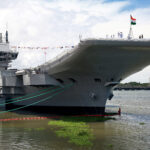
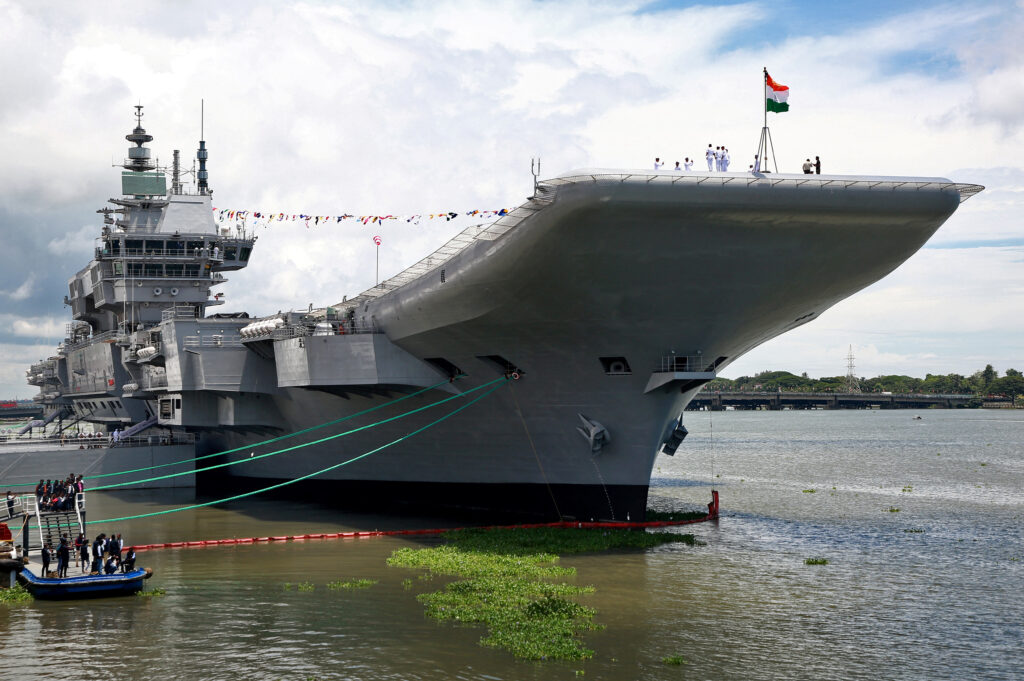
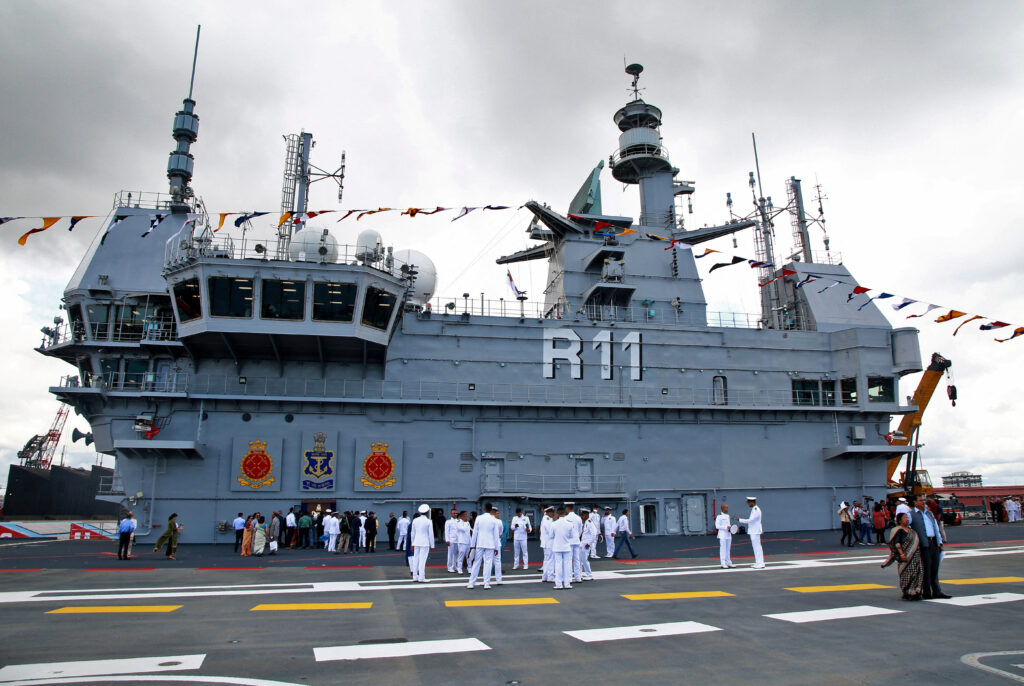
When Prime Minister Narendra Modi chose to celebrate Diwali aboard INS Vikrant, India’s first indigenously built aircraft carrier, it wasn’t just a symbolic gesture it was a statement of intent.
Standing on the deck of a ship that represents Atmanirbhar Bharat (self-reliant India), PM Modi made a declaration that resonated far beyond India’s shores:
“The Indian Navy is the guardian of the Indian Ocean.”
This statement, simple yet profound, has strategic and geopolitical implications that echo across Beijing, Washington, and the entire Indo-Pacific.
India’s Maritime Renaissance: From Coastal Power to Blue-Water Ambition
India’s naval story has been quietly transformative. For decades, the Indian Ocean was seen more as a trade corridor than a theater of power. But that’s changing fast.
Today, India operates two aircraft carriers the Russian-origin INS Vikramaditya and the fully homegrown INS Vikrant placing it among a small club of nations capable of building and operating such complex warships.
More importantly, Modi revealed that “every 40 days, India is adding a new warship or submarine to its naval fleet.” This rate of expansion underscores how India’s defense priorities are shifting from land borders to the vast maritime frontier.
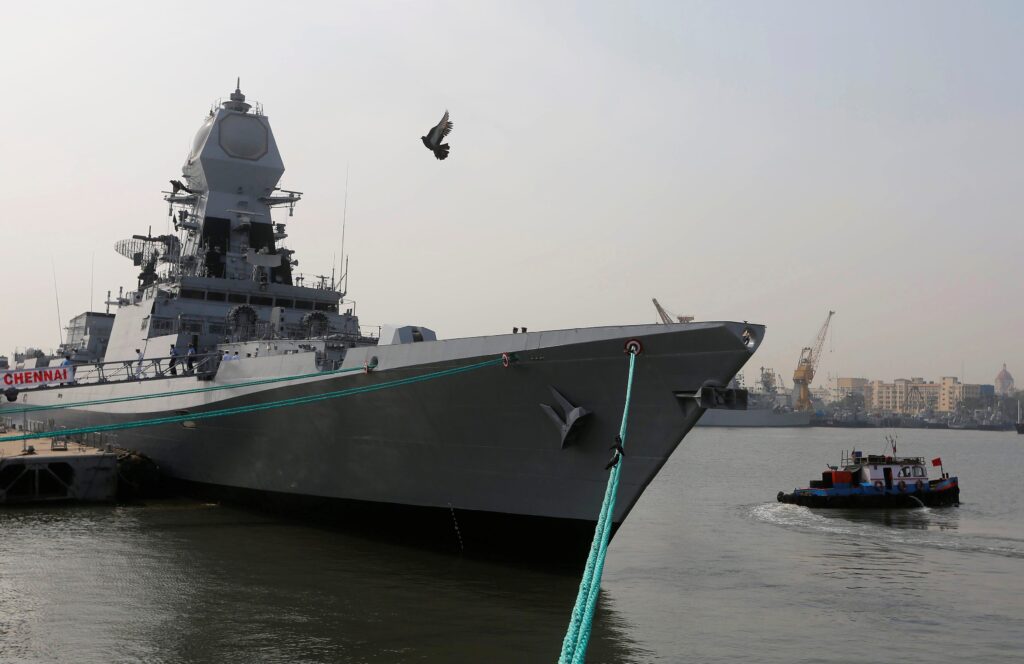
The Indian Navy’s modernization drive, with over $50 billion invested since 2014, includes stealth destroyers (Project 15B), Scorpene-class submarines, and a push toward nuclear-powered assets.
This isn’t just about firepower it’s about presence. The more ships fly the Indian flag across the Indian Ocean, the greater India’s ability to deter threats, secure trade, and project influence.
Why the Indian Ocean Matters: The Artery of Global Trade
The Indian Ocean is not just a body of water it’s the world’s energy highway.
According to the International Energy Agency (IEA) and UNCTAD data:
- Over 66% of global oil trade passes through the Indian Ocean.
- Nearly 50% of the world’s container shipments transit its routes.
- Key chokepoints like the Strait of Hormuz, Malacca Strait, and Bab el-Mandeb are lifelines of global commerce.
As PM Modi highlighted aboard INS Vikrant:
“In securing these routes, the Indian Navy stands as the true guardian of the Indian Ocean.”
This “guardian” role isn’t about aggression it’s about stability. India’s naval presence ensures safe sea lanes for all nations, echoing the doctrine of “Security and Growth for All in the Region” (SAGAR) that Modi introduced in 2015.
China’s Obsession: “Indian Ocean is Not India’s Ocean”
Beijing has never been comfortable with India’s maritime rise. Chinese state media and official documents have long objected to the term “Indian Ocean”, arguing that “no ocean belongs to a single nation.”
In Mandarin publications, China has even started renaming undersea features and regions, a subtle attempt to dilute India’s symbolic ownership of the ocean that bears its name.
China’s naval footprint has also expanded.
From its military base in Djibouti to the deployment of research and spy vessels in the Indian Ocean, China’s presence is growing slowly but deliberately.
By 2027, Beijing is expected to have four aircraft carriers, some capable of sailing deep into the Indian Ocean from bases along the “String of Pearls” ports it controls in Myanmar, Sri Lanka (Hambantota), and Pakistan (Gwadar).
As one Indian naval analyst put it:
“China doesn’t need to fire a shot to challenge India; it just needs to show up.”
India’s Strategic Counter: A Layered Maritime Defense
To counter this, India has been quietly building a network of maritime partnerships and forward positions.
- The Andaman and Nicobar Command now hosts expanded airstrips and surveillance assets.
- Joint patrols with France, Australia, and the U.S. are routine under the Quad framework.
- Agreements with nations like Seychelles, Oman, and Mauritius allow India access to key island bases.
This is part of a long-term vision ensuring that the Indian Navy can operate seamlessly from the Western Indian Ocean near Africa to the Eastern edge near the Malacca Strait.
Alfred Thayer Mahan’s Prophecy and India’s Moment
Over a century ago, U.S. naval strategist Alfred Thayer Mahan wrote:
“Whoever controls the Indian Ocean will dominate Asia. The ocean is the key to the seven seas.”
That prophecy feels more relevant than ever.
India’s growing naval power isn’t just about regional pride it’s about shaping the future balance of power in the Indo-Pacific.
History shows that empires with strong navies from Britain to the U.S. enjoyed economic and geopolitical dominance. India’s leadership now seeks to ensure that the same maritime logic applies in the 21st century.
A Multipolar Ocean: Challenges Ahead
While India’s naval expansion is impressive, challenges remain.
- Budget constraints: India’s defense spending, at roughly 2% of GDP, still lags behind China’s 4%.
- Technology gaps: Indigenous submarine programs and carrier-based aircraft are still catching up to global standards.
- Geopolitical complexity: The Indian Ocean is not just about India and China it’s also home to growing U.S., French, and British deployments.
Moreover, climate change, piracy, and non-state maritime threats are adding new layers of complexity to ocean governance.
India will need not only military might but also diplomatic agility to maintain its leadership role.
The Local and Global Angle: What This Means for India and the Region
For India’s domestic audience, the message from Modi’s visit to INS Vikrant is clear India must secure its maritime backyard to ensure national prosperity.
For regional neighbors from the Maldives to Oman a strong Indian Navy provides reassurance against both piracy and great-power rivalry.
For the Middle East, especially Saudi Arabia and the Gulf nations, India’s presence ensures stability along vital oil routes a crucial factor amid global uncertainty.
In essence, India’s naval rise benefits not only its own economy but also the broader network of nations dependent on open sea lanes.
Expert Voices: What Analysts Are Saying
Commodore (Retd.) C. Uday Bhaskar, a leading maritime strategist, notes:
“The symbolism of celebrating Diwali on INS Vikrant is significant. It underlines that India’s destiny is tied to the ocean. The future conflicts may not be on land but on water economic, strategic, and technological.”
Similarly, Dr. Raja Mohan, from the Institute of South Asian Studies (Singapore), writes:
“India’s maritime awakening is 70 years overdue. The coming decade will decide whether India can translate geography into power.”
Looking Ahead: The 2035 Vision
By 2035, India aims to rival the People’s Liberation Army Navy (PLAN) in the Indian Ocean Region.
If projections hold, India will operate 160+ major warships, including a third aircraft carrier and nuclear submarines, while also expanding shipbuilding hubs in Kochi, Vishakhapatnam, and Goa.
The goal isn’t confrontation it’s deterrence through strength.
As PM Modi said:
“You don’t have to use power to prove power. But you must have it.”
Conclusion: The Ocean that Defines India’s Future
The Indian Navy’s evolution from a regional patrol force to a blue-water guardian represents a profound shift in India’s strategic posture.
As the world’s geopolitical tides shift, the Indian Ocean is becoming the new global center of gravity and India, with its expanding navy and confident leadership, is determined to be its steward.
India isn’t just guarding the ocean; it’s shaping the destiny of the waters that define the 21st century.

Abhi Platia is a financial analyst and geopolitical columnist who writes on global trade, central banks, and energy markets. At GeoEconomic Times, he focuses on making complex economic and geopolitical shifts clear and relevant for readers, with insights connecting global events to India, Asia, and emerging markets.