


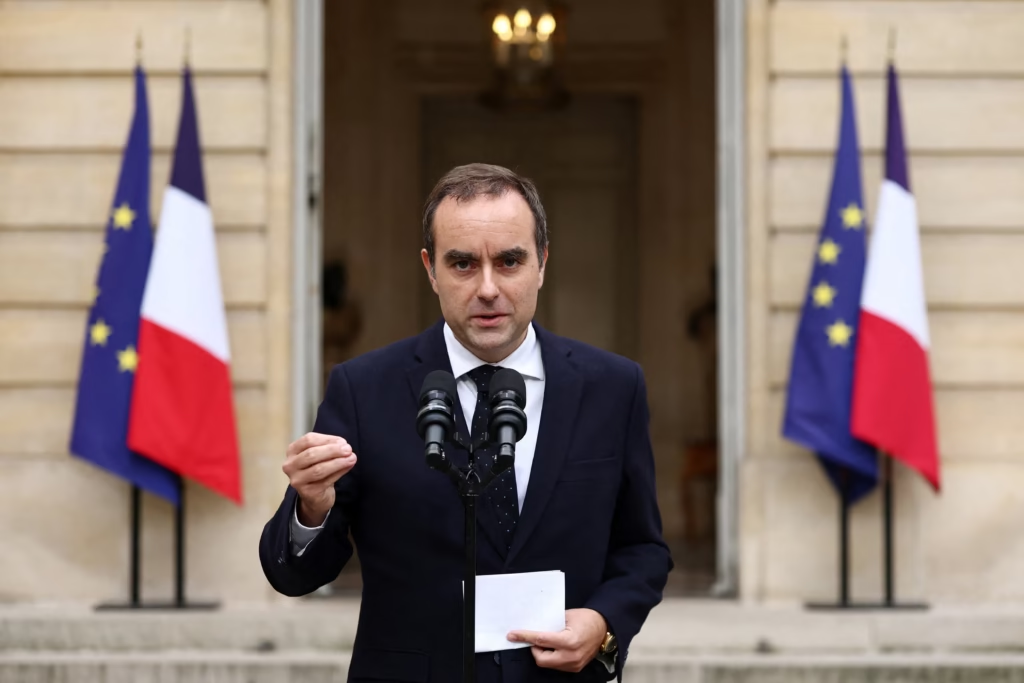
Paris October 6, 2025. France was thrown into political chaos on Sunday after Prime Minister Sébastien Lecornu abruptly resigned, less than 12 hours after officially unveiling his new cabinet. The move has not only shocked political observers but also rattled global markets, raising questions about France’s political stability and the broader direction of the European Union at a time of rising geopolitical uncertainty.
Lecornu, 38, was appointed by President Emmanuel Macron as a generational bridge seen as a pragmatic leader capable of restoring confidence in a government struggling with social unrest, high inflation, and voter fatigue. Instead, his resignation within hours of assuming power marks one of the shortest-lived premierships in modern French history.
The Immediate Fallout: Political Shock and Market Jitters
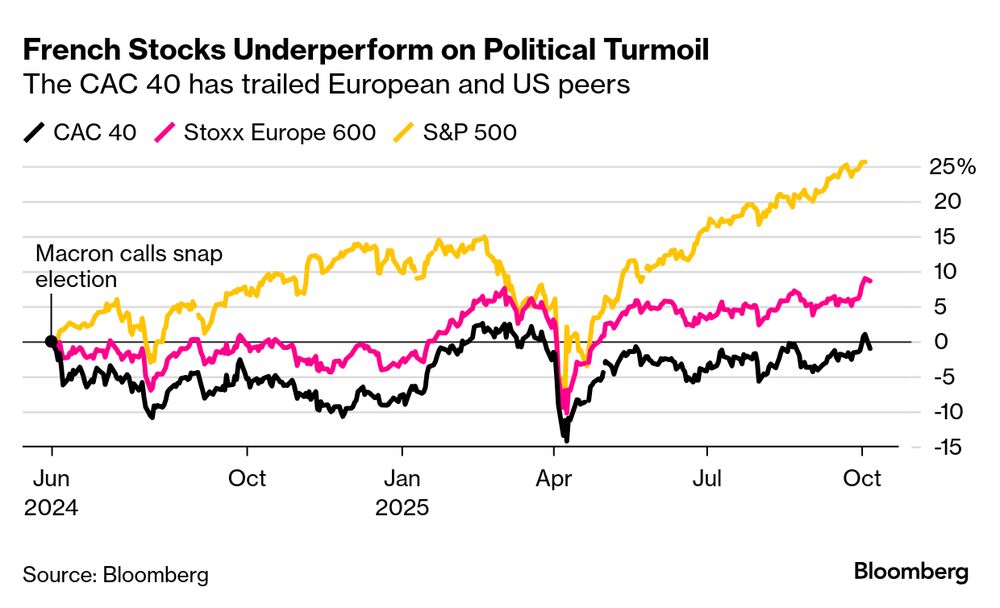
By midday Monday, the CAC 40 index dropped nearly 2.3%, wiping out weeks of gains. The euro slid 0.8% against the U.S. dollar, and yields on French 10-year bonds spiked to 3.25%, their highest level since 2023.
For traders and investors, Lecornu’s departure was not just political theatre it signaled uncertainty in one of Europe’s economic pillars, with ripple effects likely to spread across the eurozone.
“The resignation underscores the fragility of France’s coalition structure and the absence of clear policy direction,” said Amélie Durand, chief economist at Paris-based think tank Institut Montaigne. “Markets abhor unpredictability and France just became unpredictable again.”

The French presidency, caught off guard, issued a brief statement promising “continuity of governance,” but offered no clear timeline for appointing a new prime minister. Behind the scenes, sources close to the Élysée Palace suggest deep divisions between Lecornu and Macron over key ministerial appointments, particularly in the finance and defense portfolios.
A Crisis Rooted in Political Fatigue
Lecornu’s resignation didn’t emerge from nowhere. His brief tenure highlighted the deep fractures within Macron’s centrist alliance, which has struggled to maintain parliamentary control since the 2022 elections.
Since then, Macron has reshuffled his cabinet multiple times but failed to quell growing public anger over pension reforms, cost-of-living pressures, and a perceived disconnect between Parisian elites and ordinary citizens. Lecornu was meant to bring “fresh energy and unity,” but the infighting that erupted during cabinet formation suggested the exact opposite.
Comparatively, France has experienced similar volatility before from the resignations of Édouard Philippe and Elisabeth Borne to the collapse of the Fillon government in the mid-2010s. However, no resignation has come this abruptly or dramatically in modern memory, making Lecornu’s exit a defining political rupture.
Economic Ripples: Confidence Takes a Hit
France’s economic indicators were already flashing warning signs before the resignation. The country’s debt-to-GDP ratio stands near 111%, one of the highest in the EU, while growth projections for 2025 have been revised down to 1.1%.
The Lecornu episode has now triggered renewed speculation about France’s fiscal credibility especially as investors demand higher yields to hold French bonds.
Meanwhile, the eurozone’s economic core long anchored by the Franco-German partnership is showing cracks. Berlin is facing recessionary headwinds, and with Paris politically adrift, investors fear a leadership vacuum in Europe’s economic engine.
“France’s instability adds fuel to the fire,” noted Lorenzo Martelli, a European markets strategist at Nomura. “The euro is under pressure, and we might see capital outflows toward dollar-denominated assets if clarity doesn’t return soon.”
Global and Geopolitical Implications

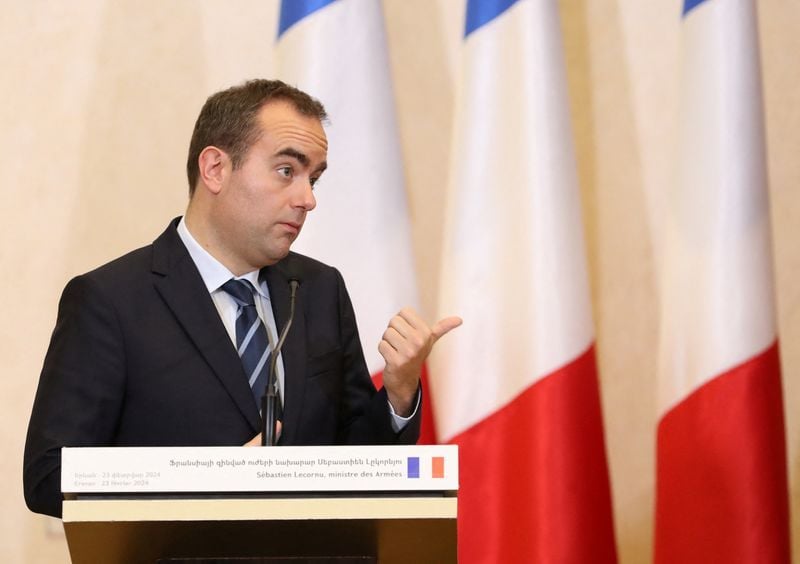
The shock in Paris isn’t contained within Europe. For India, the Middle East, and the Indo-Pacific, France has been a pivotal defense and technology partner from the Rafale fighter jet deals to emerging cooperation in AI, space, and nuclear energy.
Analysts in New Delhi worry that prolonged political instability could delay ongoing negotiations and defense deliveries. India’s Ministry of External Affairs has thus far avoided official comment, but insiders note that continuity in French policy is crucial for Indo-Pacific stability.
Meanwhile, the Middle East is watching closely. France has positioned itself as a diplomatic bridge between Europe and Gulf economies, especially through renewable energy and arms contracts. Lecornu’s resignation could temporarily slow momentum on bilateral initiatives, particularly in energy transition investments.
Expert Perspectives: “Crisis of Governance, Not Policy”
Political experts argue that Lecornu’s fall highlights not a failure of policy vision but a crisis of governance and legitimacy.
“Macronism as a project is exhausted,” said Dr. Jean-Paul Mignot of Sciences Po Paris. “It was built on centrist compromise but when everyone feels excluded, compromise collapses.”
That sentiment echoes across Europe. In Italy, Spain, and even Germany, centrist governments face similar backlash amid populist resurgence and voter polarization. Lecornu’s implosion may therefore serve as a warning sign for Europe’s democratic core that even the most stable systems are not immune to rapid political erosion.
What Happens Next? Scenarios and Projections
- Scenario 1: Macron Regains Control
Macron could move swiftly to appoint a trusted loyalist such as Finance Minister Bruno Le Maire to stabilize markets and restore investor confidence. However, that risks alienating factions within the LDP that see Macron as overreaching. - Scenario 2: Technocratic Transition
There is speculation about a “technocratic caretaker” arrangement, where a nonpartisan figure leads a temporary government until new elections are called. This might calm markets but stall legislative reforms. - Scenario 3: Snap Elections
The most radical but increasingly plausible option. Early elections would be a gamble for Macron, given the far-right National Rally’s surge in polls. But it could also reset the political landscape, offering a fresh mandate.
Each path carries risks. The only certainty is that France has entered a phase of deep political introspection, with global consequences.
Historical Parallels: Lessons from 1958 and 1968

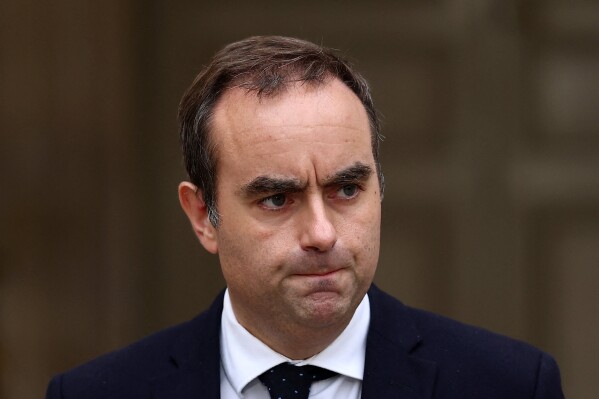
France’s Fifth Republic was born out of crisis Charles de Gaulle’s 1958 return amid Algerian turmoil. Similarly, the student and labor revolts of 1968 reshaped the country’s political fabric.
While today’s situation is less violent, the underlying dynamic is similar: an erosion of trust in leadership and institutions. The Lecornu resignation, though not a revolution, could mark the start of another realignment in French politics perhaps toward a more fragmented, coalition-based era.
A European Test Case
The episode also tests the resilience of European financial architecture. The European Central Bank (ECB) has little appetite for further bond-market intervention, but a prolonged French crisis could force its hand. If French yields continue rising, the ECB may need to step in echoing the Italian debt episodes of the early 2020s.
Such moves would reignite debates about fiscal sovereignty within the EU an issue that has long divided northern and southern members.
Conclusion: A Shock That Could Reshape Europe
Sébastien Lecornu’s resignation is more than a headline it’s a symptom of a deeper malaise across European democracies.
The event underscores how political volatility can swiftly morph into economic contagion, shaking confidence in the very institutions that sustain modern governance.
For France, the immediate challenge is restoring stability. For Europe and the global economy the bigger question is whether this marks the beginning of a new cycle of political fragmentation and economic vulnerability.
As Paris braces for the next chapter, one thing is clear: the tremors felt in the French capital will echo far beyond its borders.


Abhi Platia is a financial analyst and geopolitical columnist who writes on global trade, central banks, and energy markets. At GeoEconomic Times, he focuses on making complex economic and geopolitical shifts clear and relevant for readers, with insights connecting global events to India, Asia, and emerging markets.