


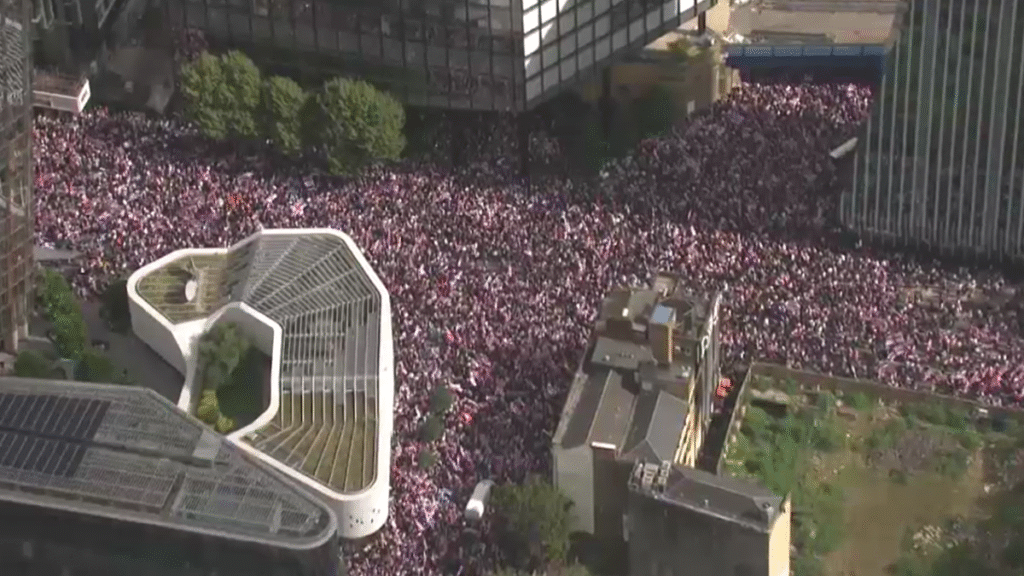
On September 13, 2025, central London witnessed one of the largest far-right demonstrations in decades. An estimated 110,000–150,000 people gathered for the “Unite the Kingdom” march, organized by controversial activist Tommy Robinson, according to Reuters.
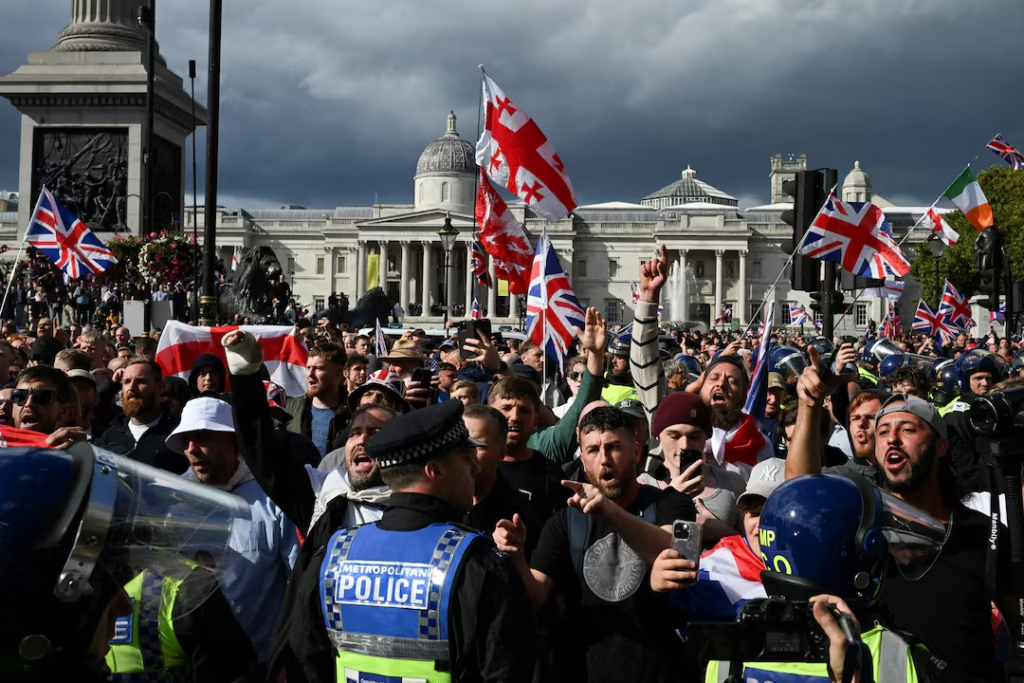
The march, filled with chants of “Stop the invasion” and thousands of Union Jacks, was framed as a fight for free speech and national sovereignty. But it quickly escalated into violence, leaving 26 police officers injured and at least 24 people arrested, Reuters reported.
While supporters described the protest as a patriotic stand, critics including the government condemned the violence and extremist overtones, warning of the dangerous normalization of hate speech.
Why Did the Protest Happen?

The protest didn’t emerge out of thin air. It was the result of years of growing anxiety over immigration, identity, and economic insecurity.
- Immigration surge: The UK recorded more than 650,000 net migrants in 2024, the highest figure in recent history, according to the Office for National Statistics. Protestors argued that the government has “lost control” of its borders.
- Cultural identity: Many demonstrators claimed traditional British values were under threat, with multiculturalism being cast as a “failed experiment.”
- Economic strain: Rising housing prices, strained healthcare, and job insecurity have fueled frustration — with immigrants often scapegoated for systemic problems.
- Free speech debates: Protestors argued that voicing concerns about immigration and Islam is increasingly labeled as “hate speech,” leaving them silenced.
Robinson tapped into these grievances, presenting the march as a “defense of Britain’s heritage.” According to Reuters, his message resonated with tens of thousands who feel ignored by mainstream politics.

How the Day Unfolded
The Unite the Kingdom march began peacefully at Trafalgar Square, before demonstrators moved through central London.
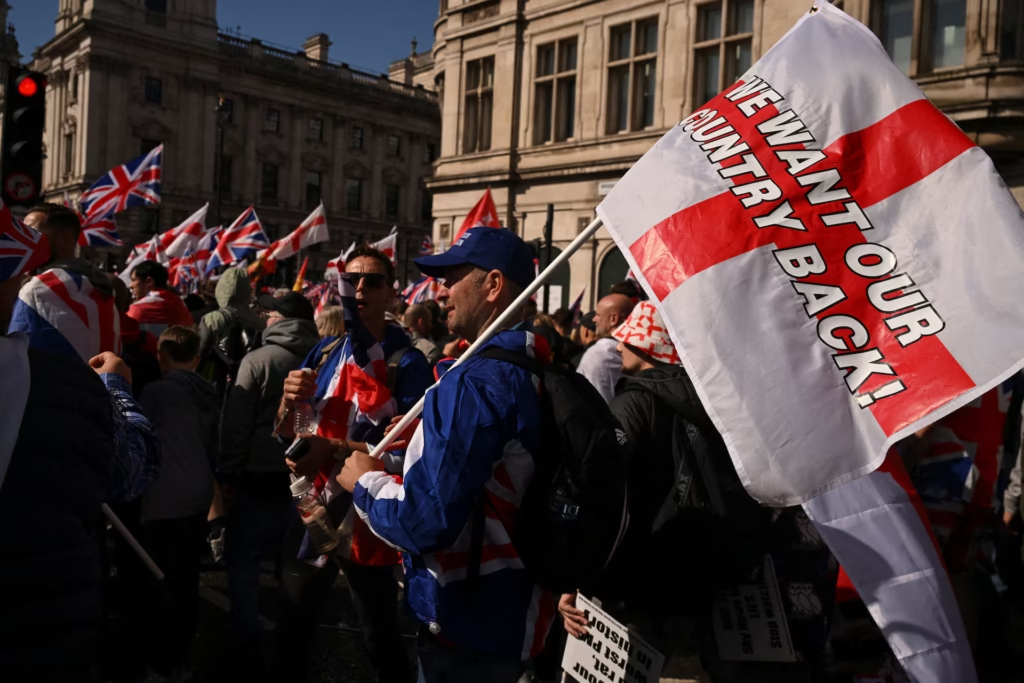
Chants of “Take back our country” echoed, alongside giant banners reading “Enough is Enough.”
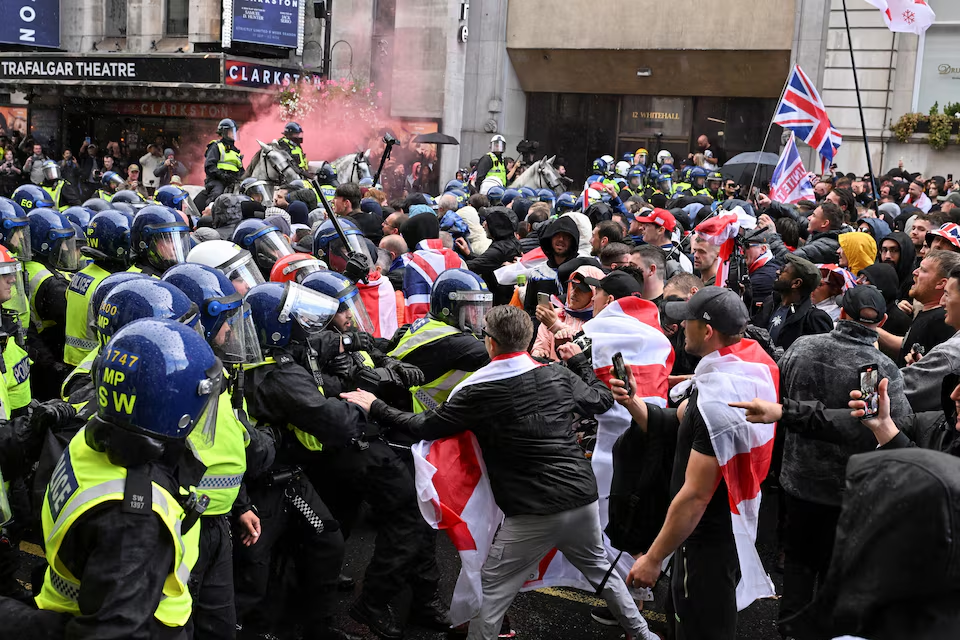
But as crowds swelled, tensions escalated. Groups of protestors attempted to break police barricades, throwing flares, bottles, and smoke bombs. The Metropolitan Police confirmed 26 officers were injured, with several hospitalized after clashes, The Guardian reported.
At least 24 arrests were made for violent disorder and public order offenses, according to Reuters.
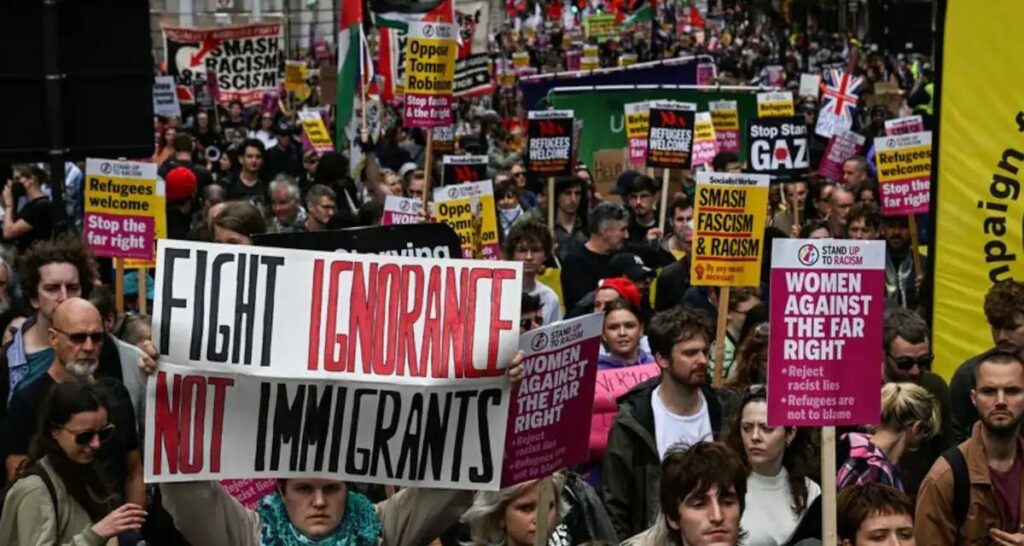
Meanwhile, a counter-protest organized by “Stand Up to Racism” drew about 5,000 people, chanting “Refugees are welcome here”. Though smaller in size, it underscored Britain’s deep social divide.
What Protestors Demanded

The rally lacked a formal manifesto, but key themes emerged:
- Stricter immigration controls – calls to deport undocumented migrants and cap asylum intake.
- Defending free speech – demands to roll back hate-speech laws seen as silencing dissent.
- Restoring national pride – heavy use of the Union Jack and St. George’s Cross as symbols of defiance.
- Political accountability – claims that both Conservative and Labour governments have “betrayed” the working class.
One of the most shocking moments came when Elon Musk addressed the rally via video link, telling demonstrators to “fight back or die.” This language was swiftly condemned by Downing Street as “dangerous and inflammatory,” The Guardian reported.
Government and Political Response
The march triggered immediate political reaction.
- Prime Minister Keir Starmer said that while the right to peaceful protest must be respected, “Britain will not allow its flag to be hijacked by extremists.” He condemned the violence and reaffirmed that hate will not define national identity, according to Reuters.
- No. 10 Downing Street singled out Musk’s remarks as “irresponsible,” warning they could incite further extremism.
- Opposition voices argued that ignoring legitimate public concerns about housing, healthcare, and inequality risks fueling the rise of such movements.
The Metropolitan Police also came under scrutiny. Despite deploying thousands of officers, critics said the force underestimated the violence risk, given Robinson’s history of mobilizing far-right supporters.
Human Impact
Beyond numbers and politics, the rally revealed the emotional rawness of Britain’s identity crisis.
- For protestors, many of them working-class, the march was a release of anger and frustration at being ignored by elites.
- For immigrants and minority groups, the sight of tens of thousands chanting anti-immigration slogans was frightening. The Muslim Council of Britain condemned the rally, warning it risks normalizing Islamophobia.
- For police, the day was bruising — with dozens of officers injured and images of battered helmets and bloodied uniforms circulating online.
The human cost underscores the depth of division in British society: one group feels abandoned, another feels threatened, and both struggle to coexist in a changing nation.
Wider Implications
The Unite the Kingdom rally is not an isolated incident it reflects broader global trends of rising right-wing populism. From Marine Le Pen in France to Alternative für Deutschland in Germany, similar forces are gaining ground.
For the UK, the protest raises urgent questions:
- Will immigration policy harden? Pressure is mounting on the government to act.
- Can free speech debates be balanced with protection against hate speech? The line is increasingly blurred.
- Will mainstream politics address economic grievances? If not, the far-right will keep exploiting them.
According to Georgetown University’s Bridge Initiative, such rallies risk legitimizing xenophobia under the banner of patriotism a trend that could fracture Britain’s social fabric if left unchecked.
Conclusion
The London anti-immigration protest of September 2025 will likely be remembered as a turning point in Britain’s struggle over identity and immigration. With over 100,000 people on the streets, it revealed just how deeply anger and division run.
But while the scale was historic, the violence and extremist rhetoric drew condemnation from across the political spectrum. For many, the question now is whether the UK can find constructive ways to address grievances without empowering hate.
As Prime Minister Keir Starmer warned, Britain cannot allow its national symbols to be weaponized by those seeking division. Whether the country heeds that warning may determine not just the future of immigration policy but the future of British unity itself.


Abhi Platia is a financial analyst and geopolitical columnist who writes on global trade, central banks, and energy markets. At GeoEconomic Times, he focuses on making complex economic and geopolitical shifts clear and relevant for readers, with insights connecting global events to India, Asia, and emerging markets.