


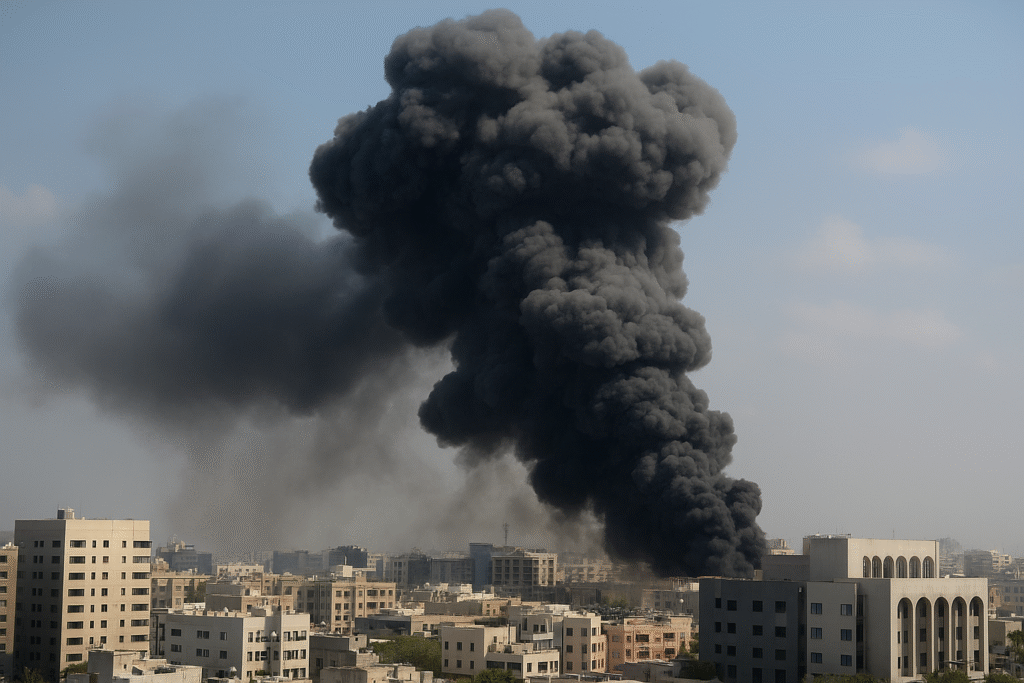
In a shocking turn of events that reverberated throughout the Middle East, Israel conducted a targeted strike in Doha, Qatar, on September 9, 2025, aimed at a gathering of Hamas political leaders. This unprecedented attack on Qatari territory resulted in the deaths of several Hamas individuals, left many others injured, and disrupted diplomatic attempts to establish a ceasefire in Gaza.
The incident has been characterized as a diplomatic earthquake, sparking serious worries about national sovereignty, regional stability, and the delicate nature of ongoing negotiations. This strike occurred just two days after Donald Trump had issued a “final warning” to Hamas on September 7, urging the group to agree to a U.S.-supported ceasefire. Many analysts are now concerned that Israel’s action could not have taken place without at least some level of American awareness, despite U.S. officials publicly disavowing any involvement.
| Detail | Information |
|---|---|
| Location | Doha, Qatar |
| Date | 9 September 2025 |
| Target | Hamas political bureau meeting |
| Casualties | 5–6 Hamas leaders killed, 1 Qatari officer dead, dozens injured |
| Significance | First Israeli strike inside Qatar |
| Impact | Ceasefire process derailed, regional outrage |
The Strike That Shook Doha

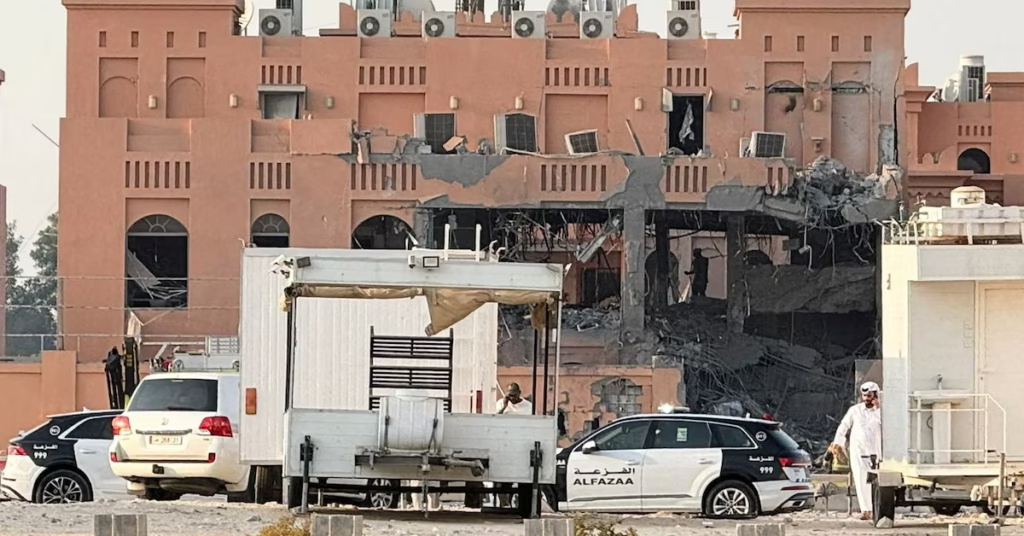
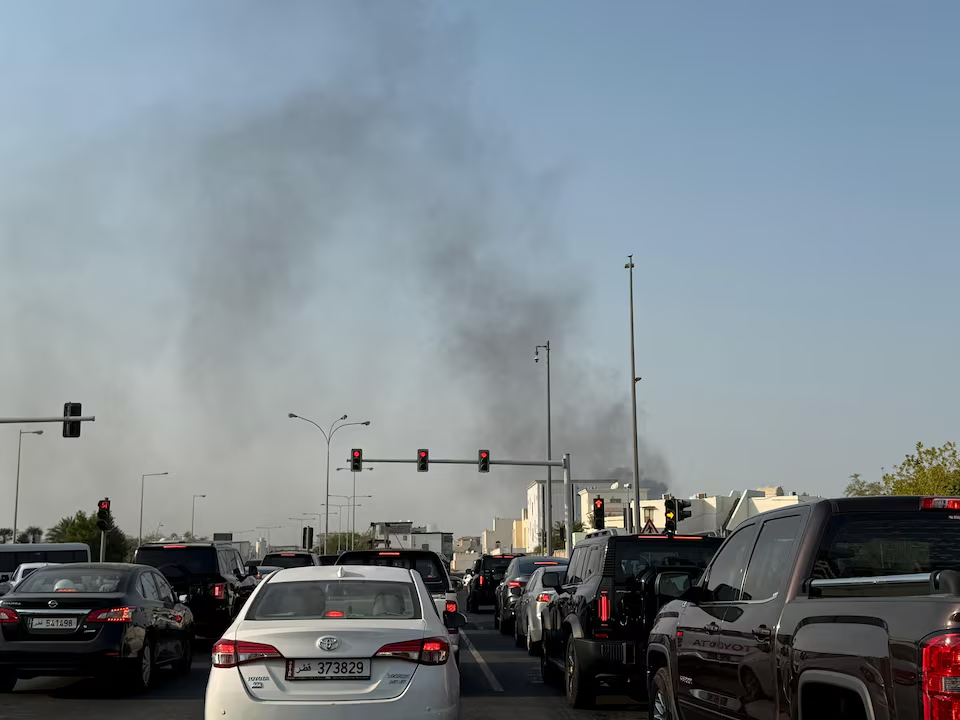
According to reports from the Associated Press, explosions rocked a residential neighborhood in Doha late on September 9. The buildings that were hit were reportedly hosting a meeting of Hamas’s political bureau. Eyewitnesses recounted scenes of shattered glass, loud blasts, and families fleeing as rescue teams worked tirelessly to assist the injured.
Among those present was senior Hamas leader Khalil al-Hayya, a crucial figure in ceasefire negotiations, who fortunately survived the attack. Reports indicate that five to six Hamas members lost their lives, along with at least one Qatari security officer, while dozens more were treated for injuries, ranging from broken bones to severe burns. The Guardian described chaotic scenes at local hospitals, where overwhelmed medical staff labored through the night.
This marked the first-ever Israeli strike on Qatari soil, instantly turning a mediation hub into a conflict zone.
Why Israel Targeted Doha
Israel took responsibility for the strike, claiming that Hamas leadership in Doha was coordinating militant operations and hampering ceasefire efforts. According to Reuters, intelligence suggested that the meeting included individuals responsible for military activities in Gaza.
However, critics argue that the strike was less about neutralizing threats and more about sending a strong political message. By launching an attack during peace negotiations, Israel conveyed that Hamas leaders were not safe, even in locations considered neutral.
For Qatar, this incident was particularly humiliating. Once seen as a mediator between Hamas, Israel, and the United States, Doha found itself transformed into a battlefield. Qatari officials condemned the strike as a “criminal act and violation of sovereignty,” warning that it would have serious repercussions for Israel-Qatar relations.
Trump’s Warning and U.S. Position

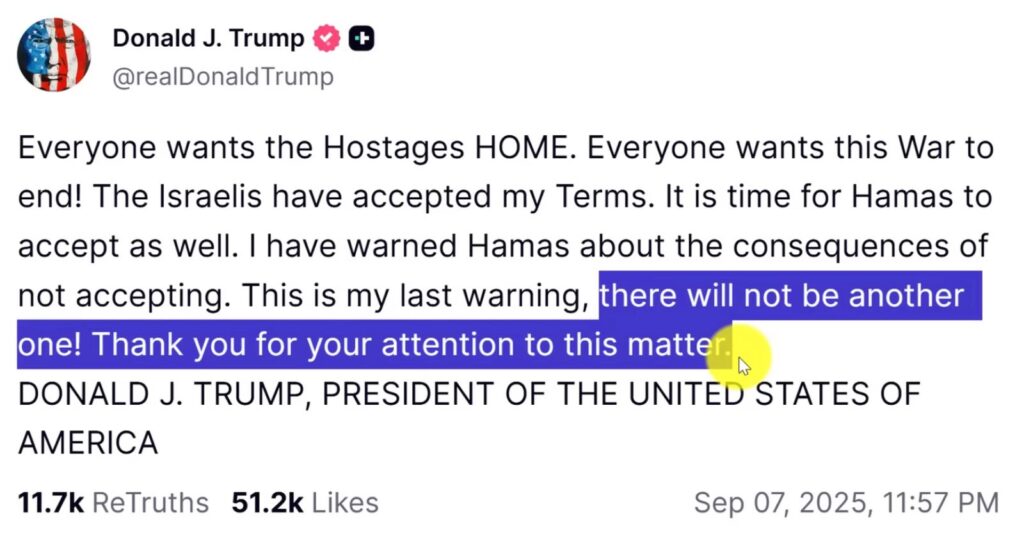
Just two days prior to the strike, Donald Trump tweeted a “last warning” to Hamas, urging them to accept ceasefire conditions. His remarks came as mediators raced to finalize prisoner exchanges and aid deliveries.
In the aftermath of the attack, U.S. officials hurried to clarify their involvement. The White House described the strike as “unfortunate,” with Trump expressing his displeasure, stating he was “very unhappy.” Officials insisted that Washington had “little or no prior warning,” emphasizing that the U.S. had not approved the action.
Yet, analysts expressed skepticism. As noted by the BBC, an operation of this magnitude happening so close to U.S. assets in the Gulf would have been challenging without at least some implicit American knowledge. This uncertainty is fueling speculation about U.S. complicity and harming Washington’s credibility as a mediator.
Human Toll: Families and Fear
Beyond the headlines, countless families have been shattered. Neighbors recounted stories of children injured by falling debris, parents rescuing loved ones from collapsed structures, and survivors left with deep trauma. For ordinary Qataris, who had come to see their capital as a bastion of stability, the strike obliterated the illusion of security.
Funerals were held simultaneously in Doha and Gaza, with Al Jazeera broadcasting grieving families demanding justice, while community leaders urged calm. For many, the tragedy felt like a pivotal moment: a foreign conflict had suddenly arrived at their doorstep.
International Condemnation
The international outrage was immediate and intense:

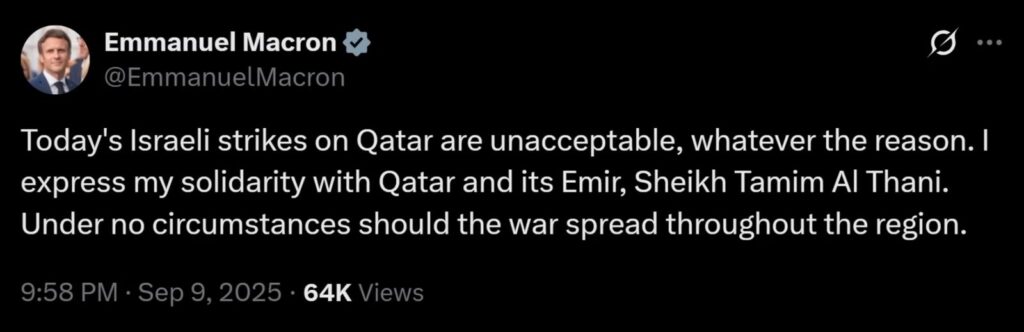
- Qatar: They condemned the attack as a blatant infringement of their sovereignty and international law.
- Russia: Via TASS, they labeled the assault a severe breach of the U.N. Charter.
- Turkey: Called it “state terrorism”, demanding an international investigation. (Al-Monitor)
- United States: While denying any prior knowledge, they acknowledged that this incident had hampered diplomatic efforts.
- UAE: In a notable gesture, the UAE president visited Doha the following day, demonstrating support for Qatar and highlighting concerns over stability in the Gulf region.
This kind of unified condemnation is uncommon and highlights the seriousness with which the strike is viewed.
Why It’s So Concerning:
- Violation of Sovereignty: Attacking a capital city where international mediators are present crosses a crucial line. If Doha isn’t safe, where can peace talks occur?
- Ceasefire in Jeopardy: The AP mentioned that the discussions were centered on ceasefire agreements. This attack has shattered trust in the negotiation process.
- Regional Instability: Analysts are drawing parallels to a mini Cuban Missile Crisis, where one miscalculation could lead to a broader conflict.
- Humanitarian Consequences: Civilians in Gaza, already suffering from a blockade and ongoing bombings, now face further delays in receiving essential aid and in ceasefire discussions.
What Happens Next?

Experts see three potential outcomes:
- Diplomatic Containment: Gulf leaders, with support from the U.S. and EU, might try to ease tensions. The quick visit by the UAE to Doha indicates that efforts may already be underway.
- Retaliation: Hamas or allied groups could respond with strikes, potentially opening up new conflict areas in Lebanon or Syria.
- Legal and Political Fallout: Qatar might seek a U.N. resolution or consider taking international legal action against Israel. Human rights organizations are already calling for accountability.
Markets are reacting; oil prices saw a brief spike following the news, highlighting concerns that instability in the Gulf could disrupt shipping routes and impact the global energy supply.
A Human Closing:
The strike in Doha wasn’t merely a strategic military action. It dealt a significant blow to diplomacy, international law, and the lives of everyday families who never imagined their neighborhoods would become battlegrounds.
For the civilians in Gaza, this event brings more uncertainty. For Qatar, it signifies a loss of dignity on the global stage. And for Israel and the U.S., it raises critical questions about the extent of military action in the name of security.
Whether this is seen as a warning or the catalyst for a larger conflict, September 9, 2025, will undoubtedly be remembered as a pivotal moment in Middle Eastern politics.


Abhi Platia is a financial analyst and geopolitical columnist who writes on global trade, central banks, and energy markets. At GeoEconomic Times, he focuses on making complex economic and geopolitical shifts clear and relevant for readers, with insights connecting global events to India, Asia, and emerging markets.