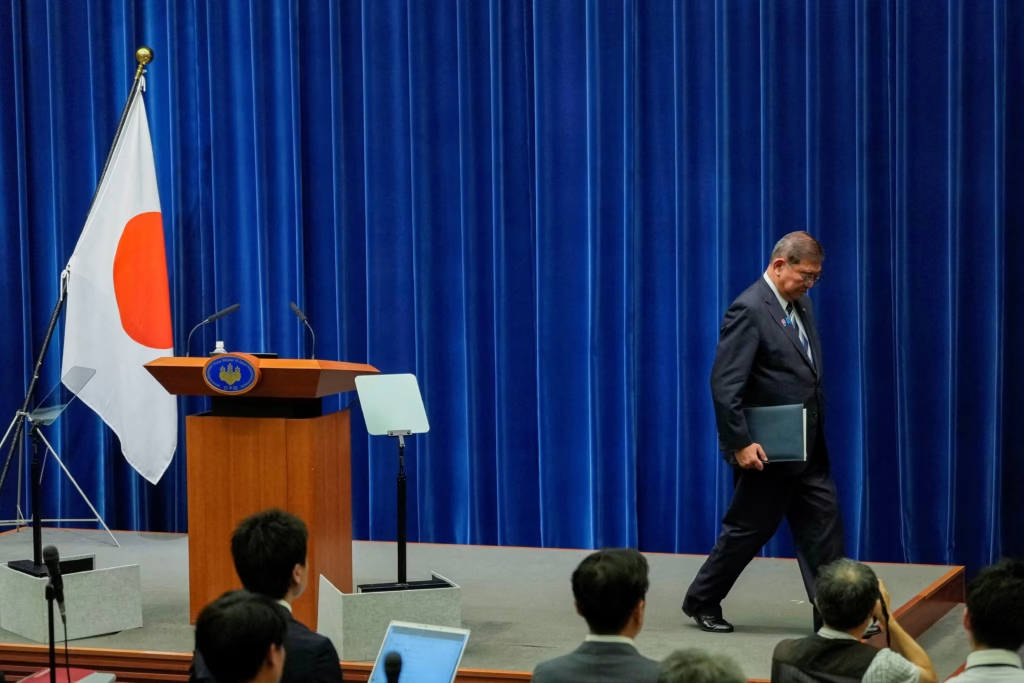
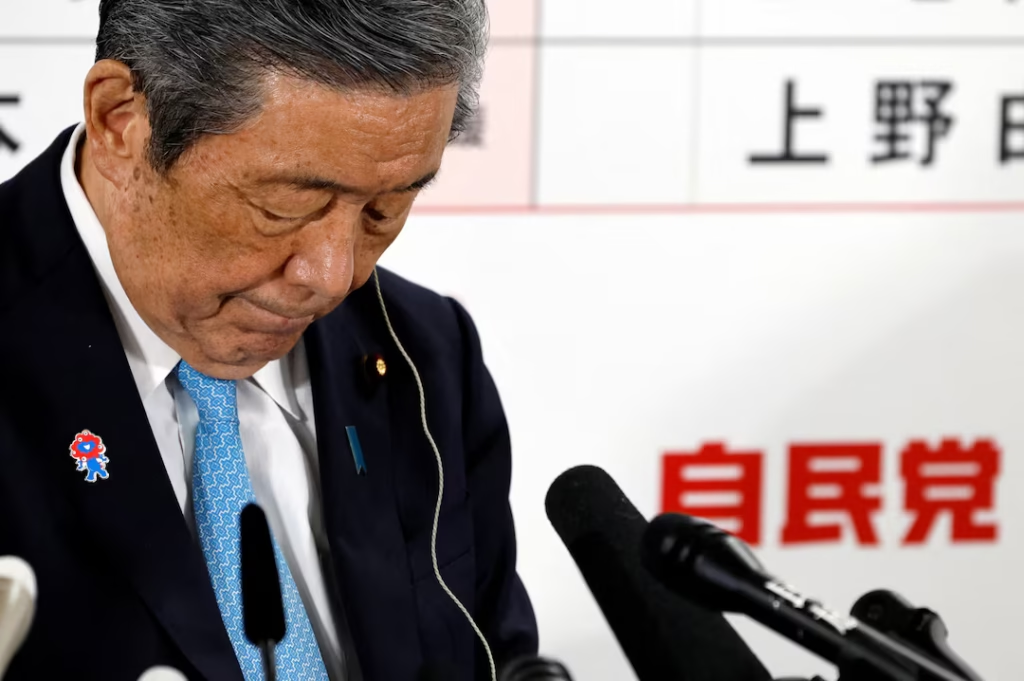
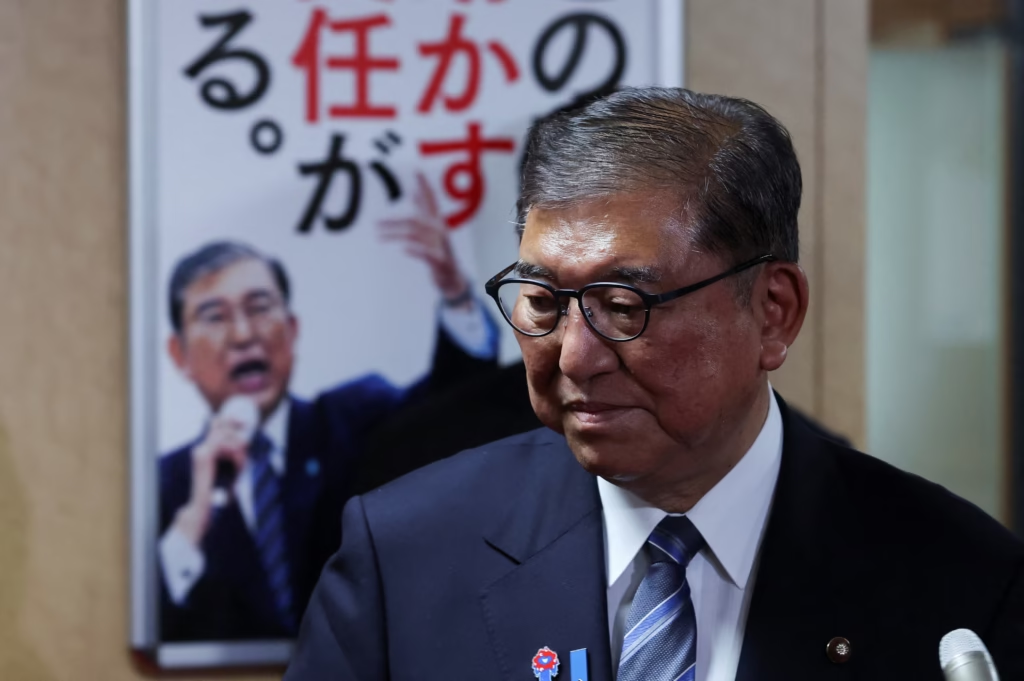
In early September 2025, Japan was thrown into political turmoil when Prime Minister Shigeru Ishiba stepped down after less than a year in office. Officially, his resignation was attributed to disappointing election results. However, many insiders believe the real catalyst was a contentious trade-security agreement he inked under the pressure of Donald Trump’s administration.
The agreement, described by opposition leaders as a “dirty deal”, tilted heavily in Washington’s favor and symbolized what many see as Trump’s bullying of weaker allies. Ishiba’s resignation has now spiraled into one of the most dramatic political stories in Asia and beyond.
The heart of the controversy was a deal signed in August between Tokyo and Washington. Marketed as a trade-security compact, the agreement required Japan to:
Import more U.S. oil and LNG at above-market prices.
Purchase billions in U.S.-made weapons, including F-35 jets.
Open markets to U.S. agriculture, angering Japanese farmers.
Reduce energy purchases from Russia, aligning with U.S. sanctions.
In exchange, Washington offered vague “security guarantees” in the Pacific. Japanese analysts and media outlets slammed the pact as humiliating and lopsided. According to The Guardian, Ishiba’s downfall was accelerated by outrage over the deal.
Trump’s approach has involved relentless pressure tactics toward allies and trade partners, with Ishiba’s resignation serving as a prime example.
Just a month prior, Trump had levied 50% tariffs on Indian exports, jeopardizing over $57 billion in trade, as reported by Reuters.
Meanwhile, Mexico faced the threat of U.S. military action if it didn’t rein in drug cartels.
Now, Japan one of America’s closest allies found itself cornered into an unfavorable agreement.
A European diplomat told Financial Times: “Trump squeezes partners with tariffs and threats until they sign. If they comply, their politics implode. Ishiba’s resignation proves the point.”
In Japan’s summer elections, opposition parties portrayed Ishiba as a leader who had “sold out” to Trump. Rural voters were furious about the farm sector’s exposure to U.S. imports, while defense hawks accused him of mortgaging Japan’s sovereignty.
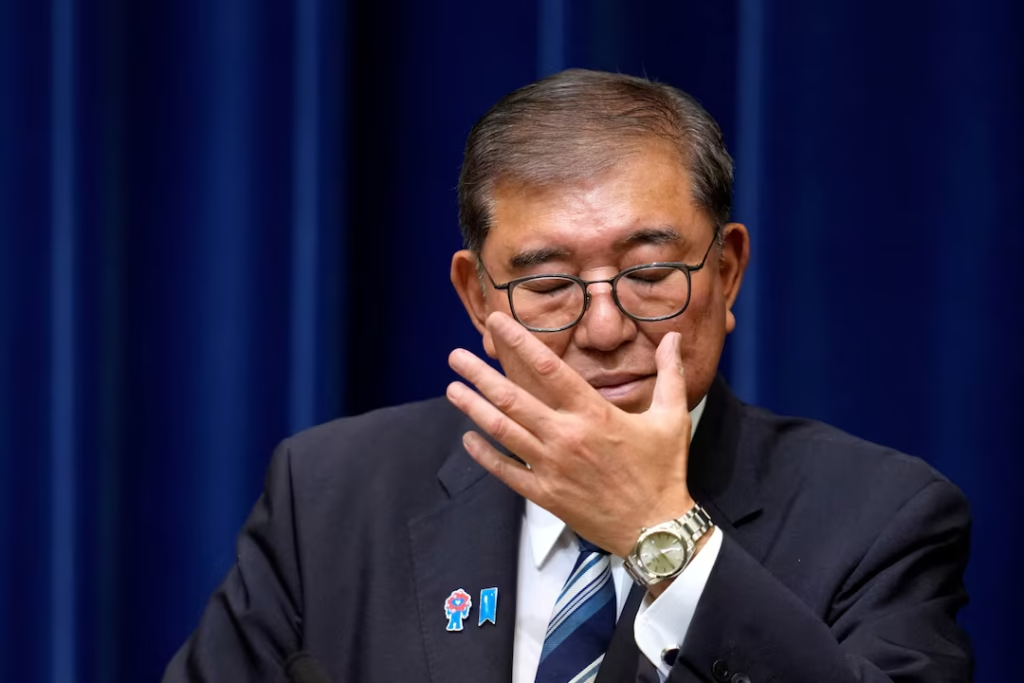
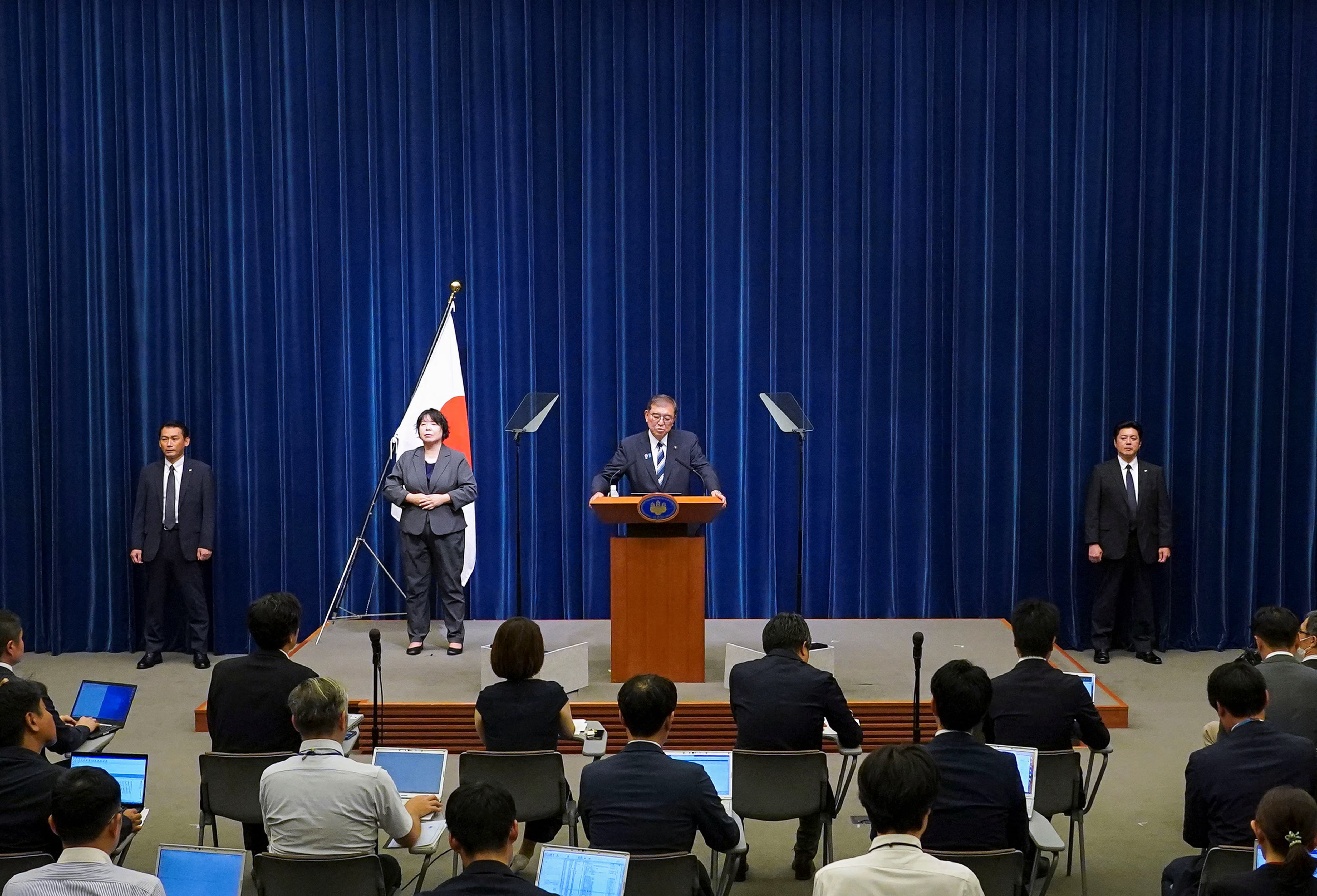
The Guardian reported that after weeks of political turmoil, Ishiba admitted defeat, saying in a teary press conference that “circumstances no longer allow me to continue serving as Prime Minister.”
World Leaders React
The resignation drew sharp reactions globally.
China blasted the U.S. deal as proof of “toxic influence.” Beijing’s foreign ministry claimed it destabilized Asia.
Russia’s Foreign Minister Sergei Lavrov said Japan was “forced to abandon Russian energy for overpriced American fuel” — calling it exploitation, reported by RT.
France’s Emmanuel Macron privately warned, according to Reuters, that “Trump is setting fire to alliances. Today it’s Japan, tomorrow it could be us.”
South Korea’s opposition leaders voiced fears that Seoul could be the next target of Trump’s “bullying.”
Japan’s Minister Boycotts Washington
In a bold move, Japan’s foreign minister opted to boycott an official invitation to Washington, citing outrage over the deal and Ishiba’s resignation. Sources cited by NHK described the boycott as a “symbolic rejection” of U.S. pressure.
“The Japanese people will not forget this humiliation,” an insider remarked. This decision has widened the divide between Tokyo and Washington.
Economic Fallout
The deal’s impact is already visible:
The yen has dropped significantly, as reported by Reuters, with investors anxious about the instability.
Bond yields have surged, reflecting worries over Japan’s financial strategies.
Analysts have cautioned that the deal could exacerbate Japan’s cost-of-living issues due to rising energy expenses and agricultural losses.
Nomura Securities pointed out that while the agreement would yield billions in sales for Washington, Tokyo stands to gain “little tangible benefit.”
Trump’s Victory Lap
Unsurprisingly, Trump hailed Ishiba’s resignation as a personal triumph. While addressing a rally in Florida, he boasted,
“Japan signed the best deal ever billions for American farmers, billions for American oil, billions for American defense. We won, they lost.”
Reports from Reuters indicate that his remarks received extensive coverage in Japan, amplifying public resentment toward Washington.
Ishiba’s political downfall transcends a mere domestic crisis; it reflects a broader global trend. Trump’s short-term victories often come at the expense of long-term alliances.
For generations, the U.S.-Japan relationship was considered steadfast. Now, even Tokyo is reassessing Washington’s trustworthiness. This situation raises concerns that countries like India, Brazil, and South Africa might seek closer ties with alliances like BRICS, where U.S. influence is less pronounced.
Could BRICS Gain?
As reported by El País, Brazil had previously blocked Venezuela from joining BRICS, highlighting the internal rifts within the group. However, the aggressive tactics employed by Trump might lead more nations to view BRICS as a viable alternative.
One Brazilian commentator pointed out, “Every time the U.S. forces a dirty deal, it nudges countries toward alternatives.”
What Comes Next?
Japan now finds itself in a state of uncertainty. A leadership contest is in motion, but whoever takes over after Ishiba will have to navigate a troubled legacy filled with public dissatisfaction, economic challenges, and a deal with the U.S. that many consider embarrassing.
On the global stage, while Trump’s strategies may grab headlines quickly, they run the risk of alienating allies and empowering adversaries. As The Guardian noted, Ishiba’s fall might be viewed not just as a Japanese issue but as evidence of how U.S. pressure can disrupt relationships with both friends and foes.
Final Thoughts
The resignation of Prime Minister Shigeru Ishiba serves as a warning. Under immense pressure, he agreed to a deal that many perceived as degrading. Trump may have celebrated the outcome, but Japan bore the consequences both politically and economically.
For the international community, this situation underscores the delicate nature of alliances during Trump’s presidency. What began as a lopsided agreement culminated in a significant political upheaval. The pressing question now is: How many more leaders will lose their positions before allies decide to stand up against U.S. intimidation?
Abhi Platia is a financial analyst and geopolitical columnist who writes on global trade, central banks, and energy markets. At GeoEconomic Times, he focuses on making complex economic and geopolitical shifts clear and relevant for readers, with insights connecting global events to India, Asia, and emerging markets.