



Bitcoin has done it again. The world’s first and most dominant cryptocurrency has surged past $125,000, smashing previous records and reigniting both euphoria and fear in global markets.
This time, the rally isn’t just a retail-driven frenzy it’s backed by institutional investors, exchange-traded funds (ETFs), and renewed optimism that Bitcoin is maturing into a legitimate asset class.
But beneath the excitement lies a deeper question: is this an unstoppable revolution, or the beginning of another speculative bubble?
Breaking Records: The Data Behind the Surge
On October 5, 2025, Bitcoin rallied by approximately 2.7%, reaching $125,245.57, surpassing its prior peak of around $124,480 from mid-August.


- This marked Bitcoin’s eighth consecutive day of gains, with sustained inflows into Bit coin ETFs fueling momentum.
- The U.S. dollar weakened across major currency pairs, partly due to fears of a U.S. government shutdown and delayed macro data, adding tailwinds for Bit.
- Earlier in August, Bitcoin had already hit fresh highs amid expectations of Fed rate cuts and friendly regulatory signals. Reuters
These data points underline that this isn’t a flash in the pan momentum is being reinforced by macro, regulatory, and investor trends.
A Rally Years in the Making
Bitcoin’s recent rise began in mid-2024 when the U.S. Securities and Exchange Commission (SEC) approved multiple spot Bitcoin ETFs. Since then, the cryptocurrency has drawn record inflows over $35 billion by early 2025, according to CoinShares.
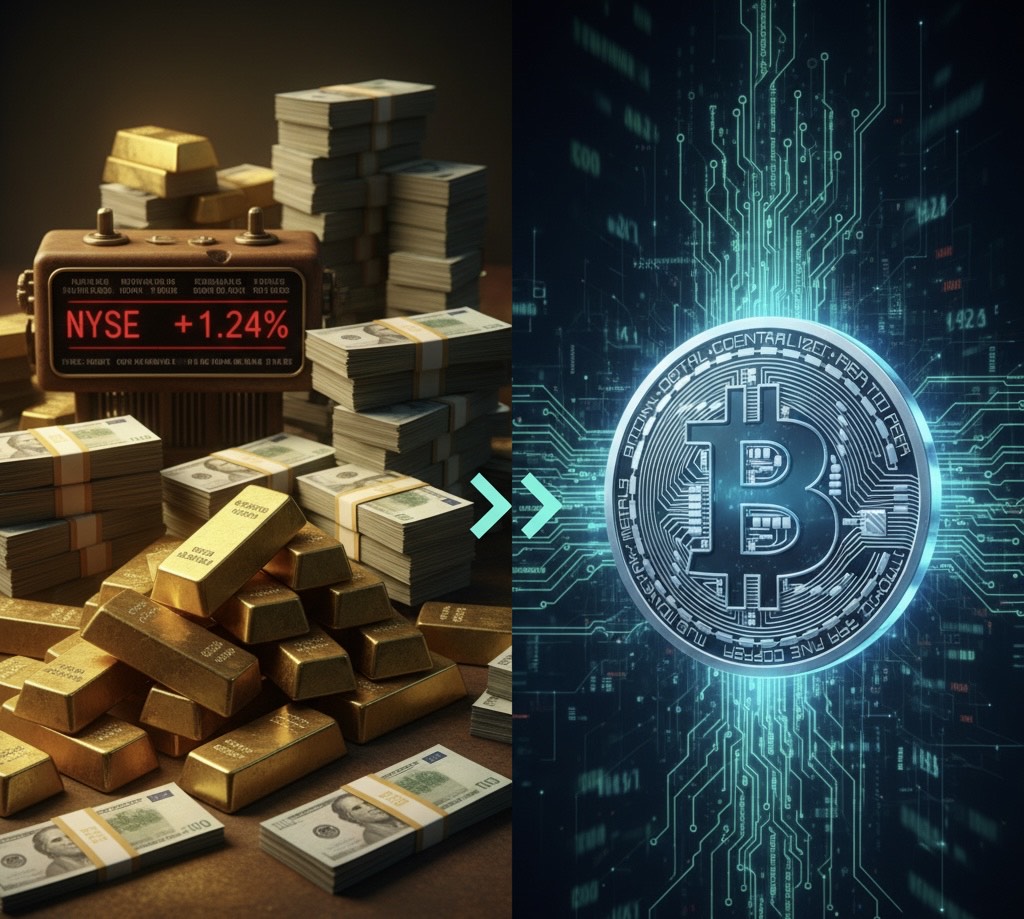
In addition, growing geopolitical uncertainty, especially after renewed tensions in Eastern Europe and energy market disruptions, pushed investors toward alternative stores of value. For many, Bitcoin became the “digital gold” hedge against inflation and currency devaluation.
“The combination of institutional adoption, regulatory clarity, and macroeconomic stress has created the perfect storm for Bitcoin,” says Anand Rathi, senior strategist at CryptoFund Global.
Chart: Bitcoin Price Milestones (2010–2025)


| Year | Price Milestone | Key Event |
|---|---|---|
| 2010 | $0.09 | Bitcoin traded publicly for the first time |
| 2013 | $1,000 | Early speculative boom |
| 2017 | $19,783 | ICO mania and global attention |
| 2021 | $69,000 | Institutional entry and pandemic-era stimulus |
| 2025 | $125,000 | ETF-driven rally and institutional dominance |
Why This Rally Feels Different
Unlike the 2017 or 2021 booms, this surge is not purely speculative. The key drivers are macroeconomic and structural:
- ETF Approval and Wall Street Entry
Institutional ETFs from BlackRock, Fidelity, and ARK Invest now hold a combined 1.8 million BTC, bringing regulatory legitimacy and reducing volatility. - Central Bank Accumulation Trends
Nations like El Salvador, and reportedly some Middle Eastern sovereign funds, have quietly increased Bitcoin reserves signaling long-term strategic interest. - De-Dollarization Momentum
With rising skepticism about the U.S. dollar’s dominance, Bitcoin’s borderless nature appeals to economies seeking autonomy from Washington’s sanctions regime. - AI and Blockchain Integration
AI-driven trading platforms and decentralized finance (DeFi) innovations have improved liquidity and risk modeling, drawing in sophisticated investors.
Geopolitical Angle: India, the Middle East, and the New Financial Order
For India, Bitcoin’s resurgence presents both an opportunity and a policy challenge.
While India has not legalized Bitcoin as a currency, it recognizes crypto assets for taxation. The country saw a 48% increase in crypto trading volume on domestic platforms like CoinDCX and WazirX following the rally.
“India’s position will define how Asia’s digital economy evolves,” says Prof. Aruna Mehta from the Indian Institute of Finance.
“If policymakers embrace blockchain innovation while regulating speculation, India could become a global fintech powerhouse.”

In the Middle East, sovereign wealth funds in the UAE and Saudi Arabia are exploring tokenized energy trade a move that could redefine petrodollar dynamics.
Meanwhile, Japan and South Korea are advancing crypto regulation frameworks that could make East Asia the next hub of compliant digital finance.
Data Snapshot: Global Crypto Adoption (2025)
| Region | Active Crypto Users (in millions) | Notable Trend |
|---|---|---|
| North America | 57 | ETF and institutional investment surge |
| Europe | 45 | Integration with mainstream banking |
| Asia-Pacific | 210 | Retail adoption and fintech innovation |
| Middle East | 33 | Tokenized trade and sovereign digital projects |
| Africa | 29 | Stablecoin-based remittances |
The Darker Side: Volatility and Regulatory Headwinds
Despite its bullish momentum, Bitcoin remains highly volatile. In just one week, prices swung between $117,000 and $126,500, reflecting nervousness around profit-taking and U.S. policy announcements.
The U.S. Federal Reserve has warned that unchecked speculative behavior in crypto could threaten “financial stability.”
China, meanwhile, reiterated its crypto ban amid fears of capital flight.
And in India, policymakers remain divided between promoting innovation and curbing speculative risks.
“Bitcoin’s surge may embolden illicit capital flows if not carefully regulated,” warns Dr. Raghav Menon, a financial policy advisor at NITI Aayog.
Comparative Insight: Then vs. Now
- 2017 Boom: Retail FOMO (Fear of Missing Out) dominated. Few institutions, limited understanding.
- 2021 Rally: Driven by stimulus liquidity and Tesla’s adoption. Quickly faded when rates rose.
- 2025 Boom: Structural, institutionally supported, and geopolitically relevant.
This evolution suggests Bitcoin is transitioning from a speculative asset to a strategic digital commodity, much like oil or gold once were in the 20th century.
Scenario Analysis: What Comes Next
- Bullish Case — Bitcoin at $250,000 by 2026
Institutional accumulation continues; new ETFs launch in Europe and Asia; global macro instability boosts demand. - Moderate Case — Stabilization at $100,000 Range
Market matures; volatility decreases; Bitcoin integrates with central bank digital currencies (CBDCs). - Bearish Case — Regulatory Clampdown and Correction
Aggressive U.S. or G20 regulations limit crypto activity; Bitcoin retraces to $75,000 before long-term recovery.
Scenarios: Paths Forward for Bitcoin
| Scenario | Probability | Price Range | Catalysts |
|---|---|---|---|
| Continued Uptrend | Moderate | $135,000–$160,000 | Institutional flow, pro regulation, macro support |
| Parabolic Breakout | Low | $160,000–$200,000+ | FOMO, policy adoption, global flows |
| Pullback / Consolidation | Moderate | $90,000–$125,000 | Regulatory pushback, macro tightening |
| Sharp Crash | Tail Risk | < $70,000 | Ban, liquidity crunch, macro shock |


Expert Voices: The Balancing Act Ahead
“Bitcoin’s resilience is a reflection of distrust in traditional systems,” says Carla Martinez, analyst at the Brookings Institution.
“But until governments build frameworks that allow coexistence, volatility will remain its biggest enemy.”
“For India and emerging markets, this is a defining moment to lead in fintech or lag behind the global shift,” adds Rajat Deshmukh, co-founder of BharatChain Labs.
Broader Implications: Markets, Sovereigns & Capital Flows
- Correlations are shifting: Bitcoin is aligning more with equities, inflation hedges, and macro cycles.
- Sovereign Reserve Strategy: Some countries under sanctions or in unstable fiscal conditions may consider Bitcoin to bypass capital chokepoints.
- Capital flows: Emerging markets may become net exporters of crypto capital to developed markets, reversing capital flight patterns.
- India’s Opportunity: India could position itself as a regional crypto regulatory hub, export exchange tech, or leverage digital asset infrastructure.
Conclusion: Beyond the Price A Paradigm Shift
Bitcoin’s explosive surge to $125,000 is more than a financial headline it’s a signal that the digital financial order is maturing.
It challenges traditional power centers, gives emerging economies more leverage, and forces policymakers to rethink money itself.
Whether it stabilizes or crashes, one truth remains: Bitcoin has already changed how the world perceives value, trust, and sovereignty.
And this time, it’s not just a bubble it’s a global referendum on the future of finance.


Abhi Platia is a financial analyst and geopolitical columnist who writes on global trade, central banks, and energy markets. At GeoEconomic Times, he focuses on making complex economic and geopolitical shifts clear and relevant for readers, with insights connecting global events to India, Asia, and emerging markets.