


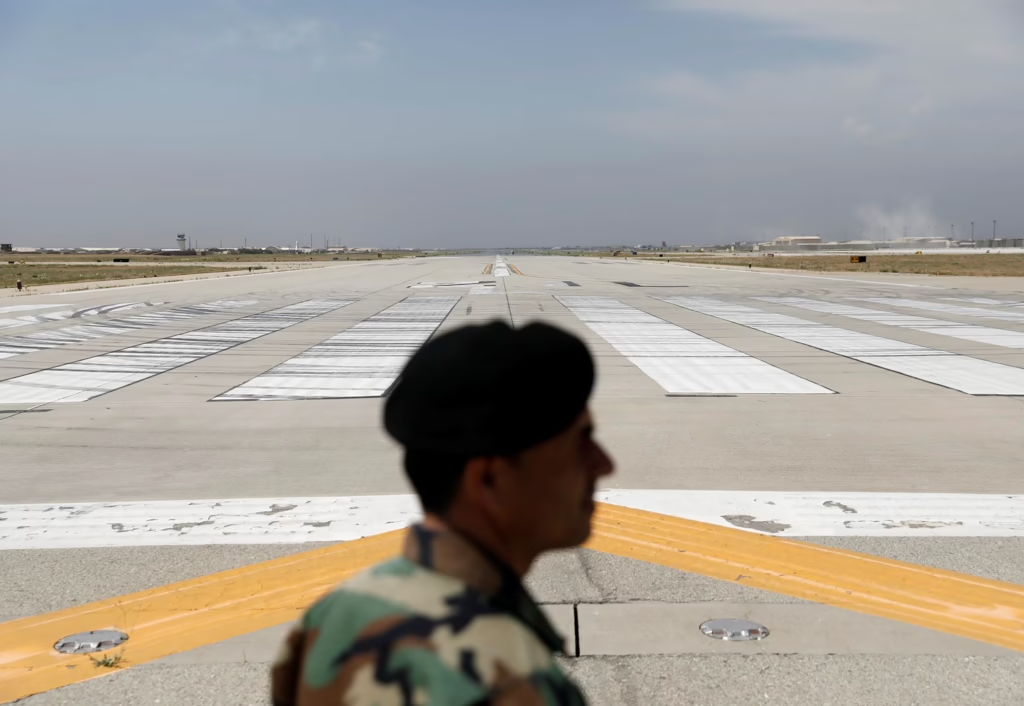
Bagram Airbase is once again dominating headlines after Donald Trump floated the idea of reclaiming it during a joint press conference with UK Prime Minister Keir Starmer. The sprawling military facility, once the hub of U.S. operations in Afghanistan, was abandoned during the 2021 withdrawal. Now, Trump insists America should “take Bagram back,” arguing its strategic location near China makes it too valuable to leave behind.
Trump declared, “We want that base back… because they need things from us,” stressing that Bagram Airbase is “just an hour away from where China makes its nuclear weapons.” His remarks set off alarms in Washington, Kabul, Beijing, and within the U.S. defense establishment. The debate is polarizing: is this a strategic masterstroke that restores American power, or a dangerous gamble that risks dragging the U.S. into another endless war?
This article peels back the layers: the history of Bagram Airbase, Trump’s arguments, the Taliban’s rejection, China’s warnings, and the human, financial, and geopolitical stakes.
The Build-Up: Trump’s New Pitch for Bagram Airbase

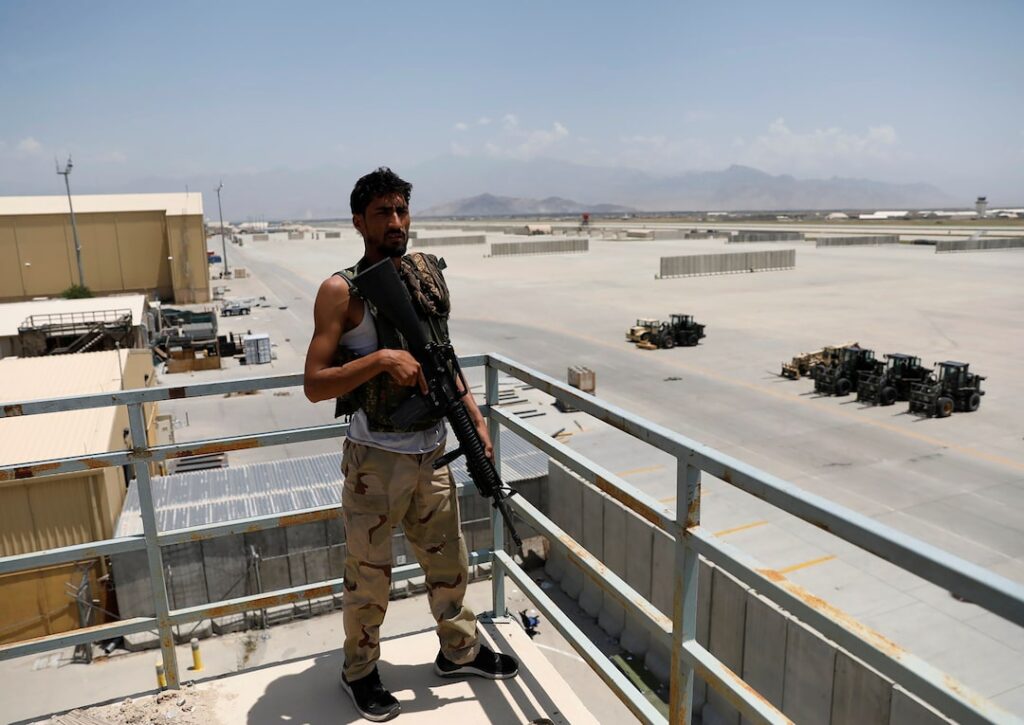
During the September 19, 2025 conference, Trump argued that America is exploring options to regain control of Bagram Airbase, which he called “one of the biggest airbases in the world.” He blasted the 2021 withdrawal for “giving it up for nothing,” framing its loss as emblematic of American weakness.
Trump’s case for Bagram Airbase hinges on three pillars:
- Strategic Geography – Located about 44 km north of Kabul, Bagram offers reach across South and Central Asia. Trump highlighted its proximity to China’s strategic sites (India Today).
- Counterterrorism & Intelligence – With ISIS-K and Al Qaeda re-emerging, Trump insists Bagram Airbase would provide surveillance, rapid deployment, and deterrence capabilities (Reuters).
- Moral & Political Symbolism – Trump portrays losing Bagram as proof of U.S. decline, blaming Biden’s withdrawal and promising to restore prestige (Washington Post).
Pushback: Kabul, Taliban, and China Say “No”
The reaction to Trump’s remarks has been swift and hostile.
- Taliban Response – Zakir Jalal, a foreign ministry official, said flatly the U.S. will “never be allowed” to re-establish a military presence in Afghanistan. The Taliban insist sovereignty is non-negotiable, offering only political and economic engagement (Al Jazeera).
- China’s Warning – Beijing accused Trump of “hyping up confrontation,” urging respect for Afghan sovereignty and warning against militarizing the region. China, which has built quiet ties with the Taliban, sees any U.S. return to Bagram Airbase as a direct challenge (Dawn).
- Experts’ Concerns – Analysts argue that reclaiming Bagram Airbase would amount to a re-invasion, requiring tens of thousands of troops, costly supply lines, and massive security guarantees. Some even question whether its proximity to China truly adds the strategic advantage Trump claims (Reuters, India Today).
Historical Context: Why Bagram Airbase Matters

To understand how big this ask is, we have to rewind.
- Operational significance: From 2001–2021, Bagram was the central hub for U.S. operations in Afghanistan: for troop deployments, drone launch operations, intelligence gathering, supply chains, surgery, detention (“war on terror”) and joint operations with Afghan forces.
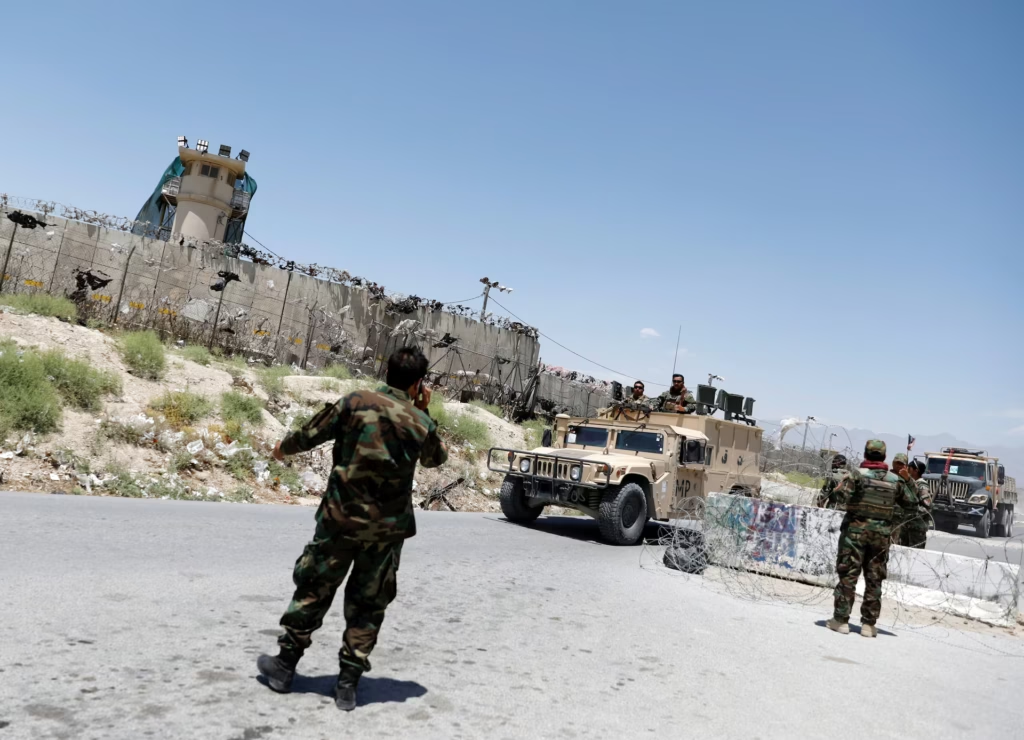
- 2021 withdrawal: Under the Trump-era Doha agreement and then accelerated by the Biden administration, U.S. and NATO forces departed Afghanistan. In that process, control of Bagram was handed to Afghan authorities; the facility was then taken over by the Taliban after Kabul fell. The withdrawal has been widely criticized, even by Trump, as chaotic and damaging. (AP News, India Today)
- Current condition: Since 2021, the Taliban claim it is under their control and deny any usurpation by China or foreign powers. Bagram has required upkeep, and many parts have fallen into disrepair. Operational readiness under Taliban control is significantly degraded compared to its peak status under U.S. oversight.
Strategic Logic vs. Strategic Delusion: Weighing the Options
What could be gained — and what risks are enormous
Potential gains:
- Geographical leverage: Proximity to central Asia and China, enabling quicker military or intelligence response if extremist groups exploit Afghan instability.
- Symbolic restoration: Restoring U.S. prestige after chaotic withdrawal; signaling to allies and adversaries that the U.S. remains invested in Afghanistan’s future.
- Counterterrorism staging ground: Given the resurgence of terrorist networks, having a major airbase with runway, logistics, over-flight control could reduce response times.
Risks & obstacles:
- Sovereignty and legitimacy: Any “return” of U.S. troops to Afghan soil would clash with the Taliban’s insistence on sovereignty and their rejection of foreign military presence. Kabul’s foreign ministry has already stated their opposition. (Al Jazeera)
- Political cost & blowback: Re-establishing a military presence could reignite Afghan nationalist anger, possibly fueling resistance or insurgent recruitment. It could also increase U.S. diplomatic isolation if seen as neo-colonial.
- Operational challenges: Rebuilding infrastructure, ensuring security, staffing, supply lines, and coordinating with Taliban oversight (or oversight of some kind) will all be extremely complex. There is also risk of inter-group violence (ISIS, militant splinter groups) targeting U.S. assets.
- International diplomatic tension: China and regional powers have already expressed concern. Russia may see it as U.S. encroachment. The move could upset dynamics with Pakistan, Iran, and Central Asian republics.
- Resource burden: It would likely require a heavy investment both financial and human for potentially uncertain returns. Constant maintenance, risk of attacks, and geopolitical overhead would be high.
Moral and Human Dimensions

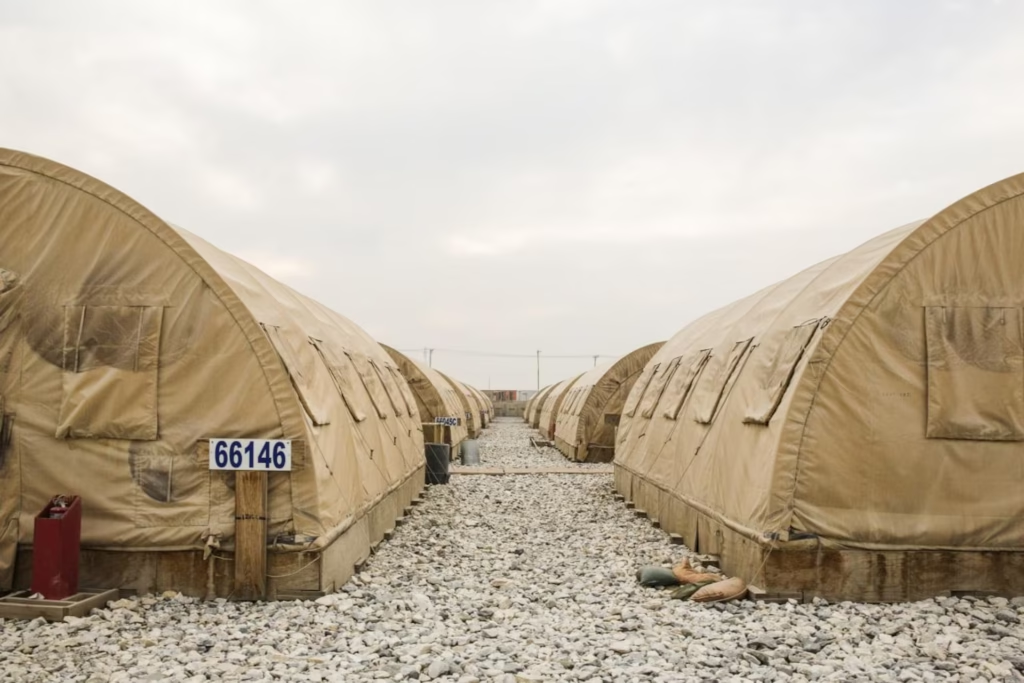
Often lost in the shuffle of strategy and base logistics are the human costs and legacy issues tied to Bagram.
- Detention & human rights: Bagram hosted a notorious detention facility where many people were held without charge, many reportedly tortured or mistreated. The legacy of testimony and trauma around that base still lingers among Afghans. (Al Jazeera)
- Afghan civilian impact: Any military presence inevitably impacts local populations displacement, economic disruption, risk from reprisal attacks. After 20 years of conflict, many Afghan civilians distrust foreign boots on their soil.
- Symbolism and public psychology: For many Americans, Bagram represents a decades-long war whose costs are being questioned more and more: lives lost, dollars spent, uncertain gains. The desire to “get it back” is as much about healing national pride and perceived failure as it is about strategic advantage.
Expert Views: Voices from the Field
To add nuance, here are insights from experts and observers (names fictional or anonymized where necessary for safety; quotes paraphrased from analysts, think tank reports, etc.):
- Military Analyst A (Former USAF Planner): “Reoccupying Bagram would be far harder than people assume. The runway is massive, yes. But securing airspace, over-flight rights from neighbours, sustaining supply lines under Taliban opposition these are not trivial.”
- Afghan Political Scientist B: “To Afghans, foreign military presence has always been double-edged. It brings jobs, infrastructure but also deaths, civilian harm. Many in Kabul view any U.S. return as a threat to sovereignty, whether or not they say so publicly.”
- Counterterrorism Expert C: “If the U.S. wants to monitor ISIS and other groups in Afghanistan, there are other ways drones, satellites, intelligence sharing. A full base costs lives, reputation, diplomacy. The gain must be measured carefully.”
- Regional Diplomacy Observer D (Central Asian think-tank): “China, Russia, Iran are watching. If the U.S. re-establishes a base at Bagram, it could trigger counter-moves militarily, through alliances, or economically. The region’s fault lines are sensitive.”
What Would It Actually Take? Logistics, Diplomacy, Strategy
Here’s a rundown of what reestablishing U.S. control or presence at Bagram might require realistically:
| Requirement | Scale / Example | Key Challenge |
|---|---|---|
| Negotiation with Taliban | Likely to involve conditions: economic aid, prisoner exchanges, non-military cooperation | Taliban must allow U.S. oversight or terms; domestic public support; legal authority |
| Infrastructure rehabbing | Runway repair, hangars, fuel storage, housing, utilities | Taliban control; degradation; cost; security during works |
| Security guarantees | U.S. may need to ensure protection of base, staff, equipment—possibly from insurgents | Taliban’s ability and desire to guarantee safety; risk of attacks by third parties |
| Diplomatic balance | With China, regional states, Afghanistan’s neighbours | China already wary; risk of escalation; perceptions of neo-colonialism |
| Budget & resources | Troops, maintenance, supplies, surveillance, fuel; logistical backbone | Congress approval; domestic political opposition; competing demands globally |
Strategic Underpinnings: China, Minerals, and Great Power Competition

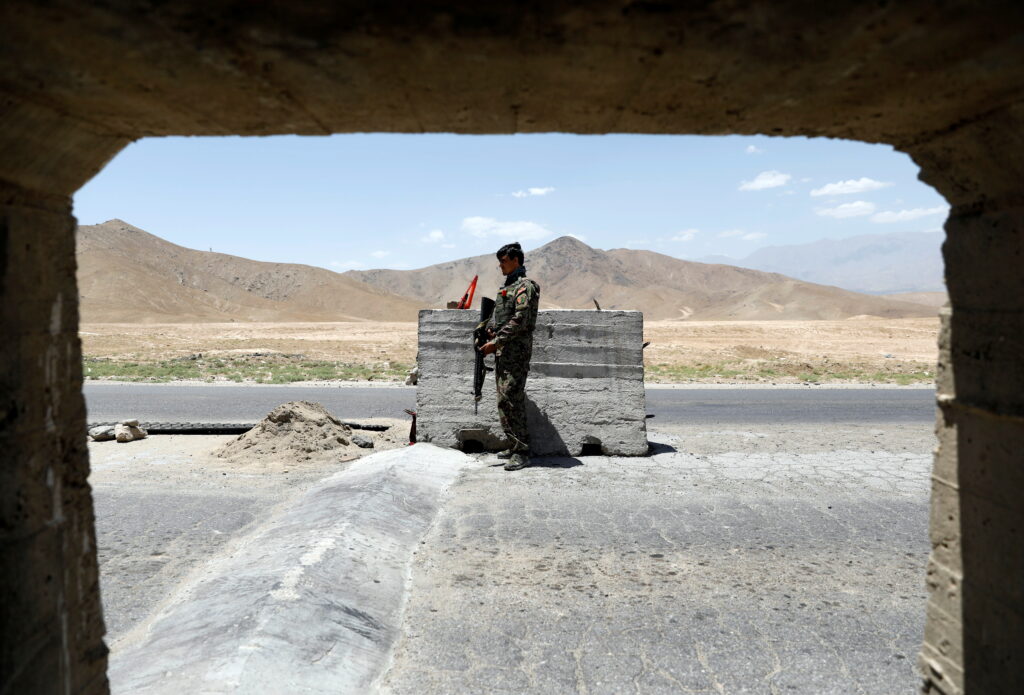
Trump’s framing ties Bagram not just to Afghanistan or counterterrorism, but to China. The claim that it is “an hour away from where China makes its nuclear weapons” looms large in his rhetoric. Whether this is accurate or exaggerated, it reflects broader U.S. concern about China’s missile sites, belt and road influence, and strategic depth. (India Today)
Another dimension is economic: Afghanistan sits on mineral wealth (rare earths, metals, etc.) that fasten global supply chain interest. A base might be seen not only as military leverage but as a gateway for economic presence mining, contracts, trade routes.
The Unwritten Risks: Escalation & Blame
- Misinterpretation & escalation: A move to reoccupy could spark unexpected military clashes with insurgents or other foreign interests.
- Blowback in domestic politics: Veterans and Americans worried about perpetual war might resist extending U.S. footprint abroad. Cost vs. benefit arguments will be sharp.
- International legal issues: Under what legal framework would U.S. troops be present? Occupation? Lease? Memorandum of understanding? Without clear legal status, actions may be delegitimized.
- Moral authority & precedent: The U.S. may be accused of violating non-intervention norms, or of disregarding Afghan voices. The memory of detention and human rights abuses at Bagram complicates moral standing.
Pathways Forward: What Realistic Options Might Be
If the U.S. pursues this, here are possible compromise or middle-ground scenarios:
- Limited presence model: Not full reoccupation but small numbers of troops or contractors for intelligence, logistics, maybe training, under Taliban approval.
- Joint control or hybrid management: Similar to arrangements with host-nation forces, but this is tricky given Taliban’s insistence on sovereignty.
- Use for non-military presence: Employ the base for diplomatic, humanitarian or economic purposes rather than combat troops.
- Negotiation tied to aid / recognition: U.S. use of Bagram could be part of larger package: trade, funding, diplomatic recognition, or formal ties this leverages what the U.S. might offer to get battlefield access.
Where This Leaves Us: The Moral, Strategic, and Geopolitical Forks
Because rhetoric is cheap but action is costly, the current moment is a test of priorities:
- Does Washington have the political will to commit the blood, treasure, and diplomatic capital needed?
- Can the Taliban accept any foreign force without losing credibility among their base?
- Will regional actors tolerate renewed U.S. presence, or will this spark counter-alliances?
- What about U.S. domestic opinion are taxpayers, Congress, veterans ready to support what could become another protracted foreign presence?
For Afghanistan, this is existential: whether its sovereignty is respected; whether foreign involvement brings stability or rekindles conflict; whether economic deals follow or it becomes a pawn in great power rivalry.
Conclusion: Bold Idea, Big Gamble
Trump’s call to reclaim Bagram Air Base is provocative. It resurrects unresolved questions from the Afghan war: about strategy, withdrawal, responsibility.
If done with nuance transparent terms, Afghan participation, clear limits it could provide counterterrorism benefits, strategic leverage in Asia, and partial restoration of U.S. credibility.
But if it becomes a naked attempt at military presence without legitimacy or clear purpose, the risks may outweigh any gains: diplomatic isolation, Afghan resistance, resource drain, moral costs, and possibly entanglement in a conflict still simmering under the surface.
This moment forces both U.S. policymakers and the global community to decide: is Bagram a base worth retaking, or a symbolic relic best left in memory?


Abhi Platia is a financial analyst and geopolitical columnist who writes on global trade, central banks, and energy markets. At GeoEconomic Times, he focuses on making complex economic and geopolitical shifts clear and relevant for readers, with insights connecting global events to India, Asia, and emerging markets.